
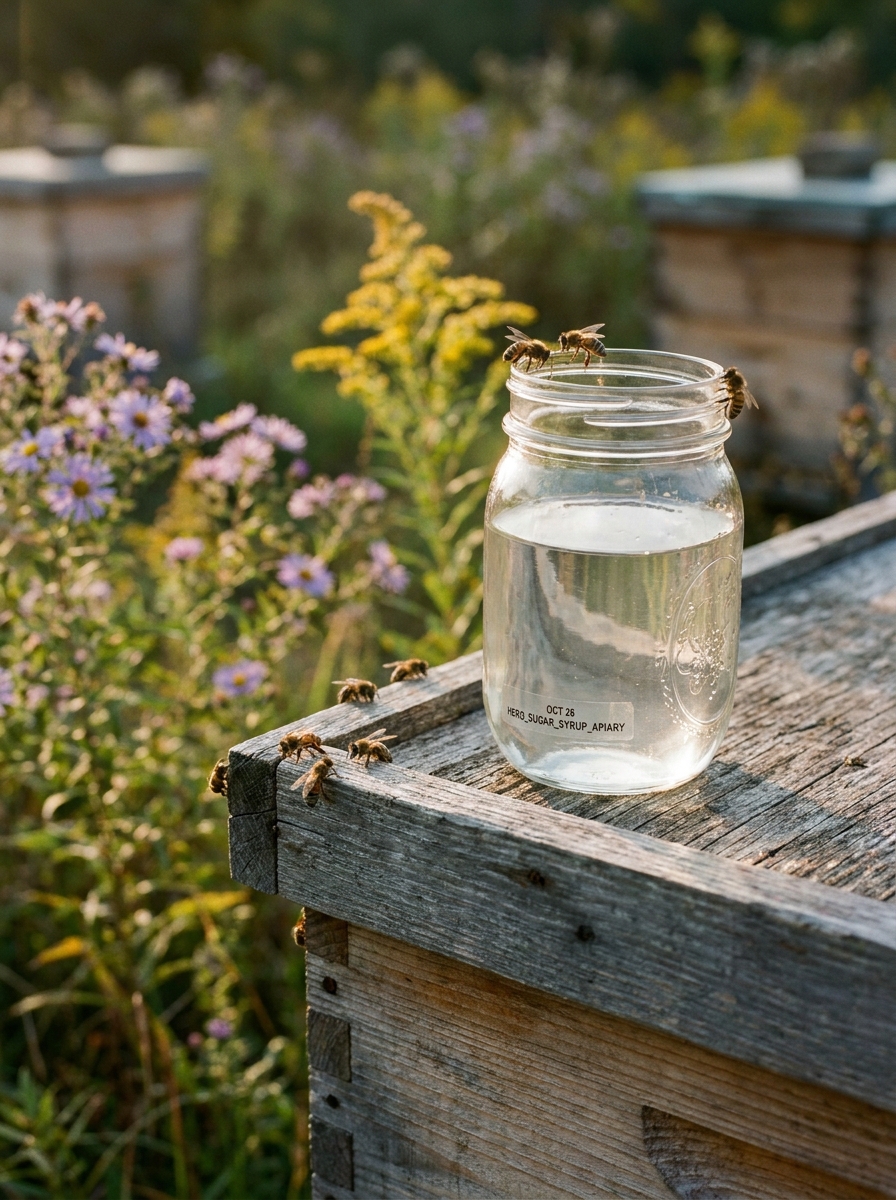
Spring colony expansion depends on a steady nectar source to stimulate rapid brood rearing and encourage worker bees to build fresh wax comb.
Early spring weather is notoriously unpredictable, often preventing honeybees from foraging on natural blooms due to cold winds or persistent rain.
This comprehensive 1 to 1 bee syrup recipe delivers the exact balance of clean hydration and easily digestible sucrose needed to jumpstart your apiary.
By matching the natural carbohydrate density of fresh flower nectar, this liquid feed signals the queen to accelerate egg laying across the brood nest.
You can mix a crystal-clear, safe, and mold-resistant batch in just 5 minutes using pure white sugar and clean warm water.
| Detail | Info |
|---|---|
| Prep Time | 5 minutes |
| Cook Time | 0 minutes |
| Total Time | 5 minutes |
| Servings | 1.6 liters [6.7 cups] (enough for 2 colony feeder fills) |
| Difficulty | Easy |
| Diet Tags | Plant-Based / Vegetarian / All-Natural / Non-Toxic |
Why This Recipe Works
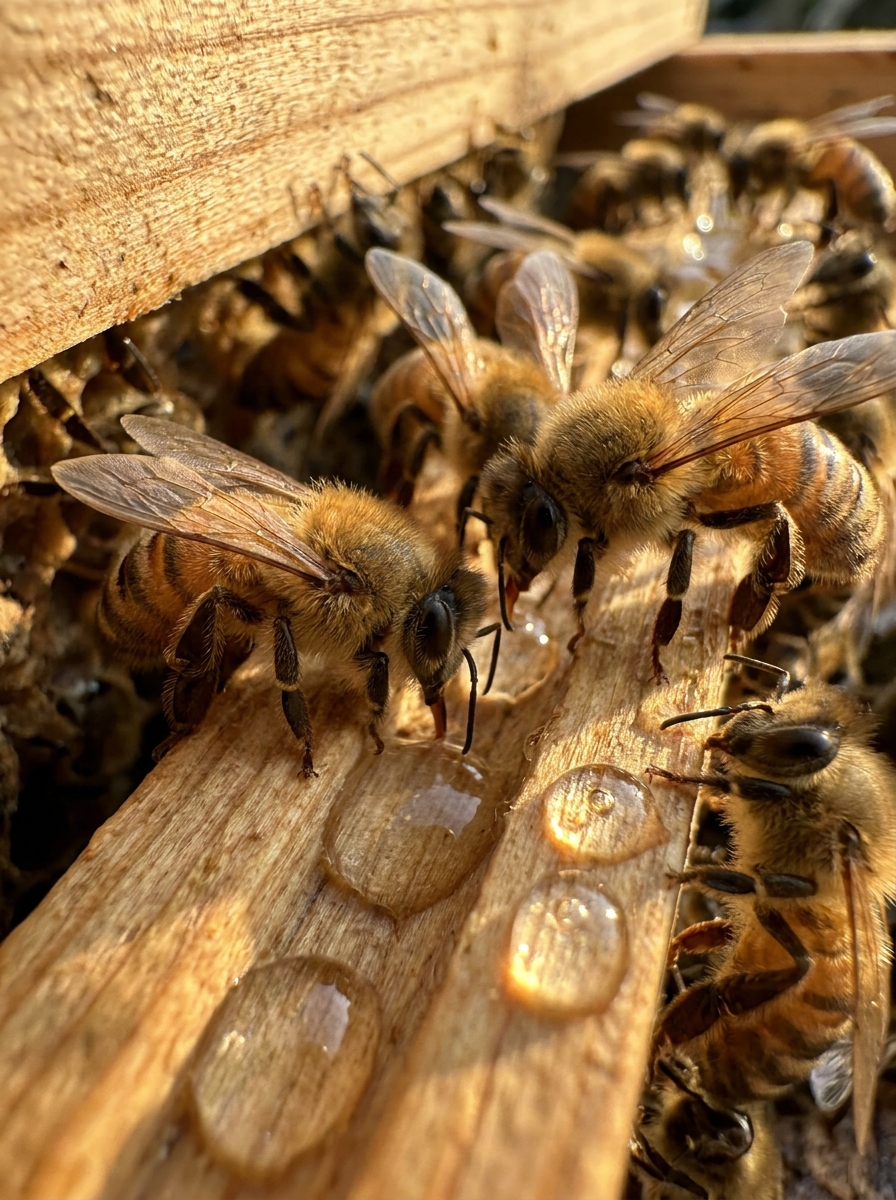
Honeybees require carbohydrates for kinetic energy and colony thermoregulation, alongside clean water for metabolic hydration and larval food preparation.
A one-to-one ratio by weight or volume mirrors the natural sugar concentration of early spring floral nectar, which typically registers between 45 and 55 percent dissolved solids.
When worker bees consume this light syrup, their hypopharyngeal glands activate to produce nutrient-rich royal jelly for developing larvae.
This artificial nectar flow triggers a positive feedback loop within the hive, signaling the queen that resources are abundant.
The queen responds by expanding her daily egg-laying rate from a few hundred eggs to over one thousand five hundred eggs per day.
Wax-producing worker bees also utilize the easily metabolized sucrose to secrete liquid beeswax from eight abdominal sternal glands.
Maintaining proper preparation temperature is vital for protecting honeybee digestive health and colony longevity.
Direct boiling of sugar solutions causes thermal breakdown of sucrose into fructose and glucose, which under prolonged heat generates hydroxymethylfurfural (HMF).
Hydroxymethylfurfural is a toxic compound that damages honeybee midgut epithelial cells and significantly shortens worker lifespan.
By heating the water independently and removing it from the heat source before dissolving the sugar, this recipe guarantees zero HMF formation.
Slight acidification with pure lemon juice lowers the syrup pH from neutral alkaline levels down to roughly 4.5.
This acidic environment closely replicates natural floral nectar and honey, suppressing the proliferation of wild yeasts, mold spores, and bacterial pathogens.
The balanced viscosity allows nurse bees and foragers to ingest the liquid rapidly through their proboscis without expending excessive physical energy.
Rapid ingestion prevents syrup stagnation in the feeder, which dramatically reduces the opportunity for fermentation and hive mold development.
The rapid digestion of pure sucrose generates minimal metabolic ash in the bee digestive tract.
This prevents gut distension and reduces the risk of indoor dysentery during cold spring weather snaps when bees cannot take cleansing flights.
Ingredients and Substitutions
Core Sucrose and Hydration Matrix
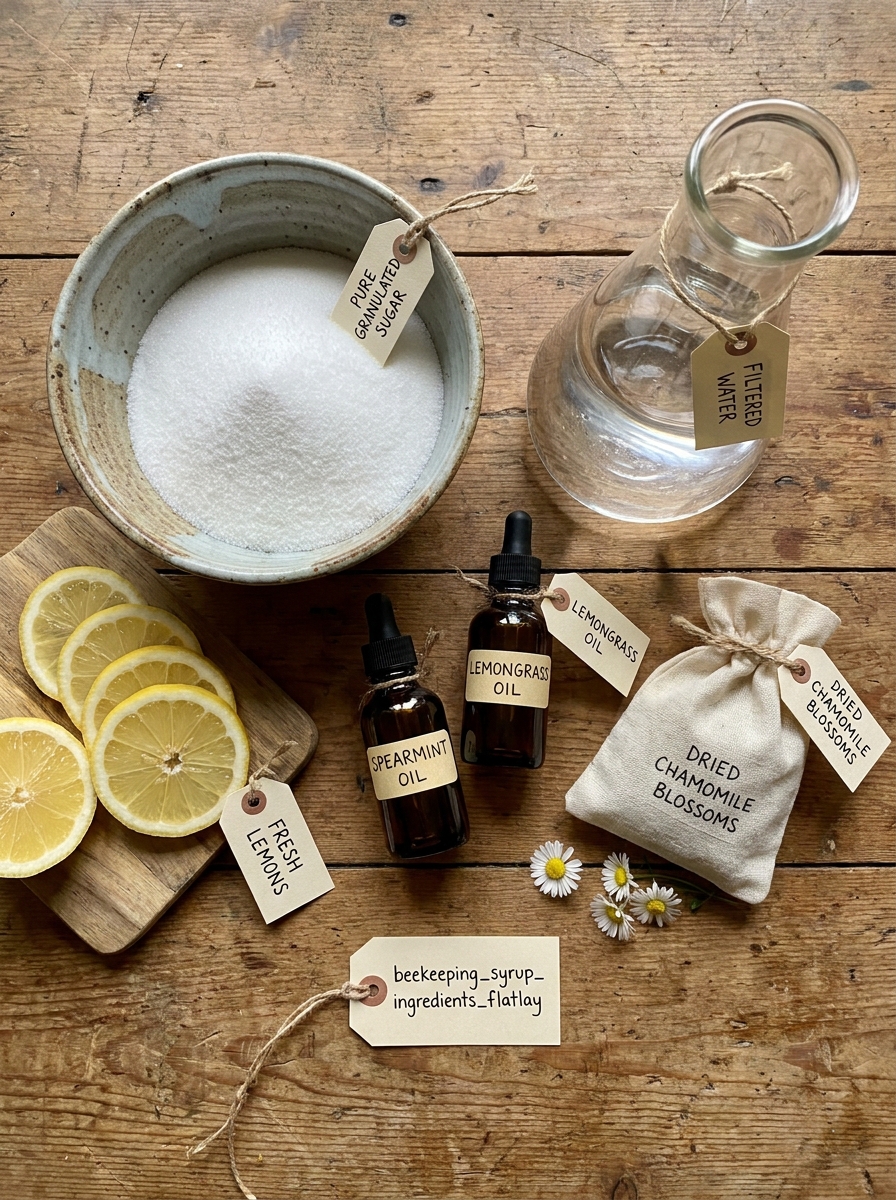
- Clean filtered drinking water: 1000 ml (1000 g) [4.2 cups]
- Pure white granulated cane or beet sugar: 1000 g [4.4 cups]
Natural Preservative and Stimulant Blend
- Freshly squeezed lemon juice: 5 ml [1 tsp]
- Pure spearmint natural essential oil (optional feeding stimulant): 2 drops
- Pure food-grade lemongrass natural essential oil (optional feeding stimulant): 2 drops
- Strong steeped chamomile or thyme tea (optional organic mold inhibitor): 60 ml [1/4 cup] (replaces equal volume of water)
Ingredient Notes
Pure white granulated sucrose is the only safe sugar source for honeybees.
Both cane sugar and beet sugar are 99.9 percent pure sucrose and perform identically when refined to standard white granules.
Never use brown sugar, raw sugar, turbinado, demerara, or molasses for feeding bees.
Unrefined sugars contain high levels of ash, complex minerals, and indigestible caramel compounds that cause fatal honeybee dysentery in enclosed hives.
Never use commercial confectioners or powdered sugar, because manufacturers add cornstarch or calcium phosphate as anti-caking agents.
Honeybees cannot digest raw starch particles, which swell in their digestive tracts and cause severe internal blockages.
Never feed commercial store-bought honey to your bees under any circumstances.
Store-bought honey often harbors microscopic endospores of Paenibacillus larvae, the deadly pathogen responsible for American Foulbrood disease.
Clean filtered or dechlorinated tap water ensures no excessive chlorine, chloramines, or heavy metals enter the colony food supply.
If your household tap water has a strong chemical odor, boil and cool the water first or pass it through an activated carbon filter.
Fresh lemon juice supplies natural citric acid to stabilize the solution and discourage fungal fermentation in warm weather.
Organic apple cider vinegar can be used as an acidifier in equal volume if fresh lemon juice is unavailable.
Essential oils such as food-grade spearmint, thyme, or lemongrass serve as natural aromatic feeding attractants while promoting digestive health.
Always ensure essential oils are 100 percent pure therapeutic grade without synthetic carrier oils or synthetic fragrances.
Thyme extract contains natural thymol, which supports colony cleanliness and prevents mold spores from colonizing the syrup reservoir.
Chamomile tea provides gentle botanical polyphenols that soothe the digestive tracts of stressed spring package bees.
Equipment Needed
A large 4-liter [1-gallon] stainless steel or enamel-coated stockpot provides ample room for rapid stirring without accidental splashing.
A digital kitchen scale with 1-gram precision guarantees an exact one-to-one ratio by weight.
A long-handled stainless steel spoon, silicone spatula, or wire whisk ensures rapid dissolution of all sugar crystals.
A heat-resistant glass candy thermometer or digital probe thermometer allows you to verify that water temperatures remain under 60°C [140°F].
A wide-mouth funnel and clean food-grade plastic jugs or glass jars facilitate mess-free transfer and storage.
Clean internal bee feeding equipment, such as an inverted jar feeder, top hive feeder, rapid feeder, or frame feeder, is required for hive installation.
Avoid using galvanized metal containers or rusted iron pots, as acidic syrup can leach harmful zinc and heavy metals into the feed.
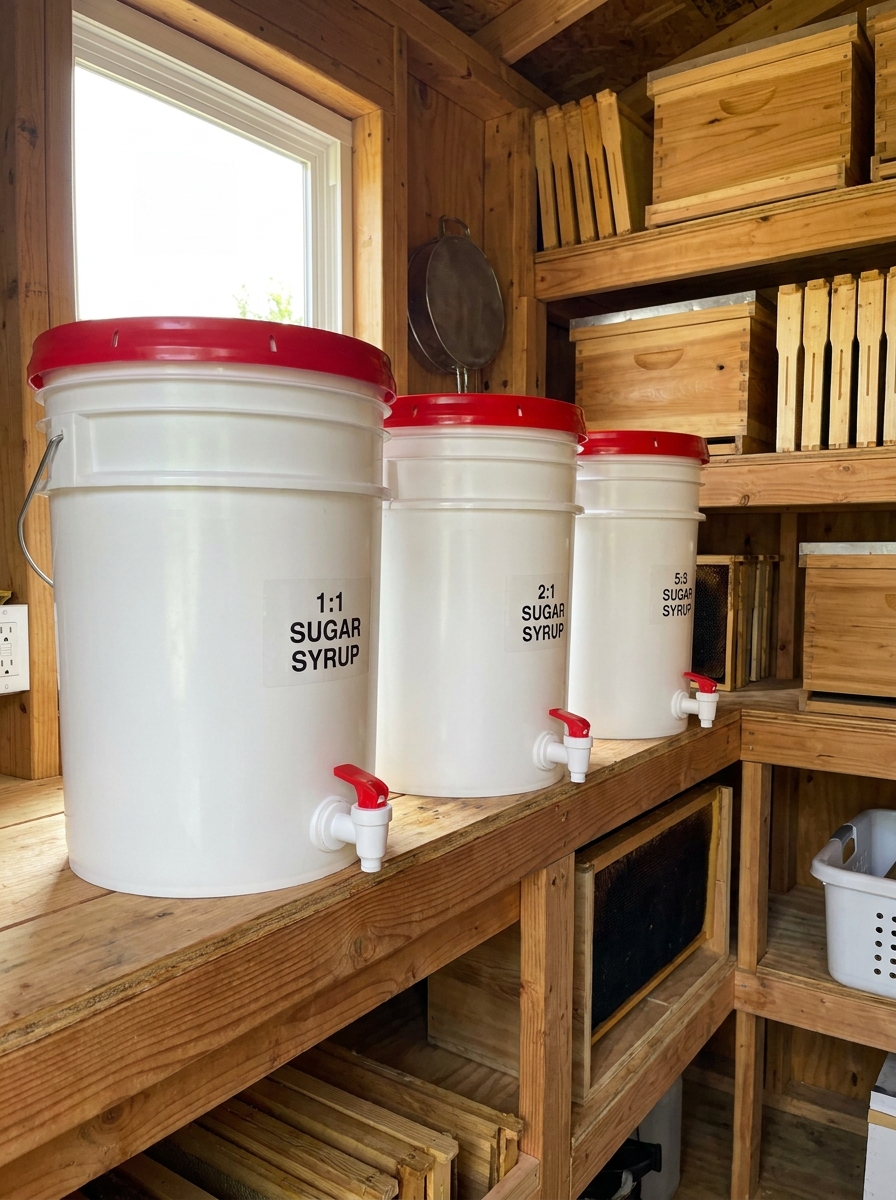
Food-grade plastic buckets equipped with airtight lids and built-in spigots simplify the dispensing process in large apiaries.
Step-by-Step Instructions
- Measure 1000 grams [1000 ml / 4.2 cups] of clean filtered water and pour it into a large stainless steel pot.
- Heat the water on your stove over medium heat until it reaches a warm temperature between 50°C and 60°C [122°F to 140°F], showing light vapor without reaching a simmer.
- Remove the pot completely from the hot stove burner and place it onto a heat-safe trivet or cold counter surface.
- Weigh 1000 grams [4.4 cups] of pure white granulated cane or beet sugar into a dry bowl using a digital scale.
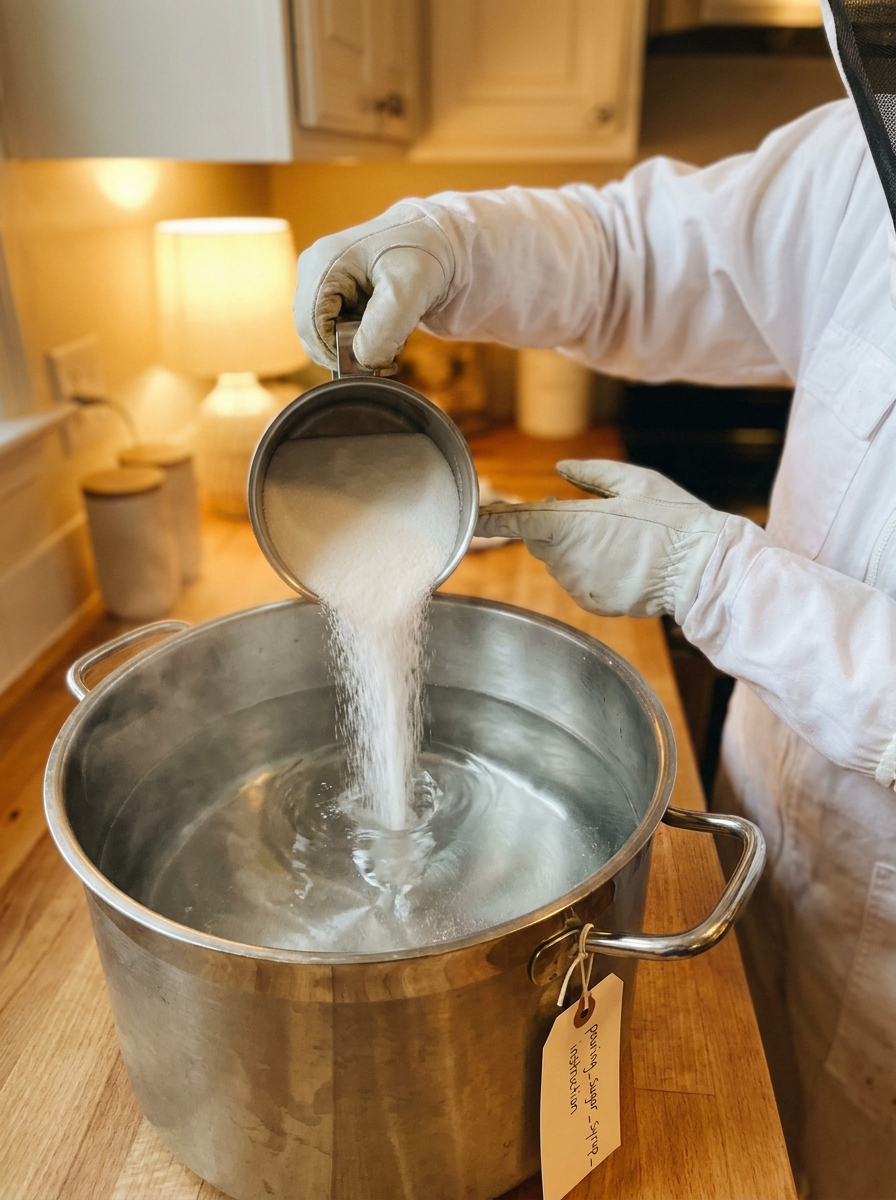
- Pour the white granulated sugar gradually into the warm water while stirring continuously in a circular motion.
- Stir the mixture briskly with a stainless steel spoon or wire whisk for 60 to 90 seconds until all visible sugar crystals vanish completely.
- Observe the liquid clarity; the solution should transform from cloudy white to completely transparent, crystal-clear liquid syrup.
- Add the fresh lemon juice and optional two drops of pure essential oil attractant once the syrup cools slightly below 40°C [104°F].
- Whisk the mixture for an additional 15 to 20 seconds to disperse the essential oils and citric acid uniformly throughout the syrup.
- Cool the finished sugar syrup to ambient hive temperature (20°C to 25°C / 68°F to 77°F) before filling your hive feeders.
Troubleshooting Guide
| Problem | Likely Cause | Solution |
|---|---|---|
| Sugar crystals settle at the bottom of the pot | Water was too cold during mixing or stirring was halted too early | Return the pot to very low heat and stir continuously for 60 seconds without allowing the liquid to boil. |
| Syrup develops black specks or scorched odor | Sugar was added while the pot remained on active high heat | Discard the batch immediately; scorched sugar contains toxic compounds that harm honeybee digestive systems. |
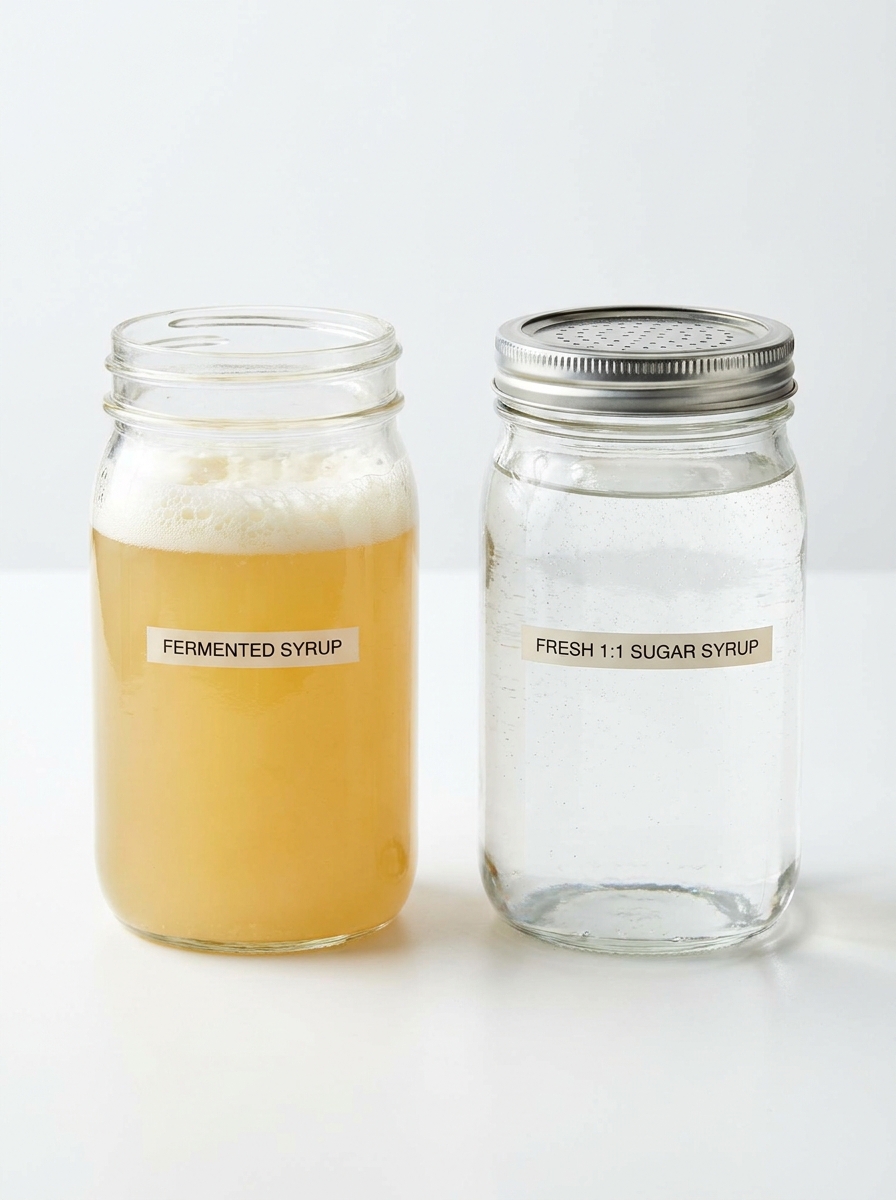
| Syrup turns cloudy or smells like alcohol in the feeder | Wild airborne yeasts entered the feeder and fermented the syrup | Empty and sanitize the feeder with boiling water, then mix a fresh batch with added lemon juice. |
| Bees ignore the syrup inside the feeder | Ambient weather is too cold (below 10°C / 50°F) or feeder is too far from the brood cluster | Move the feeder directly above the brood nest using an inverted jar or top feeder and add 1 drop of lemongrass oil. |
| Drowned bees inside the feeding vessel | Feeder lacks internal traction ladders, floats, or grooved walkways | Add clean wooden floats, clean pebbles, or rough wire mesh inside open feeding reservoirs so bees can climb out safely. |
| Robbing behavior from neighboring hives | Syrup was spilled outside the hive or entrance is too wide during feeding | Reduce the hive entrance with an entrance reducer and always fill feeders late in the evening to prevent frenzy. |
Pro Tips for Best Results
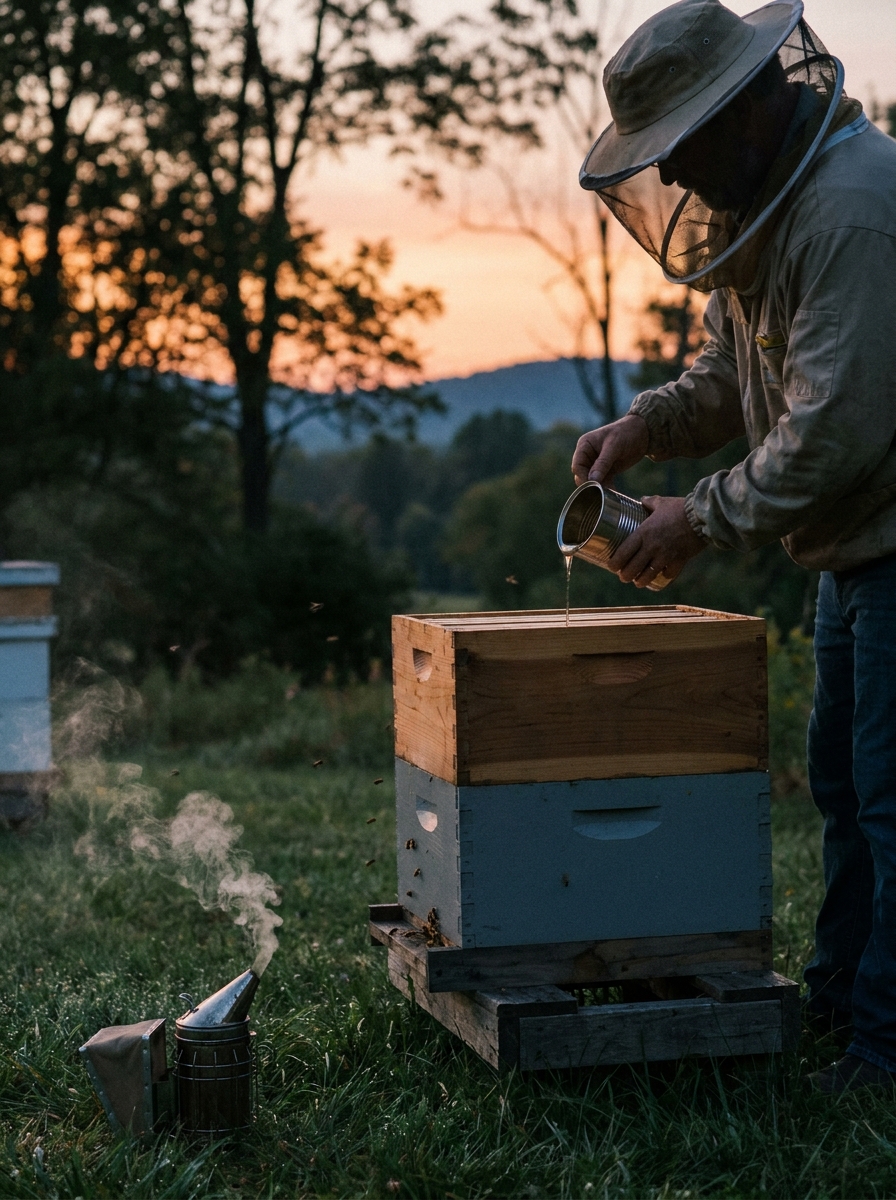
- Always remove from heat before mixing: Never dissolve sugar in boiling water over an open flame to completely eliminate the risk of producing toxic HMF.
- Feed in late afternoon or evening: Distributing syrup during twilight hours prevents robbing frenzies from nearby colonies and yellowjacket wasps.
- Maintain feeder cleanliness: Thoroughly clean and rinse hive feeders between refills to prevent the buildup of black mold and sour fermentation.
- Match seasonal feeding ratios: Use this 1:1 ratio strictly in spring and early summer for brood stimulation, switching to thick 2:1 syrup in autumn for winter food storage.
- Provide internal traction: Always ensure your feeder design includes textured surfaces or floating rafts to prevent valuable foraging bees from drowning.
- Monitor hive consumption rates: Feed only what the colony can consume within 3 to 5 days during warm weather to stop mold growth inside the hive.
Make-Ahead and Storage
Make-Ahead Options
Preparing sugar syrup in large batches saves valuable time during busy spring apiary management.
You can mix multiple gallons ahead of time and store the syrup in sanitized food-grade buckets or jugs.
Because 1:1 syrup contains high water content, batch sizes should match what your apiary will consume within two weeks.
Always label each storage container clearly with the mixing date and syrup ratio to avoid feeding confusion later.
Storage Guidelines
Store fresh sugar syrup in airtight, food-grade plastic jugs or glass carboys in a cool, dark location between 10°C and 15°C [50°F to 59°F].
For extended storage up to 30 days, keep the sealed containers inside a refrigerator at 4°C [39°F] to halt bacterial growth.
Never freeze sugar syrup in rigid glass containers because liquid expansion can cause the glass to crack.
If storing syrup in unheated honey houses or outbuildings, keep containers elevated off cold concrete floors to prevent temperature shocks.
Signs of Spoilage
Inspect stored syrup carefully before pouring it into your colony feeders.
Fresh syrup is completely transparent with a neutral, clean sweet aroma.
If the liquid becomes cloudy, displays floating mold rafts, or smells sour like wine or sourdough starter, discard it immediately.
Never attempt to boil fermented syrup to rescue it, as heating spoiled sugar water concentrates toxic byproducts.
Variations
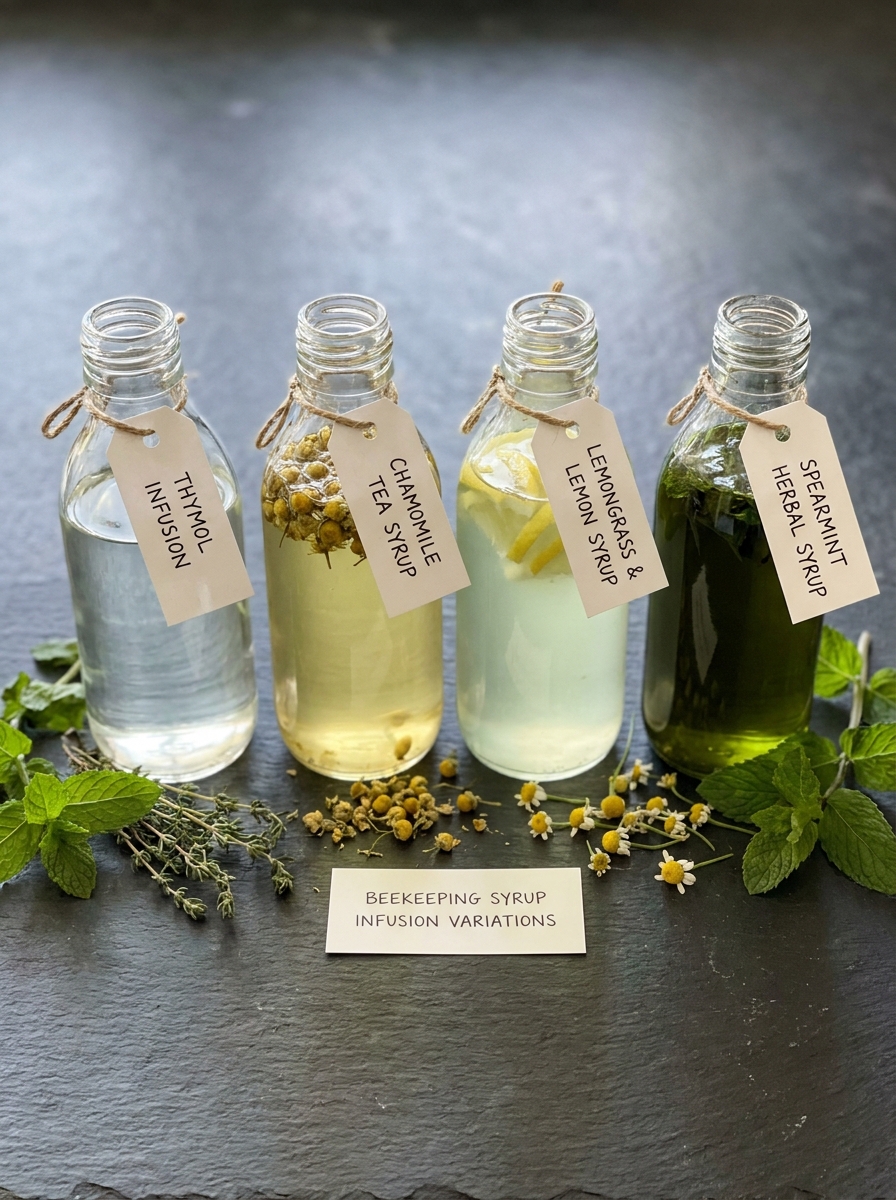
Thymol-Infused Health and Mold-Resistant Syrup
Enhance internal hive hygiene and suppress mold formation in warm humid climates by adding natural thymol.
Dissolve 1 gram of pure food-grade thymol crystals in 10 ml of pure vegetable glycerine, then add 2.5 ml of this solution to 4 liters of 1:1 syrup.
This variation helps maintain a clean digestive tract in honeybees while extending feeder shelf life up to 10 days.
Chamomile and Spearmint Herbal Spring Stimulant
Create an aromatic, soothing herbal syrup that encourages reluctant spring swarms to accept artificial feed quickly.
Brew a strong herbal infusion using 4 organic chamomile tea bags and 2 organic spearmint tea bags in 1000 ml of boiling water for 15 minutes.
Remove the tea bags, verify the water is between 50°C and 60°C [122°F to 140°F], and stir in 1000 g of pure white sugar.
The aromatic botanical vapors stimulate bee foraging receptors and promote calm feeding behavior during package installation.
Lemongrass Swarm Attractant and Comb-Building Syrup
Formulate a specialized comb-building syrup for newly hived package bees and captured spring swarms.
Add 3 drops of pure food-grade lemongrass essential oil and 10 ml of organic lemon juice to a standard 1:1 syrup batch.
Lemongrass essential oil mimics natural honeybee Nasonov pheromones, which reassures the colony and accelerates comb drawing on foundation frames.
New colonies fed with lemongrass syrup establish their brood nest faster and demonstrate enhanced foraging orientation around the hive entrance.
Complete Spring Apiary Booster Syrup
Craft an all-in-one nutritional support syrup by combining essential organic acids and herbal extracts.
Mix 1000 ml of warm water with 1000 g of white cane sugar, 5 ml of apple cider vinegar, 2 drops of spearmint oil, and 2 drops of lemongrass oil.
Whisk thoroughly until emulsified, providing your bees with aromatic stimulation, gut acidification, and immediate spring energy.
This balanced combination reduces honeybee stress during chilly spring temperature fluctuations and strengthens emerging worker cohorts.
Frequently Asked Questions
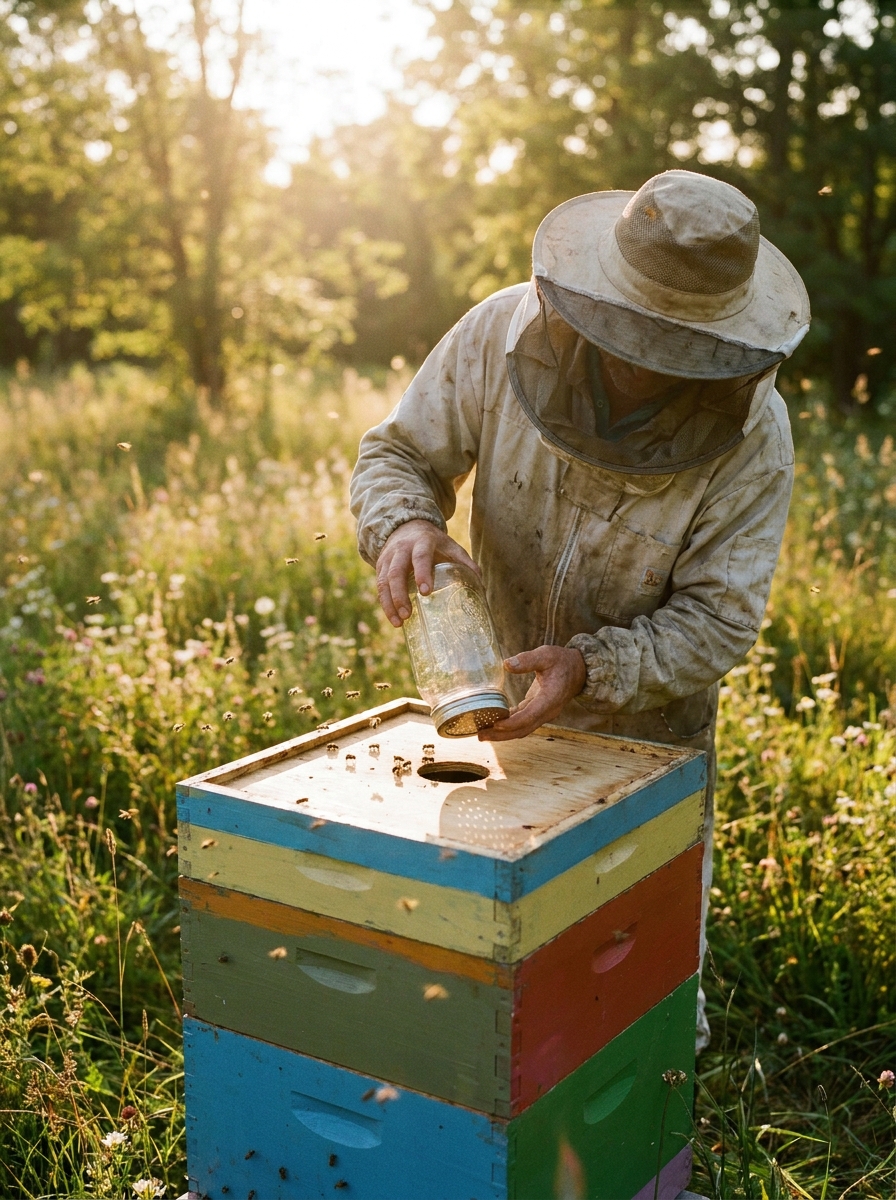
When should I start feeding 1 to 1 sugar syrup to my bees?
Begin feeding 1:1 sugar syrup in early spring when daytime temperatures consistently reach at least 10°C to 12°C [50°F to 54°F].
This ensures the cluster can break formation, access the feeder, and process the water content without chilling the brood nest.
Feeding too early in sub-freezing weather can elevate internal hive humidity and cause condensation to drip on the cluster.
What is the exact difference between 1:1 and 2:1 sugar syrup?
A 1:1 ratio contains equal parts water and sugar, mimicking thin floral nectar to stimulate spring brood rearing and wax production.
A 2:1 ratio contains two parts sugar to one part water, creating a dense syrup that bees can quickly dehydrate and cap for winter honey stores.
Worker bees consume 1:1 syrup immediately for metabolic energy, whereas they store 2:1 syrup inside honeycomb cells for winter survival.
Can I use tap water to make sugar syrup for bees?
Yes, standard municipal tap water is safe as long as it is suitable for human drinking.
If your municipal water contains strong chlorine odors, let the water sit uncovered in a bucket for 24 hours or use a charcoal filter before heating.
Avoid using untreated pond water or stagnant rain barrel runoff, as wild surface water can introduce harmful algal or bacterial contaminants.
Why is boiling sugar water dangerous for honeybees?
Boiling sugar water creates high localized heat that caramelizes sucrose and generates hydroxymethylfurfural (HMF).
HMF is a potent chemical toxin for honeybees that causes acute intestinal toxicity and significantly shortens worker lifespan.
Always heat the water separately, remove it from the heat source, and then stir in the granulated sugar until completely dissolved.
How much 1:1 syrup should I feed a new package of bees?
A new package or swarm should be fed continuously until they have fully drawn out wax comb on all frames in their primary brood box.
Typically, a new colony consumes between 4 and 8 liters [1 to 2 gallons] of syrup during their first two to three weeks.
Once natural nectar flows begin in abundance and all foundation frames are drawn, you can gradually taper off supplemental feeding.
How do I prevent robbing when feeding sugar syrup?
Install entrance reducers on all hives receiving supplemental feed, and never spill sugar syrup on the exterior hive woodenware or ground.
Always fill and replenish feeders during late evening hours when foraging flight activity has ceased for the day.
If robbing behavior begins, place a robbing screen over the hive entrance immediately and remove external Boardman feeders in favor of internal top feeders.
Conclusion
Providing supplemental 1 to 1 bee syrup is one of the most effective management practices for establishing healthy, thriving honeybee colonies in spring.
By providing clean carbohydrates that mimic natural floral nectar, you equip your bees with the energy required to rear healthy brood and draw pristine wax comb.
Remember to always use pure white granulated sugar, dissolve it off the heat to prevent toxic HMF, and maintain clean feeding equipment.
Your honeybees will reward your careful preparation with explosive spring population growth and robust seasonal productivity.
We would love to hear about your beekeeping experiences and spring colony progress.
Please share your thoughts, questions, and favorite feeding setups in the comments below.
1 To 1 Bee Syrup Recipe
Crystal-clear, safe, and stimulating spring sugar syrup formulated for honeybee colony expansion.
- 1000 ml (1000 g) [4.2 cups] clean filtered drinking water
- 1000 g [4.4 cups] pure white granulated cane or beet sugar
- 5 ml [1 tsp] freshly squeezed lemon juice
- 2 drops pure spearmint natural essential oil (optional feeding stimulant)
- 2 drops pure food-grade lemongrass natural essential oil (optional feeding stimulant)
- 60 ml [1/4 cup] strong steeped chamomile or thyme tea (optional organic mold inhibitor)
- Measure 1000 grams [1000 ml / 4.2 cups] of clean filtered water and pour it into a large stainless steel pot.
- Heat the water on your stove over medium heat until it reaches a warm temperature between 50°C and 60°C [122°F to 140°F].
- Remove the pot completely from the heat source and place it onto a heat-safe trivet or counter.
- Weigh 1000 grams [4.4 cups] of pure white granulated cane or beet sugar into a dry container.
- Pour the white sugar gradually into the warm water while stirring continuously in a circular motion.
- Stir briskly with a stainless steel spoon or whisk for 60 to 90 seconds until all visible crystals vanish.
- Observe the clarity of the syrup until it turns completely transparent and crystal-clear.
- Add the fresh lemon juice and optional essential oil drops once the liquid cools below 40°C [104°F].
- Whisk for an additional 15 to 20 seconds to distribute the essential oils and citric acid uniformly.
- Cool the sugar syrup to ambient temperature (20°C to 25°C / 68°F to 77°F) before filling your hive feeders.
* Nutrition is calculated per 200 ml portion for bee carbohydrate energy analysis.
