
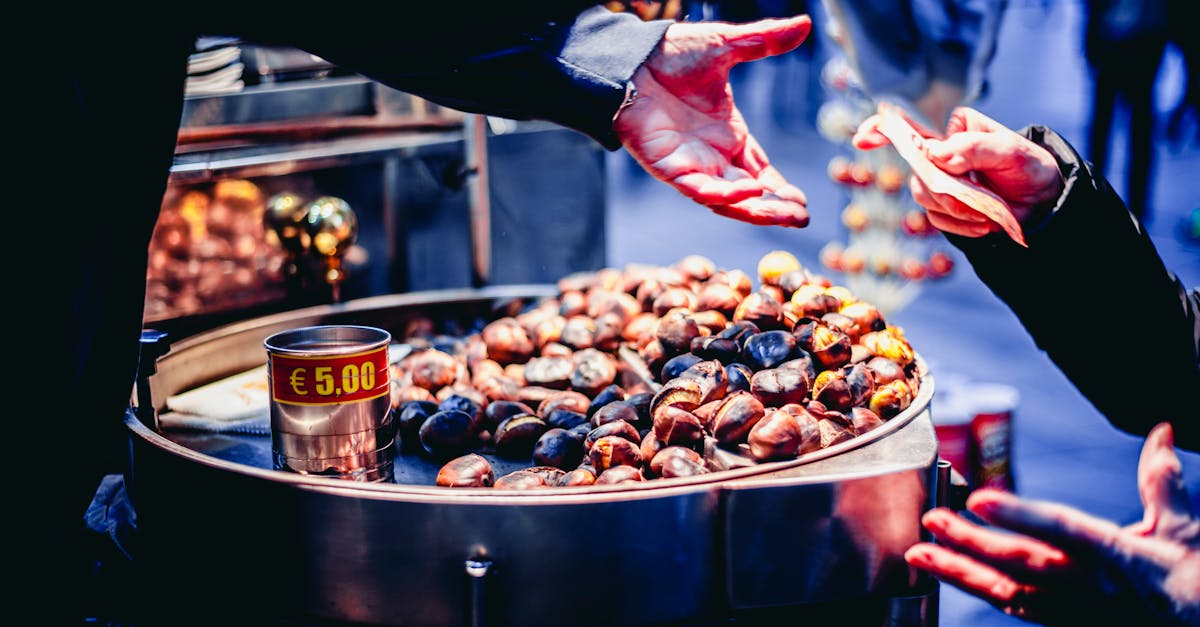
The first time I roasted chestnuts at home, I expected a cozy movie-moment.
I got a loud pop, a scorch mark on a baking sheet, and one chestnut that launched like a tiny meteor. After a few test batches (and a better knife grip), I landed on a method that gives me sweet, tender chestnuts with peels that actually come off, in the oven, on the stove, or in an air fryer.
This is my go-to roasted chestnuts recipe, with clear steps, doneness cues, peeling tricks, and the small safety details that make a big difference.
Key Takeaways
- For the best roasted chestnuts recipe, buy chestnuts that feel heavy, look glossy, and don’t rattle, then store them in the fridge in a breathable bag for up to 2 weeks.
- Always score an X through the shell (and slightly into the nut) before roasting so steam can escape and the chestnuts don’t explode.
- Oven-roast at 425°F for about 20–28 minutes (longer for large nuts) and stop when the X “petals” open and the inside looks matte and tastes sweet and creamy.
- Make any roasted chestnuts recipe easier to peel by covering the hot chestnuts tightly in a bowl with foil for 8–10 minutes to steam-loosen the inner skin.
- Use the air fryer for the fastest roasted chestnuts (380°F for 12–16 minutes, shaking every 4 minutes) and avoid overcrowding so the shells open evenly.
- Keep roasted chestnuts tender by storing peeled nuts airtight for 3–4 days, freezing up to 3 months, and reheating gently with moisture (damp towel or foil) to prevent toughness.
What Makes Chestnuts Different (And How To Buy The Best Ones)
You bite into a roasted chestnut and you taste soft starch, not crunch.
Chestnuts behave more like a potato than a nut, which means they can dry out fast if you roast them too long.
Chestnuts also sit on the lighter end of the calorie scale for “nuts.” A 1-ounce (28 g) serving of roasted chestnuts has about 70 calories and about 15 g carbs, according to the USDA FoodData Central, which means they work well as a warm snack that does not feel heavy.
How To Pick Fresh Chestnuts
Fresh chestnuts feel alive in your hand.
Use this quick buying checklist:
- Choose heavy nuts for their size, which means more moisture and a softer center after roasting.
- Look for glossy, unshrivelled shells, which means less dehydration and fewer “chalky” results.
- Skip any with pinholes, which means you avoid possible insect damage.
- Avoid rattlers (shake a few), which means you skip nuts that have dried away from the shell.
I usually buy chestnuts from a busy produce section in late fall.
High turnover matters, which means you get chestnuts that have not sat warm for weeks.
How Many To Buy And How To Store Them
Chestnuts disappear quickly once you start peeling.
For snacking, I plan 6 to 8 chestnuts per person (about 3 to 4 ounces), which means everyone gets a real portion without fighting over the last few.
For cooking, I plan 1 pound in-shell to yield about 1 to 1¼ cups peeled chestnuts, which means you can fill a stuffing or a soup without coming up short.
Storage rules I use at home:
| Goal | Where I keep them | Time | Why it works (which means…) |
|---|---|---|---|
| Keep them fresh before roasting | Fridge, in a breathable bag | Up to 2 weeks | Cold slows drying, which means better texture later. |
| Hold roasted, peeled chestnuts | Fridge, airtight container | 3–4 days | Airtight limits moisture loss, which means less toughness. |
| Long storage | Freezer, well sealed | Up to 3 months | Freezing pauses staling, which means ready-to-use chestnuts for recipes. |
I do not store raw chestnuts on the counter.
Room temperature speeds mold and drying, which means more waste and more bitter surprises.
How To Prepare Chestnuts For Roasting
The transformation starts with one small cut.
A scored chestnut opens like a little mouth in the heat, which means steam can escape and the nut cooks instead of exploding.
Before I do anything else, I rinse the chestnuts and dry them well.
Dry shells give me more control, which means fewer slips when I score them.
How To Score Chestnuts Safely (And Why It Matters)
Scoring is not optional.
Trapped steam can crack the shell violently, which means you risk a mess and a burn.
My safe scoring setup:
- I set a damp towel under my cutting board, which means the board stays put.
- I use a small sharp paring knife, which means I need less force.
- I hold one chestnut flat-side down, which means it will not roll.
How I score (step-by-step):
- I cut an X on the rounded side, about 1 inch wide, which means the shell can peel back.
- I cut through the shell and just into the nut, which means I loosen the inner skin without slicing the whole chestnut.
- I repeat for the full batch, which means they roast evenly.
If you want extra grip, you can use a chestnut cutter.
That tool stabilizes the nut, which means your hands stay farther from the blade.
Should You Soak Chestnuts Before Roasting?
Soaking changes the peel more than the flavor.
When I soak scored chestnuts in warm water for 15–30 minutes, the steam inside the shell increases, which means the chestnuts peel with less tearing.
I do not soak if I want maximum browning.
Extra surface moisture slows browning, which means the shells stay paler and the nut tastes a bit less toasty.
My rule:
- I soak if I plan to serve them plain and peeled, which means I prioritize easy peeling.
- I skip soaking if I plan a strong savory finish (garlic butter, rosemary), which means I prioritize roast flavor.
Oven-Roasted Chestnuts (Classic Method)
You open the oven and you smell sweet steam and warm wood.
This method gives me the most even results, which means it works best for big batches.
Oven-roasted chestnuts recipe (my standard batch):
- 1 pound (about 450 g) fresh chestnuts, rinsed and dried
- 1–2 teaspoons neutral oil (optional)
- ½ teaspoon kosher salt (optional)
- 1–2 tablespoons water for the pan (optional but helpful)
Steps:
- I heat the oven to 425°F.
- I score each chestnut with an X.
- I toss chestnuts with a little oil and salt (optional), which means I get a slightly crisper shell.
- I spread them cut-side up on a rimmed sheet pan.
- I add 1–2 tablespoons water to the pan corners, which means I create a bit of steam and reduce drying.
- I roast for 20–28 minutes, until the X opens wide.
Temperature, Timing, And Doneness Cues
Chestnuts do not give you a perfect “golden” signal.
They give you small physical cues, which means you need to watch the shell behavior.
My doneness checklist:
- The scored X peels back like petals, which means the shell released.
- The nut inside looks matte and set, not glassy, which means the starch cooked.
- A test chestnut tastes sweet and creamy, not raw or chalky, which means you can stop the roast.
For medium chestnuts, 25 minutes at 425°F lands right for me.
For very large chestnuts, I often need 28–32 minutes, which means I avoid a raw center.
How To Steam For Easier Peeling
Here is the trick that saved my patience.
I steam roasted chestnuts for a short burst, which means the inner skin loosens instead of welding itself to the nut.
My steam method:
- I pull the hot chestnuts from the oven.
- I dump them into a metal bowl.
- I cover the bowl tightly with foil for 8–10 minutes.
That trapped heat softens the inner skin, which means I peel faster and lose less nut.
If I want an even stronger steam effect, I add 1 teaspoon water to the bowl before covering.
That extra moisture turns into steam quickly, which means the peel slips off in larger pieces.
Stovetop Roasted Chestnuts (Skillet Or Chestnut Pan)
This method sounds like winter street carts.
You hear the shells tick against the pan, which means you can judge progress by sound as much as sight.
Stovetop roasting runs hotter and faster.
That speed gives you bold aroma, which means you need active attention to avoid scorched shells.
Stovetop method (1 pound batch):
- I score the chestnuts.
- I heat a heavy skillet over medium heat for 3 minutes.
- I add chestnuts in a single layer, cut-side up.
- I cover with a lid.
- I cook 15–20 minutes, shaking the pan every 2–3 minutes.
Best Pan Choices And Heat Control
Pan choice controls hot spots.
A cast-iron skillet holds heat steadily, which means you get fewer burned patches.
A chestnut pan (with holes) lets flames kiss the shell.
That direct heat adds smoky notes, which means you get a more “street-style” roast.
I stay around medium to medium-low once the pan warms.
Lower heat extends cook time, which means the center cooks before the shell turns bitter.
How To Avoid Burning The Shells
Burnt shells taste sharp.
They also dry the nut, which means the inside turns crumbly.
What I do:
- I keep the lid on most of the time, which means steam stays near the nut.
- I shake the pan on a schedule (every 2–3 minutes), which means I prevent one side from charring.
- I remove a few early “fast finishers,” which means small chestnuts do not overcook while big ones catch up.
If I smell sharp smoke, I drop the heat immediately.
That quick change prevents bitterness, which means the batch stays sweet.
Air Fryer Roasted Chestnuts (Fastest Method)
The air fryer makes chestnuts feel almost too easy.
In under half an hour, I get a bowl of warm, sweet nuts, which means this is my weeknight method.
Air fryer roasted chestnuts recipe:
- 1 pound chestnuts, scored
- Optional: 1 teaspoon oil and ½ teaspoon salt
Steps:
- I preheat the air fryer to 380°F for 3 minutes (if my model supports it).
- I place chestnuts in the basket in a single layer.
- I air fry for 12–16 minutes.
- I shake the basket every 4 minutes.
- I rest them covered for 8 minutes before peeling.
Batch Size, Settings, And Shaking Schedule
Air fryers like airflow.
If I overcrowd the basket, hot air cannot circulate, which means I get uneven doneness and stubborn peels.
My batch rule: I keep it to 1 pound or less in a standard 5–6 quart air fryer.
That spacing keeps heat moving, which means more chestnuts open at the same time.
Shaking schedule: every 4 minutes.
That movement rotates hot spots, which means fewer scorched shells along the basket edges.
How To Adjust For Large Vs. Small Chestnuts
Size controls time.
Small chestnuts finish fast, which means they can dry out if you run a long timer.
Here is the adjustment chart I use:
| Chestnut size | Air fryer temp | Time | What to watch (which means…) |
|---|---|---|---|
| Small | 380°F | 10–12 min | X opens early, which means you should test sooner. |
| Medium | 380°F | 12–16 min | Even “petal” opening, which means good peel. |
| Large | 380°F | 16–20 min | Shell opens but nut feels firm, which means add 2–3 minutes and recheck. |
I test one chestnut at the minimum time.
That early test prevents dry batches, which means I keep the texture creamy.
How To Peel Roasted Chestnuts (While They’re Still Warm)
Peeling chestnuts feels like a race.
Warm chestnuts peel cleanly, which means timing matters more than fancy tools.
I peel in small waves.
I keep the rest covered, which means they stay steamy and cooperative.
Shell Vs. Inner Skin: What To Remove
You remove two layers.
You remove the hard shell first, which means you can reach the papery inner skin.
You then remove the inner skin (pellicle), which means you avoid that fuzzy, bitter mouthfeel.
My peeling flow:
- I crack the shell at the X and pull it back.
- I pinch the inner skin and pull it away.
- I place peeled chestnuts in a covered bowl.
Covering peeled chestnuts traps warmth, which means they stay tender while I finish the batch.
What To Do If They Won’t Peel Cleanly
Some chestnuts fight back.
That usually means they cooled or they undercooked, which means the inner skin still grips the nut.
Fixes I use:
- I re-steam them for 5 minutes under foil, which means the skin loosens.
- I return stubborn ones to the oven for 3–5 minutes, which means the center finishes cooking.
- I scrape the skin with the back of my knife for small fragments, which means I save the nut instead of wasting it.
If you plan to chop chestnuts for a recipe, imperfect peels still work.
A few brown flecks do not ruin a stuffing, which means you can stop chasing perfection.
Flavor Variations And Serving Ideas
A plain chestnut tastes like sweet bread.
One spoon of flavored butter turns it into a real snack, which means you can match it to dessert or dinner.
I flavor chestnuts while they are warm.
Warm surfaces absorb fats and sugars faster, which means the flavor sticks.
Sweet Options: Cinnamon Sugar, Honey Butter, Vanilla
Sweet toppings love chestnuts.
Chestnut starch carries sugar like toast carries jam, which means a small amount tastes big.
1) Cinnamon sugar chestnuts
- 2 tablespoons melted butter
- 1 tablespoon sugar
- ¼ teaspoon cinnamon
- Pinch of salt
I toss 2 cups warm peeled chestnuts with the mix.
The butter coats the surface, which means the cinnamon smells stronger with each bite.
2) Honey butter chestnuts
- 2 tablespoons butter
- 1 tablespoon honey
- Pinch of salt
I melt and toss.
Honey binds to the butter, which means it clings instead of pooling.
3) Vanilla finish
I add ¼ teaspoon vanilla extract to honey butter.
Vanilla boosts aroma, which means chestnuts taste more “dessert” with no extra sugar.
If you want a whipped topping for sweet chestnut bowls, I often pair them with Baileys Irish cream whipped cream, which means I can serve a fast holiday dessert with zero baking.
Savory Options: Rosemary Salt, Garlic Butter, Chili Lime
Savory chestnuts feel like a side dish.
They also pair well with roasted meats, which means they fit on a holiday plate without trying too hard.
1) Rosemary salt
- 1 teaspoon chopped fresh rosemary
- ½ teaspoon flaky salt
- 1 tablespoon olive oil
I toss warm peeled chestnuts.
Rosemary oils hit hot starch, which means the aroma blooms immediately.
2) Garlic butter
- 2 tablespoons butter
- 1 small garlic clove, grated
- Pinch of salt
I warm butter just until melted.
Gentle heat keeps garlic sweet, which means it does not turn harsh.
If you like garlic-forward sauces, you may also like this blue jam garlic aioli, which means you can dip chestnuts like fries (yes, it works).
3) Chili lime
- 1 tablespoon butter or oil
- ½ teaspoon chili powder
- Zest of ½ lime
- Pinch of salt
I toss and serve.
Lime zest cuts the starch, which means each bite feels brighter.
Using Roasted Chestnuts In Recipes
Chestnuts shine when you chop them.
Chopped chestnuts add texture without crunch, which means they mix well into soft dishes.
Ways I use them (with numbers):
- I fold ½ cup chopped chestnuts into stuffing, which means the bite feels richer.
- I add ¾ cup chestnuts to a creamy soup and blend half, which means I get thick body without flour.
- I scatter ⅓ cup chopped chestnuts on a fall salad, which means I add warmth and sweetness.
For a fresh salad pairing, I like ideas similar to this CASA salad recipe, which means I can build a full lunch around roasted chestnuts and crisp greens.
For dessert, I chop chestnuts and fold them into frosting or sandwich cookies.
If you want a simple sweet base, this C&H powdered sugar frosting recipe works well, which means you can turn chestnuts into a fast cake topping.
Troubleshooting, Food Safety, And Make-Ahead Tips
One bad batch teaches you fast.
Chestnuts can turn dry, moldy, or oddly bitter, which means you need a few guardrails.
Food safety matters most before roasting.
A moldy chestnut can look fine outside, which means you should trust smell and texture.
I follow guidance that matches general food safety advice from the USDA on safe handling and storage, which means I keep perishable foods cold and I reheat leftovers fully.
Why Chestnuts Dry Out (And How To Keep Them Tender)
Dry chestnuts taste like sawdust.
That dryness usually comes from time and heat, which means you can fix it with shorter roasting and more steam.
Common causes and fixes:
| Problem | What causes it | Fix I use | Benefit (which means…) |
|---|---|---|---|
| Dry, crumbly centers | Over-roasting by 5–10 min | Pull earlier and rest covered | Resting holds moisture, which means softer texture. |
| Tough inner skin | Chestnuts cooled fast | Cover with foil 8–10 min | Steam loosens skin, which means faster peeling. |
| Bitter taste | Shells charred | Lower heat and shake/turn more | Less scorching, which means sweeter flavor. |
I also add a spoon of water to the pan or bowl.
That water makes steam, which means the nut stays creamy instead of drying at the edges.
Storage, Freezing, And Reheating Without Toughening
Chestnuts stale quickly after peeling.
Starch firms as it cools, which means texture changes faster than with most nuts.
My make-ahead plan:
- I roast and peel.
- I cool for 15 minutes.
- I pack in an airtight container.
Airtight storage reduces moisture loss, which means chestnuts stay tender for the next day.
Freezing (best for cooking):
- I spread peeled chestnuts on a tray and freeze for 1 hour.
- I transfer to a freezer bag and press out air.
Pre-freezing prevents clumps, which means I can grab ¼ cup at a time.
Reheating (gentle):
- Microwave: I cover with a damp paper towel and heat 20–40 seconds.
- Oven: I wrap in foil and warm at 300°F for 10 minutes.
Moist heat prevents hardening, which means the chestnuts taste freshly roasted instead of chewy.
Honest warning: chestnuts that sit uncovered will toughen.
Air dries the surface fast, which means even perfect roasting cannot save them later.
Conclusion
Roasted chestnuts reward small care.
You score the shell, you manage steam, and you peel while warm, which means you get sweet, tender chestnuts instead of dry crumbs.
When I want the most even batch, I use the oven.
When I want fast results, I use the air fryer, which means I can make chestnuts on a random Tuesday and still feel that winter comfort.
If you try one change this time, cover the chestnuts for 8–10 minutes right after roasting.
That simple rest traps steam, which means peeling turns from a struggle into something almost relaxing.
Frequently Asked Questions About a Roasted Chestnuts Recipe
What is the best roasted chestnuts recipe for the oven?
For a classic roasted chestnuts recipe, score an X on 1 lb chestnuts, place cut-side up on a rimmed sheet, and roast at 425°F for 20–28 minutes. Add 1–2 tablespoons water to the pan for steam. They’re done when the X opens wide and the nut looks matte.
How do you score chestnuts so they don’t explode while roasting?
Scoring is essential because it lets steam escape. Set a damp towel under your cutting board, use a sharp paring knife, and hold the chestnut flat-side down. Cut a 1-inch X on the rounded side, slicing through the shell and just into the nut to prevent popping.
Should I soak chestnuts before making a roasted chestnuts recipe?
Soaking isn’t required, but it can improve peeling. Soak scored chestnuts in warm water for 15–30 minutes to create more steam inside the shell, which loosens the inner skin. Skip soaking if you want deeper browning, since extra moisture can reduce that toasty roast flavor.
How do you peel roasted chestnuts easily without losing half the nut?
Peel chestnuts while they’re still warm, removing both the hard shell and the papery inner skin. Right after roasting, trap steam by covering them in a bowl with foil for 8–10 minutes. If they resist, re-steam 5 minutes or roast 3–5 minutes longer, then try again.
What’s the best way to make roasted chestnuts in an air fryer?
For an air fryer roasted chestnuts recipe, score 1 lb chestnuts and air fry at 380°F for 12–16 minutes, shaking every 4 minutes for even cooking. Don’t overcrowd the basket. Rest them covered for about 8 minutes before peeling so steam loosens the inner skin.
How long do roasted chestnuts last, and what’s the best way to reheat them?
Peeled roasted chestnuts keep 3–4 days in the fridge in an airtight container, or up to 3 months frozen (well sealed). Reheat gently to avoid toughness: microwave covered with a damp paper towel for 20–40 seconds, or warm wrapped in foil at 300°F for about 10 minutes.
