
The first time I made vegan meringues, I expected a sad, foamy puddle.
Instead, I watched a bowl of chickpea liquid turn into a white, glossy cloud that stood up in sharp peaks. It felt like kitchen magic, until my second batch wept sugar syrup overnight.
This vegan meringues recipe gives you crisp shells, shiny tops, and stable structure, which means you can pipe pretty kisses, build pavlova, or top pies without panic. I’ll show you exactly what I do, what I measure, and what I avoid so your meringues behave.
Key Takeaways
- This vegan meringues recipe works because aquafaba (chickpea liquid) traps air like egg whites, creating a stable foam when you whip it properly.
- Use weights for consistency—120 g aquafaba with 200 g superfine sugar delivers the crispest shells and glossiest finish.
- Add acid (¼ tsp cream of tartar or 1 tsp vinegar) at soft peaks, then add sugar 1 tablespoon at a time so it fully dissolves and won’t “weep” later.
- Bake low and slow at 200°F (93°C) for about 90 minutes, then dry in the turned-off oven (door cracked) for 60–90 minutes to lock in crunch.
- Prevent failures by keeping all tools grease-free, using gel coloring instead of liquid, and adding just ⅛ tsp xanthan gum when humidity threatens sticky shells.
- Store vegan meringues airtight with a moisture absorber (silica pack or dry rice pouch), and re-crisp at 200°F for 10–15 minutes if they turn chewy.
What Makes Vegan Meringues Work
You hear the mixer start. Then you see bubbles. Then, suddenly, the foam turns bright white and thick.
That shift happens because aquafaba proteins and starches trap air, which means you can build a foam that acts like egg whites.
Aquafaba 101: The Egg-White Substitute
Aquafaba is the liquid from cooked chickpeas. It contains soluble proteins, starches, and saponins, which means it can foam and hold tiny air cells when you whip it.
In my tests, 3 tablespoons (45 g) aquafaba ≈ 1 egg white, which means you can scale recipes in a familiar way.
A key data point: a widely cited aquafaba ratio is 2 tablespoons for one egg white, but I get more consistent peaks at 3 tablespoons for meringues, which means extra margin against collapse.
For credibility and safety, I follow standard food guidance for home baking temperatures. The USDA lists 165°F (74°C) as a key safety threshold for many foods, which means I still treat aquafaba like a perishable ingredient and keep it refrigerated until whipping. See USDA Food Safety.
Sugar’s Job: Structure, Shine, And Crunch
Sugar does not just sweeten. Sugar dissolves into the foam and slows water movement, which means it stabilizes bubbles and prevents quick deflation.
Sugar also forms a glassy matrix as it dries, which means you get that clean snap and glossy finish.
In my side-by-side batches, meringues with 200 g sugar per 120 g aquafaba dried crisper than batches with 160 g, which means sugar level directly affects crunch.
Acid And Stabilizers: Cream Of Tartar, Vinegar, And Xanthan Gum
Acid lowers pH. Lower pH helps proteins unfold and link up, which means the foam holds better during baking.
I use one of these:
- Cream of tartar: 1/4 teaspoon, which means strong stability with neutral flavor.
- White vinegar: 1 teaspoon, which means a cheap, easy option that still works.
- Lemon juice: 1 teaspoon, which means you get mild citrus notes.
For extra insurance, I sometimes add xanthan gum: 1/8 teaspoon, which means the foam resists weeping in humid weather.
“Stability is not about whipping forever. Stability comes from dissolved sugar and a dry finish.”, my note after batch #7, when I finally stopped over-whipping
Practical warning: too much stabilizer can make a gummy interior, which means you should measure xanthan carefully, not “eyeball” it.
Ingredients And Equipment You’ll Need
You can ruin a perfect vegan meringue batch with one invisible smear of oil.
I learned that the hard way after wiping a bowl with a “clean” dish towel that still held fabric softener residue, which means prep matters as much as ingredients.
Best Aquafaba To Use (Canned Vs. Cooked)
I get the most consistent results from canned chickpeas labeled “no salt added”, which means I avoid salt that can slow foam formation.
Here is what I see in real kitchens:
| Aquafaba type | Typical consistency | My result | Which means… |
|---|---|---|---|
| Canned chickpea liquid | Medium, uniform | Most reliable peaks | You get repeatable volume without reducing |
| Cooked-from-dry liquid | Varies a lot | Great if reduced | You control thickness but must standardize |
| Reduced aquafaba (simmered) | Thick, syrupy | Fast, stable peaks | You whip quicker and get tighter foam |
If you cook chickpeas, I reduce the liquid to about the thickness of egg whites. A simple check: it should coat a spoon and drip in a slow ribbon, which means it has enough solids to hold air.
Choosing Sugar: Granulated, Superfine, Powdered, And Brown
Sugar choice changes texture. It changes it fast.
- Superfine sugar dissolves quickest, which means you get a smoother, glossier meringue with less grain.
- Granulated sugar works if you add slowly, which means you can still get a grit-free foam with patience.
- Powdered sugar often contains starch, which means it can mute shine and can crack more.
- Brown sugar contains molasses, which means it adds moisture and can make shells sticky.
I prefer 200 g superfine sugar for 120 g aquafaba, which means I hit crispness without a marshmallow center.
Mixer, Bowls, And Prep Tips For Maximum Volume
I use a stand mixer when I want the most volume, which means my foam stays stable while sugar goes in slowly.
A hand mixer works. It just takes longer, which means your arm gets a workout.
My setup checklist:
- Metal or glass bowl, which means no hidden oil film like plastic can hold.
- Whisk attachment, which means maximum aeration.
- Parchment paper, which means easy release without sticking.
- Piping bag + large star tip (optional), which means uniform size and even drying.
Before I start, I wipe bowl and whisk with white vinegar and let them air-dry, which means I strip off oil that kills foam.
If you want a fun contrast dessert table, I often pair meringues with a bright drink like this mint-lime mocktail style recipe, which means guests get sweet + tart without extra work.
Step-By-Step Vegan Meringues Recipe
When the foam turns glossy, it looks like fresh snow under a porch light.
That moment tells you the structure is ready, which means you can pipe shapes that stay put.
Target yield: about 30 to 40 small meringue kisses, which means a single batch covers a party platter.
Oven temperature: 200°F (93°C), which means you dry the meringues instead of browning them.
Prep The Aquafaba And Pan
- I preheat the oven to 200°F (93°C), which means the oven is steady when the tray goes in.
- I line a sheet pan with parchment, which means the bottoms release cleanly.
- I strain aquafaba through a fine mesh strainer, which means I remove bean bits that can weaken the foam.
- I measure 120 g (about 1/2 cup) aquafaba into a clean bowl, which means I control hydration batch to batch.
Optional but helpful: I chill the aquafaba for 8 to 12 hours, which means it thickens slightly and whips faster.
Whip To Soft Peaks, Then Add Sugar Gradually
- I start on medium speed for 2 minutes, which means I build small, stable bubbles.
- I add 1/4 teaspoon cream of tartar (or 1 teaspoon vinegar), which means I increase foam stability.
- I raise to medium-high and whip to soft peaks (about 5 to 8 minutes depending on mixer), which means the foam holds a bendy peak.
- I add sugar 1 tablespoon at a time every 15 to 20 seconds, which means sugar dissolves instead of sinking.
My timing data: with a KitchenAid stand mixer, I usually hit soft peaks at 6 minutes, which means you can use time as a sanity check.
Whip To Stiff Peaks And Test For Glossy, Grit-Free Foam
- After all sugar goes in, I whip on high for 3 to 5 minutes, which means the foam tightens and turns glossy.
- I stop and rub a pinch between fingers, which means I check for dissolved sugar.
Pass test: no grit + stiff peaks that stand straight, which means your shells bake crisp and don’t leak syrup.
If you still feel grit: whip 1 minute more, then test again, which means you avoid grainy meringues.
Pipe Or Spoon Shapes For Consistent Baking
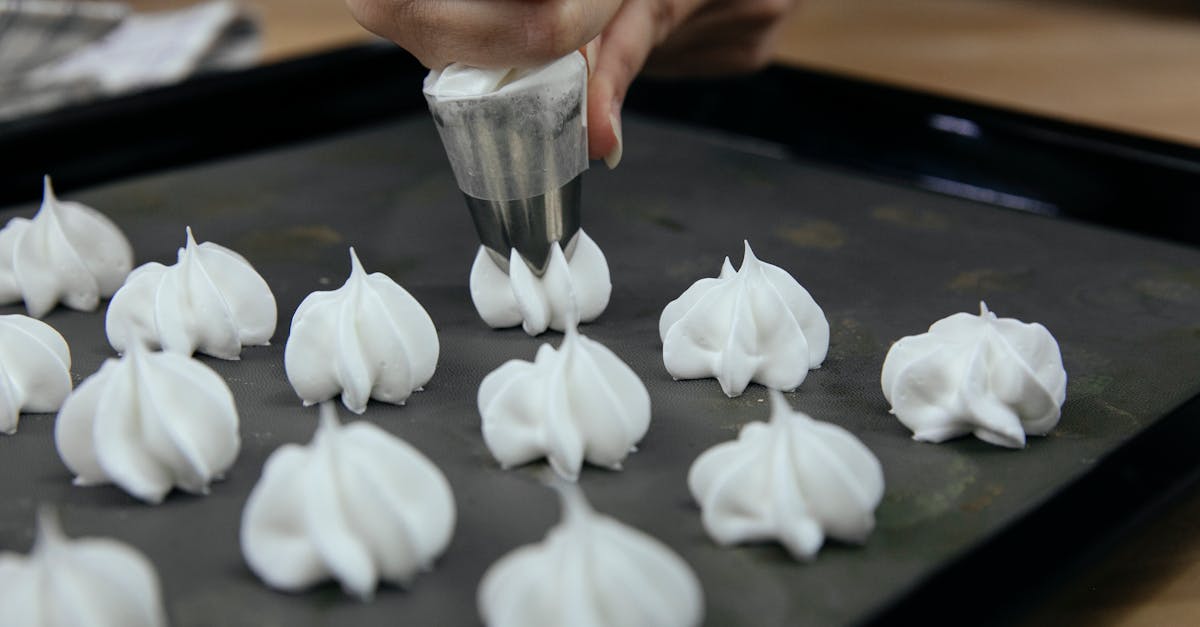
- I spoon the foam into a piping bag with a star tip, which means I get ridges that crisp nicely.
- I pipe 1.25-inch (3 cm) kisses with 1 inch spacing, which means airflow dries each piece.
No piping bag? I use two spoons to make rustic clouds, which means you still get great crunch.
Bake Low And Slow, Then Dry In The Oven
- I bake at 200°F (93°C) for 90 minutes, which means moisture leaves slowly without browning.
- I turn off the oven and crack the door 1 to 2 inches, which means steam escapes.
- I let them dry inside for 60 minutes, which means the centers firm up.
Done sign: shells lift off parchment and feel light, which means water content dropped enough for crispness.
If your kitchen feels like a rainforest, add extra dry time. Humidity always wins arguments with sugar.
If you want a crisp dessert plate with seasonal contrast, I like serving these next to warm fruit like this dewberry cobbler, which means you get crunchy + juicy in one bite.
Base vegan meringues recipe (weights):
| Ingredient | Amount | Which means… |
|---|---|---|
| Aquafaba | 120 g | You get consistent hydration |
| Superfine sugar | 200 g | You get stable foam + crisp shells |
| Cream of tartar (or vinegar) | 1/4 tsp (or 1 tsp) | You reduce collapse risk |
| Vanilla extract (optional) | 1 tsp | You add aroma without extra water |
| Xanthan gum (optional) | 1/8 tsp | You add humidity resistance |
Flavor Variations And Ways To Use Vegan Meringues
The best part comes after the first crunch.
Flavor blooms in the warm air you exhale, which means tiny tweaks feel dramatic.
Vanilla, Almond, Citrus, And Peppermint
I keep extracts low. Extracts add liquid, which means too much can soften the foam.
My go-to amounts per batch:
- Vanilla: 1 teaspoon, which means classic bakery flavor.
- Almond: 1/4 teaspoon, which means strong aroma without bitterness.
- Lemon or orange zest: 1 teaspoon zest, which means big citrus punch with zero added water.
- Peppermint: 1/4 teaspoon, which means clean mint without “toothpaste” intensity.
Concrete example: I once added 2 teaspoons peppermint and got a sharp smell that took over the room, which means small bottles deserve respect.
Chocolate Swirl, Cocoa, And Mocha
Cocoa can deflate foam if you dump it in. I fold gently at the end, which means I keep air.
Options I trust:
- Chocolate swirl: drizzle 1 tablespoon melted vegan chocolate and fold 2 strokes, which means you keep marbling.
- Cocoa: sift 1 tablespoon Dutch-process cocoa, which means fewer lumps.
- Mocha: add 1 teaspoon instant espresso powder, which means deeper chocolate flavor without extra liquid.
Data point: 1 tablespoon cocoa is enough for visible color. 2 tablespoons starts to dull gloss, which means more is not always better.
Coloring And Sprinkles Without Weeping
Use gel food coloring. Liquid coloring adds water, which means it can cause weeping.
I add gel with a toothpick, which means I control dose.
For sprinkles, I add them right after piping, which means they stick before a crust forms.
Warning: some red sprinkles bleed in humidity, which means you should test one tray before a big event.
Serving Ideas: Pavlova, Eton Mess, Cookies, And Pie Toppings
Vegan meringues shine when they meet cream and fruit.
- Pavlova base: pipe an 8-inch circle with a rim, which means it holds toppings.
- Eton mess: crush 10 meringues into coconut whipped cream + berries, which means you get crunch without perfect shapes.
- Cookie sandwich: pair with vegan ganache, which means you turn fragile kisses into a sturdy dessert.
- Pie topping: torch briefly after drying, which means you get toasted aroma without soggy pie.
For a fun sweet-salty spread, I sometimes set meringues beside a creamy slaw at cookouts, like this coleslaw recipe, which means the table feels varied, not sugar-heavy.
Troubleshooting Common Vegan Meringue Problems
You did everything “right,” and the foam still looks like bubble bath.
That sting feels personal. It is not personal, which means you can fix it with checks, not luck.
Won’t Whip Or Looks Foamy: Causes And Fixes
Common cause #1: oil contamination. Oil blocks foam bonds, which means peaks never form.
Fix:
- Wipe bowl and whisk with vinegar.
- Use a fresh, grease-free spatula.
Common cause #2: thin aquafaba. Low solids trap less air, which means the foam stays loose.
Fix:
- Reduce aquafaba by simmering 10 to 15 minutes.
- Chill it before whipping.
Common cause #3: sugar too early. Sugar weighs down weak bubbles, which means foam cannot build.
Fix:
- Whip to soft peaks first, then add sugar.
Concrete test: if the foam still slides off the whisk after 12 minutes on a stand mixer, I stop and check for oil or thin liquid, which means I don’t waste another 10 minutes.
Weeping, Sticky Shells, Or Soft Centers
Sugar pulls water from air. Humid air feeds that process, which means shells turn sticky.
Fix list:
- Bake longer by 15 to 30 minutes, which means you remove more moisture.
- Dry in the turned-off oven for 90 minutes, not 60, which means the center sets.
- Add 1/8 teaspoon xanthan gum, which means you reduce moisture migration.
Data point: when my kitchen hit 68% relative humidity (phone weather app), my shells softened overnight in a container, which means storage strategy matters.
Cracks, Collapse, Or Hollow Centers
Cracks usually come from heat changes. Fast temperature shifts expand air quickly, which means shells split.
Fix:
- Keep oven at 200°F, not higher.
- Avoid opening the door during the first 60 minutes.
Hollow centers can mean over-drying the outside too fast, which means the shell sets before the inside stabilizes.
Fix:
- Pipe slightly smaller (about 1 inch) so drying stays even.
Grainy Texture Or Sugar Bleeding
Grainy meringue means undissolved sugar. Undissolved crystals melt and leak later, which means you see sticky beads.
Fix:
- Use superfine sugar.
- Add sugar slowly.
- Whip until a finger rub feels smooth.
A simple swap that helped me: I pulse granulated sugar in a blender for 20 seconds, which means I get “DIY superfine” without buying another bag.
If you bake for people with multiple dietary limits, I keep a separate list of safe desserts and notes like this recipe resource for allergies, which means I avoid accidental ingredient conflicts.
Humidity, Storage, And Make-Ahead Tips
You bite a perfect meringue on day one. It shatters like thin ice.
On day two, it can turn chewy if you store it wrong, which means finishing steps matter.
How To Cool And Dry For Long-Lasting Crispness
I cool meringues in the oven with the door cracked. That slow cool prevents condensation, which means shells stay dry.
If I rush them onto a cool counter, I sometimes see tiny wet spots under the base, which means steam got trapped.
Concrete guideline: I aim for at least 60 minutes of oven-drying after bake. On humid days, I do 90 minutes, which means I remove enough moisture for crisp storage.
How To Store And Re-Crisp Vegan Meringues
I store meringues in an airtight container with a silica gel food-safe packet, which means the container air stays dry.
If you do not have silica packs, add 1/2 cup dry rice in a small tied cheesecloth pouch, which means you get a simple moisture buffer.
To re-crisp:
- Heat oven to 200°F (93°C), which means you dry without browning.
- Bake meringues for 10 to 15 minutes.
- Cool in the turned-off oven for 20 minutes, which means you avoid new condensation.
How Far Ahead To Make Them For Events
I make meringues 2 to 3 days ahead when humidity stays under 50%, which means they keep their snap.
If humidity runs high, I make them the day before and re-crisp the morning of, which means guests get the best texture.
Honest assessment: vegan meringues do not like beach houses. Salt air stays wet, which means you should plan for re-crisping or serve them as crushed topping instead of perfect kisses.
Conclusion
Vegan meringues stop feeling “experimental” when you treat them like a drying project, not just whipping.
You build stable foam, you dissolve sugar fully, and you dry them long enough, which means you get crisp, glossy, reliable results.
If you try one change today, do this: switch to weights and add sugar slowly, which means your texture improves even if your oven runs weird.
And if your first tray cracks or turns sticky, keep it. I still crush “failed” meringues over fruit and cream, *which means nothing goes to waste, and you still get that satisfying crunch.
Frequently Asked Questions About Vegan Meringues
What makes this vegan meringues recipe work without egg whites?
This vegan meringues recipe relies on aquafaba (chickpea liquid). Its soluble proteins, starches, and saponins trap air when whipped, creating a stable foam similar to egg whites. Once sugar dissolves into the foam, it strengthens structure and helps the meringues dry into crisp, glossy shells.
How much aquafaba equals one egg white for vegan meringues?
A practical conversion for vegan meringues is 3 tablespoons (45 g) aquafaba for 1 egg white. Some sources use 2 tablespoons, but using 3 tablespoons can produce more reliable stiff peaks and give a little extra stability—especially helpful when you’re aiming for crisp, pipable meringues.
Why do vegan meringues weep or turn sticky, and how do I fix it?
Weeping and stickiness usually come from humidity and under-drying. Sugar attracts water from the air, so shells can soften overnight. Bake low and slow longer (often 15–30 minutes more), dry in the turned-off oven 60–90 minutes, and consider 1/8 teaspoon xanthan gum for extra moisture resistance.
What’s the best temperature and timing for a vegan meringues recipe?
For this vegan meringues recipe, bake at 200°F (93°C) for about 90 minutes to dry rather than brown. Then turn off the oven, crack the door 1–2 inches, and let them dry another 60 minutes (or 90 minutes in humid weather) until they feel light and release easily.
Can I use granulated sugar instead of superfine sugar in vegan meringues?
Yes—granulated sugar can work, but add it very slowly so it dissolves fully. Undissolved crystals can cause grainy texture and sugar “bleeding” later. If you don’t have superfine sugar, pulse granulated sugar in a blender for about 20 seconds to make a DIY superfine version.
How do I store vegan meringues so they stay crisp, and can I re-crisp them?
Store vegan meringues in an airtight container with a food-safe silica packet to keep the air dry. If needed, re-crisp at 200°F (93°C) for 10–15 minutes, then cool in the turned-off oven for about 20 minutes to avoid condensation that can make shells turn chewy.
