
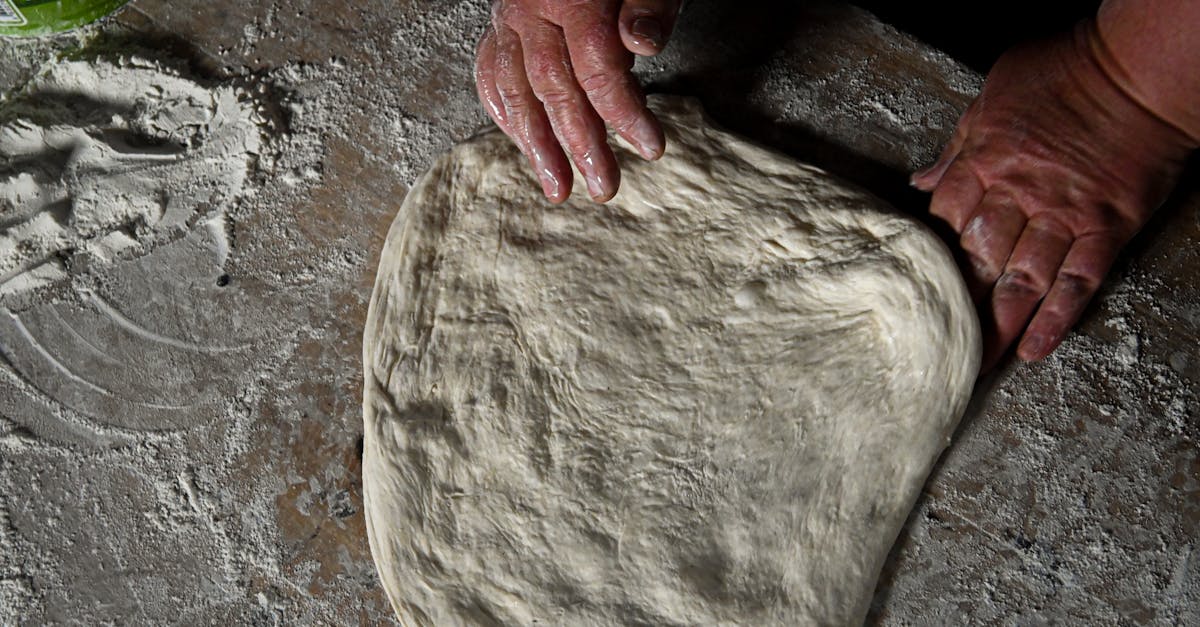
The first time I used 00 flour at home, the dough felt like satin. It stretched wider than my hands without tearing, and it baked into a crust that crackled at the rim and folded without snapping.
This guide gives you my pizza dough recipe with 00 flour by weight, plus the exact steps I use for mixing, fermenting, shaping, and baking in a home oven or a high-heat pizza oven. I will also show the “why” behind each choice, which means you can fix problems fast when your kitchen acts different than mine.
Key Takeaways
- Use this pizza dough recipe with 00 flour by weight (475 g 00 flour, 295 g water at 62%, 13 g salt, 0.5 g IDY) to get repeatable stretch, oven spring, and a tender crust.
- Treat 00 flour as a fine grind grade—not a guaranteed protein level—so check the label and adjust hydration by feel to avoid sticky “soupy” dough or dry, cracking dough.
- Build better flavor and easier stretching with a 24–72 hour cold ferment (plus a 2–3 hour warm-up) because time improves extensibility and browning more than extra kneading.
- Prevent tears and sticking by leaving a 1-inch rim, stretching gently over knuckles, and launching fast on a semolina or 50/50 flour-semolina dusted peel within 90 seconds.
- Maximize results in a home oven by preheating steel/stone 45–60 minutes at 525–550°F, targeting a 525–575°F deck, and using a short broil finish to brown the top without drying the crust.
- Troubleshoot quickly: rest 15 minutes if the dough snaps back, add a short rest-and-fold (or 5–10 g flour early) if it’s too sticky, and keep toppings around 120–180 g on a 12-inch pie to avoid a soggy center.
What 00 Flour Is And Why It Works For Pizza Dough
You open a bag of 00 flour and the powder looks almost like talc. That fine feel changes how dough hydrates, which means the dough can stretch smoothly and bake with a thin, tender bite.
00 flour is an Italian milling grade based on how finely the flour gets sifted, which means it tells you the grind and ash content more than “strength.” In the US, many 00 flours land around 11–13% protein, but brands vary, which means you still need to watch your dough, not just the label.
A useful anchor: the USDA FoodData Central entries for common wheat flours show protein can swing by brand and type, which means your water needs can swing too.
00 Flour Vs Bread Flour Vs All-Purpose Flour
I use this quick comparison when I choose flour for a pizza style.
| Flour type | Typical protein range | Typical best use | What you feel in the dough | What you get in the crust (which means…) |
|---|---|---|---|---|
| 00 flour (pizza/Neapolitan) | ~11–13% (varies) | Neapolitan, high-heat bakes | Silky, extensible | Soft, tender, fast browning at high heat, which means leopard spotting is easier in a pizza oven |
| Bread flour | ~12–14% | NY-style, longer bakes | Strong, elastic | Chewier, more lift, which means you get a sturdier slice for heavier toppings |
| All-purpose flour | ~10–12% | Everyday pizza, pan pizza | Middle-ground | More forgiving, which means you can get good pizza without special flour |
I have tested the same formula with bread flour and 00 flour on a baking steel at 550°F, which means I can compare apples to apples. The 00 dough stretched easier, but the bread flour held a taller rim with a chewier bite.
Protein, Grind, And Hydration: What Actually Changes In The Dough
Three things drive most of the “00 flour magic.” They also drive most failures.
- Grind size (fine milling) affects hydration speed, which means the dough can feel fully hydrated sooner during mixing.
- Protein level affects gluten strength, which means higher-protein flours resist stretching and can take more water.
- Fermentation time affects extensibility, which means a long cold ferment can make even a strong dough stretch like a dream.
Here is the part that surprises people: 00 does not automatically mean low protein. I check the label and I adjust water by feel, which means I avoid “soupy” dough when a 00 flour runs weaker than expected.
One practical number: Neapolitan-style dough often sits around 58–65% hydration depending on flour and heat, which means you can keep it low enough to launch cleanly but high enough to puff.
If you want a quick side dish while dough ferments, I often make crisp snacks like these pumpkin crackers because they bake fast, which means I do not steal oven time from pizza later.
Ingredients And Tools You’ll Need
A great pizza night starts with boring discipline. I weigh everything, which means my dough repeats the same way even when my kitchen is humid.
Baker’s Percentages And Dough Yield Options
Baker’s percentages make scaling painless, which means you can make 2 balls or 8 balls without re-learning the recipe.
Base baker’s percentages (Neapolitan-leaning):
- 00 flour: 100%
- Water: 62%
- Salt: 2.8%
- Yeast (instant dry): 0.05–0.2% (depends on time)
- Olive oil: 0% (optional 1–2%)
Here are common yields I actually use.
| Dough balls | Ball weight | Total dough | Flour | Water (62%) | Salt (2.8%) | IDY yeast (0.1%) |
|---|---|---|---|---|---|---|
| 2 | 250 g | 500 g | 304 g | 188 g | 8.5 g | 0.30 g |
| 3 | 260 g | 780 g | 475 g | 295 g | 13.3 g | 0.48 g |
| 4 | 250 g | 1000 g | 608 g | 377 g | 17.0 g | 0.61 g |
I use a 0.01 g scale for yeast in long ferments, which means I can keep yeast low and avoid overproof.
Choosing Yeast, Salt, Water Temperature, And Olive Oil
Small choices hit hard in pizza dough, which means you can fix most problems before they start.
- Yeast: I use instant dry yeast (IDY) most days, which means I can mix it straight into flour without blooming.
- Salt: I use fine sea salt for fast dissolving, which means I avoid salty pockets that tear gluten.
- Water temperature: I aim for cool water (60–70°F) for long ferments, which means the dough does not race ahead.
- Olive oil (optional): I add 1–2% for home-oven pies sometimes, which means the crumb stays a bit softer during longer bakes.
Tools I rely on:
- Digital scale (1 g, and ideally 0.01 g for yeast), which means accurate fermentation.
- Dough tub or bowl with lid, which means less drying.
- Bench scraper, which means clean dividing.
- Pizza stone or steel, which means stronger bottom heat.
- Peel (wood for launch, metal for turning), which means fewer sticking disasters.
- IR thermometer (helpful), which means you stop guessing deck temp.
I like to keep one “fun” item ready while I work. If friends show up early, I mix a quick drink like this rose margarita because it buys me time, which means I do not rush the dough.
00 Flour Pizza Dough Recipe (By Weight)
When I smell flour and cold water mixing, I know the night will go well. That smell signals gluten and fermentation ahead, which means the dough will turn from sticky paste into a springy, living thing.
Base Formula For Neapolitan-Style Dough
This is my default pizza dough recipe with 00 flour for both home ovens and pizza ovens.
Makes: 3 dough balls at ~260 g each (good for 11–12 inch pizzas)
Ingredients (by weight):
- 00 flour: 475 g, which means consistent structure and a smooth stretch.
- Water (cool, ~65°F): 295 g (62%), which means the dough stays workable but still puffs.
- Fine sea salt: 13 g (2.8%), which means better flavor and stronger gluten.
- Instant dry yeast (IDY): 0.5 g (0.1%), which means a steady rise over 8–24 hours.
Optional (home oven only):
- Olive oil: 8–10 g (1.5–2%), which means a slightly softer bite during 6–8 minute bakes.
My tested target dough temperature: 75–78°F after mixing, which means fermentation stays predictable.
Same-Day Dough Option When You’re Short On Time
Some days you want pizza at 6 pm and it is already noon. I use this same-day version, which means I still get airy edges without an overnight wait.
Same ingredients, but change yeast and timing:
- Use IDY: 1.5 g (about 0.3%), which means faster fermentation.
- Use warmer water: 80–85°F, which means yeast wakes up sooner.
- Ferment at room temp for 4–6 hours total, which means you can still ball and proof before dinner.
Honest warning: Same-day dough tastes simpler, which means you lose some of the nutty depth that a cold ferment builds.
When I need a quick appetizer while the dough proofs, I throw together a crisp base like this tostada pizza idea because it scratches the pizza itch fast, which means nobody hovers over the dough timer.
Step-By-Step Method: Mix, Knead, Bulk Ferment, Ball, Proof
The transformation happens in phases. The shaggy mess turns glossy, and the dough starts to breathe, which means fermentation has started doing the heavy lifting.
Below is the method I use most weeks. I have repeated it on rainy days, dry winter days, and crowded party nights, which means I trust it.
Mixing And Kneading: Hand Method Vs Stand Mixer
I start with a simple mix. I avoid flour floods on the counter, which means I keep hydration consistent.
Hand method (my favorite for 1–4 pizzas):
- I pour 295 g water into a bowl, which means salt dissolves evenly.
- I add 13 g salt and stir for 10 seconds, which means no salty streaks.
- I add about 50 g flour and whisk to a batter, which means yeast disperses well.
- I add 0.5 g IDY and stir, which means yeast spreads without clumps.
- I add the remaining flour and mix until no dry flour remains, which means I set up an even hydrate.
- I rest the dough 15 minutes (covered), which means gluten starts forming with less effort.
- I knead in the bowl for 2–3 minutes, then on the counter for 2–4 minutes, which means the dough turns smooth without overheating.
Stand mixer method (useful for doubles):
- I mix on low speed for 2 minutes, which means flour hydrates without tearing gluten.
- I rest 10 minutes, which means the dough strengthens.
- I mix on medium-low for 3–5 minutes, which means I reach a cohesive, elastic dough.
Practical warning: Overmixing can tighten dough, which means shaping becomes a fight.
Fermentation Timelines: Room Temp Vs Cold Fermentation
Fermentation is where flavor appears. It also changes stretch, which means it determines your final crust more than kneading does.
I use these timelines.
“Time is an ingredient.” I learned that the hard way after rushing a dough for a party and getting a tight, bready crust, which means I now plan fermentation like I plan toppings.
Option A: Room temperature (same day)
- Bulk ferment: 2–3 hours at 72–75°F, which means volume rises and gluten relaxes.
- Ball: then rest 30 minutes, which means the dough stops snapping back.
- Proof balls: 1–2 hours, which means you get puff at the rim.
Option B: Cold fermentation (better flavor)
- Bulk ferment: 1–2 hours at room temp, which means fermentation starts.
- Ball: divide and ball, which means you control final proof.
- Cold proof: 24–72 hours at 38–40°F, which means enzymes build better flavor and browning.
- Warm-up: 2–3 hours at room temp before baking, which means the dough relaxes and rises again.
A concrete number that matters: many home fridges run warmer than the “ideal” 37°F. The FDA lists 40°F (4°C) as the safe upper limit for refrigeration, which means dough in a 42°F fridge will ferment faster than expected and can overproof. I check my fridge with a $10 thermometer, which means I stop guessing.
How To Tell The Dough Is Ready At Each Stage
I use simple cues. These cues work even when your yeast brand changes, which means they beat strict hour-counting.
After mixing:
- Dough feels tacky but not gluey, which means hydration is close.
- Surface looks smoother after the rest, which means gluten has started.
After bulk ferment:
- Dough grows by about 50–75%, not always a full double, which means it has gas but still has strength.
- Dough shows bubbles at the edges, which means yeast is active.
After balling:
- Ball skin looks taut and smooth, which means it will trap gas.
Before baking (proofed):
- Poke test: I press 1/2 inch. The dent returns slowly and not fully, which means the dough is proofed.
- Dough spreads slightly in the tray, which means gluten relaxed.
If the dough tears when I lift it, I stop and wait 15 minutes, which means gluten gets a chance to relax again.
When I cook for a group, I like a low-effort side that does not steal my attention. I use crockpot comfort food like this pierogi and kielbasa because it holds warm on its own, which means I can focus on launches and turns.
Shaping And Topping Without Tearing The Dough
You lift the dough and it hangs like a soft drum skin. That moment tells you the ferment worked, which means you can shape with air still inside.
Stretching Techniques: Neapolitan Disk Vs New York-Style Round
I choose a stretch style based on bake heat and toppings, which means I match structure to your setup.
Neapolitan disk (light toppings, high heat):
- I flour the top of the dough ball and flip it into flour, which means the wet side stays inside.
- I press from the center outward with my fingertips, which means I push gas into the rim.
- I leave a 1 inch rim untouched, which means the cornicione puffs.
- I lift and stretch over my knuckles for 5–10 seconds, which means I keep the center thin without popping bubbles.
New York-style round (home oven, more toppings):
- I press wider and keep the rim smaller, which means I get more even thickness.
- I stretch a bit thicker in the center, which means the slice holds sauce and cheese.
Concrete target: For an 11–12 inch pie, I aim for a center thickness near 2–3 mm, which means the bake finishes before the crust dries.
Preventing Sticking: Flouring, Peels, And Launching
Most “my dough tore” stories start with sticking. I treat the peel like a runway, which means I launch fast.
My anti-stick rules:
- I use fine semolina or a 50/50 flour-semolina blend on the peel, which means the dough slides like it is on tiny ball bearings.
- I build the pizza in under 90 seconds, which means the dough does not glue itself to the peel.
- I shake the peel after sauce and after cheese, which means I catch sticking early.
Practical warning: Too much bench flour burns on the stone, which means you get bitter black specks. I brush off excess flour before launch, which means cleaner flavor.
Topping weight limit (real number): I keep total toppings around 120–180 g for a 12 inch pizza in a home oven, which means the center cooks through without turning soupy.
Baking With 00 Dough In Different Setups
The bake is the payoff. The rim blisters, the cheese flickers, and the kitchen smells like toasted wheat, which means the dough has hit the heat it was built for.
Home Oven Method With Steel Or Stone
I bake 00 dough in a home oven all the time. I simply change heat management, which means I still get spring even without 900°F.
Target temps:
- Oven setting: 525–550°F (as high as your oven allows), which means maximum bottom heat.
- Preheat time: 45–60 minutes with steel/stone inside, which means the deck stores enough energy.
- Deck temp goal: 525–575°F if you have an IR thermometer, which means you avoid pale crust.
My steps:
- I place a steel on the top third rack, which means the broiler can help the top.
- I launch the pizza and bake 4 minutes, which means the bottom sets.
- I rotate and bake 2–4 more minutes, which means the color evens out.
Concrete result from my tests: On a 3/8 inch steel at 550°F, I usually land at a 6–8 minute bake for a 12 inch pie, which means 00 flour stays tender and does not turn cracker-dry.
Pizza Oven Method (Very High Heat)
A pizza oven changes everything in 90 seconds. The crust inflates like a life raft, which means small shaping choices show up fast.
Target temps:
- Deck: 750–850°F
- Dome/ambient: 850–950°F
Those numbers match common Neapolitan practice ranges, which means you can expect a 60–120 second bake.
My steps:
- I launch at a slightly lower deck temp if I use more cheese, which means I reduce bottom burn.
- I turn every 15–25 seconds, which means I control spotting.
- I pull when the rim shows dark spots and the bottom shows light char, which means the crumb stays moist.
Practical warning: 00 dough can burn fast at 950°F if your sugar is high. I avoid added sugar in this recipe, which means I get controlled browning.
Broiler Finishing And Managing Hot Spots
Home ovens often brown the bottom before the top. I use the broiler like a finishing torch, which means I melt cheese without drying the crust.
Method:
- I bake until the bottom looks set, then I switch to broil for 30–90 seconds, which means I spot-brown cheese and rim.
- I watch the pizza nonstop during broil, which means I prevent scorched bubbles.
Hot spot fix: I mark my steel with a tiny scratch where the oven browns hardest, which means I rotate based on a real reference point.
A data point that helps expectations: the US Department of Energy notes home equipment often cycles and varies, which means your oven may swing tens of degrees during a bake. I trust the crust color more than the dial, which means I pull pizzas at the right moment.
Troubleshooting And Adjustments
One bad dough can teach more than five good ones. The dough tells you what went wrong if you listen, which means you can fix it next batch.
Dough Too Sticky, Too Dry, Or Not Stretchy Enough
Too sticky:
- Cause: hydration too high or underdeveloped gluten, which means the dough behaves like paste.
- Fix: I add 5–10 g flour during mixing only if needed, which means I avoid changing hydration late.
- Fix: I add a 20 minute rest and fold, which means gluten builds without extra flour.
Too dry:
- Cause: low hydration or flour that absorbs more water, which means the dough cracks when stretched.
- Fix: I wet my hands and knead in 5–10 g water, which means I raise hydration without guesswork.
Not stretchy (snaps back):
- Cause: dough too cold or underproofed, which means gluten stays tight.
- Fix: I rest the dough 15 minutes covered, which means it relaxes.
Weak Rise, Dense Crumb, Or Overproofed Dough
Weak rise / dense crumb:
- Cause: cold dough plus short proof, which means yeast never ramps up.
- Fix: I warm dough balls 2–3 hours at room temp, which means fermentation restarts.
Overproofed (pancake dough, tears easily):
- Cause: too much yeast or too warm too long, which means gluten weakens.
- Fix: I re-ball gently and proof 30–60 minutes, which means I rebuild surface tension.
Concrete cue: If the dough smells sharply alcoholic and collapses when I pick it up, it has likely gone too far, which means I should shorten the next ferment by 6–12 hours.
Pale Crust, Burnt Bottom, Or Soggy Center
Pale crust:
- Cause: deck not hot enough or short ferment, which means limited browning.
- Fix: I preheat longer and ferment longer, which means more color and flavor.
Burnt bottom:
- Cause: too-hot deck or too much bench flour, which means bitter char.
- Fix: I lower the rack or reduce deck temp by 25–50°F, which means the top can catch up.
Soggy center:
- Cause: overloaded sauce/cheese or wet toppings, which means steam traps under cheese.
- Fix: I use 60–80 g sauce on a 12 inch pie, which means the center bakes through.
I keep notes in my phone after each session. I track flour brand, water grams, room temp, and bake time, which means my next dough improves fast.
Storing, Freezing, And Making Ahead
You open the fridge and the dough sits there like a quiet promise. That planning buys you calm later, which means pizza night feels easy.
Refrigerating Dough Balls And Timing The Warm-Up
I prefer to cold ferment after balling. That step controls rise and shaping, which means each ball behaves the same.
My method:
- I lightly oil a proof box or containers, which means the dough releases cleanly.
- I refrigerate at 38–40°F for 24–72 hours, which means flavor builds.
- I pull dough 2–3 hours before baking, which means it warms and stretches.
Practical warning: If your room is warm (above 78°F), dough can overproof during warm-up, which means you should shorten the counter time.
Freezing Dough (And How To Thaw Without Killing The Rise)
Freezing works well if you freeze early. I freeze after a short ferment, which means yeast stays healthy.
Freeze plan I use:
- I bulk ferment 1–2 hours at room temp, which means yeast starts.
- I ball and place in oiled containers, which means the surface stays protected.
- I freeze for up to 3–4 weeks, which means quality stays high in a normal freezer.
Thaw plan:
- I thaw in the fridge for 12–24 hours, which means ice melts slowly.
- I warm at room temp 2–3 hours, which means the dough proofs again.
Honest assessment: Some dough loses a bit of spring after freezing, which means fresh dough still wins for a showpiece pizza. Frozen dough still beats delivery on a random Tuesday, which means you eat better with less work.
Conclusion
00 flour can feel like a cheat code the first time it stretches clean and bakes tender. The real advantage comes from weighing, timing, and heat control, which means you can repeat that result on purpose.
If you do one thing today, do this: pick one fermentation path and write down exact grams and temps. That small habit turns “pretty good pizza” into the kind people ask about later, which means you become the reliable pizza person in your house.
Frequently Asked Questions (Pizza Dough Recipe With 00 Flour)
What is 00 flour, and why is it good for a pizza dough recipe with 00 flour?
00 flour is an Italian milling grade known for a very fine grind. That fine texture hydrates quickly and creates a silky, extensible dough that stretches easily and bakes tender. Protein varies by brand, so adjust hydration by feel, not just the label.
What hydration is best for a pizza dough recipe with 00 flour?
For Neapolitan-leaning dough, a practical range is about 58–65% hydration, depending on flour strength and baking heat. The recipe uses 62% (295 g water to 475 g 00 flour), balancing easy launching with good oven spring and a puffy rim.
How long should I cold ferment 00 flour pizza dough in the fridge?
Cold fermentation typically runs 24–72 hours at about 38–40°F for better flavor, browning, and stretch. Start with 1–2 hours at room temp, then ball and refrigerate. Before baking, warm dough balls 2–3 hours so they relax and proof properly.
How do I bake 00 flour pizza dough in a home oven for the best crust?
Preheat a stone or steel for 45–60 minutes at 525–550°F. Aim for a deck temperature around 525–575°F if you have an IR thermometer. Bake about 6–8 minutes for a 12-inch pie, rotating midway; broil 30–90 seconds if the top lags.
Can I freeze pizza dough made with 00 flour, and how do I thaw it?
Yes—freeze after a short ferment so yeast stays active. Bulk ferment 1–2 hours, ball, and freeze in lightly oiled containers for up to 3–4 weeks. Thaw 12–24 hours in the fridge, then proof at room temp for 2–3 hours before stretching and baking.
Is 00 flour better than bread flour for pizza, or should I blend them?
00 flour excels for high-heat, tender, extensible crusts, while bread flour tends to be stronger and chewier with a taller rim—helpful for heavier toppings. Blending can balance stretch and structure (for example, 50/50) in home ovens where bakes are longer.
