
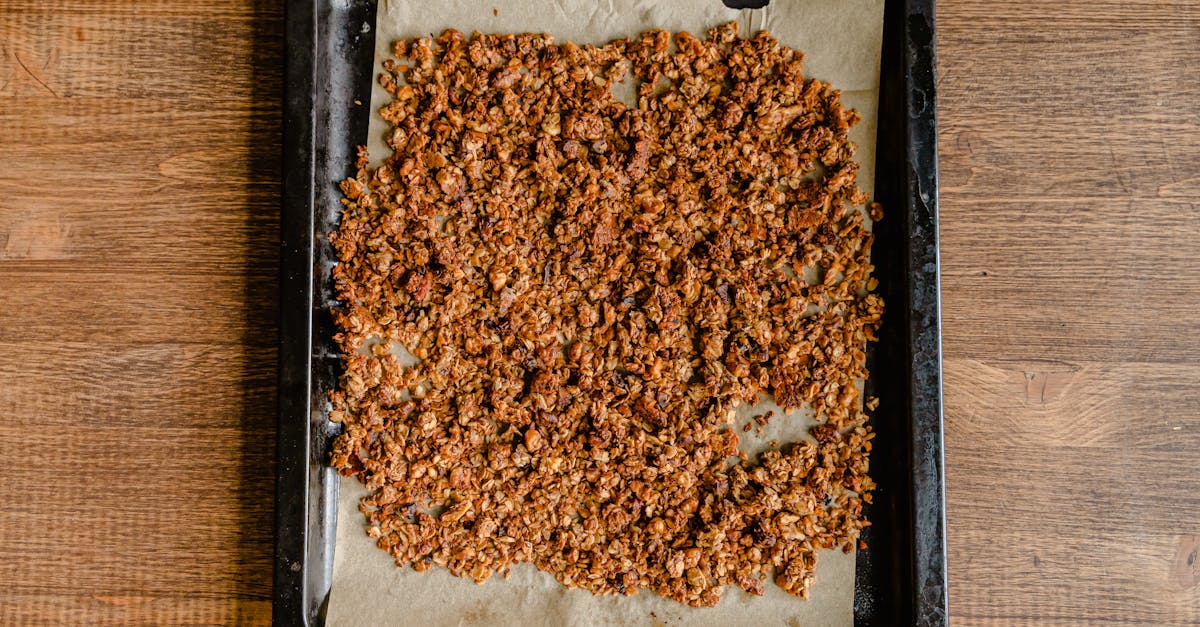
I make granola at home because it gives me full control over taste, texture, and nutrition. This guide shows exactly how I build, bake, and store a reliable homemade granola recipe you can adjust to your goals.
Key Takeaways
- A homemade granola recipe puts you in control of sugar, cost, and allergens so you can cut added sugar by up to half and save significantly versus store-bought options.
- Weigh dry ingredients and use a digital scale for repeatable batches, mixing wet and dry thoroughly and baking at 325°F (163°C) for 25–30 minutes with mid-bake stirs for even browning.
- For crunchy clusters press the granola before the last 5 minutes of baking and cool fully on the pan for about 45 minutes to let clusters set.
- Customize texture and nutrition by swapping rolled oats for puffed grains or adding seeds/nuts for extra protein, or reduce sweetener and add more nuts/seeds for a lower-sugar version.
- Store in airtight jars up to 21 days at room temperature or freeze up to 3 months, and label jars with date and allergens to keep batches safe and trackable.
Why Make Granola at Home
Health, Cost, And Flavor Benefits
I started making granola to cut sugar and control portions. Commercial granolas can contain 10–20 grams of sugar per 50 g serving, which means a quick swap to homemade can cut added sugar by 50% or more.
Homemade granola often costs less. I can make 10 cups for about $6–$8, which means I pay roughly $0.60–$0.80 per cup versus $2–$4 per cup for premium brands.
I also tune flavor precisely. I add toasted orange zest or dark cocoa for a single-bite memory, which means each batch matches what I want that week.
Control Over Ingredients And Allergens
When I cook granola, I choose every ingredient. I pick oats, seeds, sweeteners, and oils based on health or allergy needs, which means I avoid unwanted additives and hidden soy or gluten.
About 1 in 13 children in the U.S. has a food allergy, which means managing cross-contact and reading labels matter for families.
I keep separate bowls for nut-free batches. I label jars with the date and key allergens, which means anyone eating it knows what’s inside.
Environmental And Convenience Advantages
I reuse jars and bulk bins, which means less packaging waste compared with single-use retail bags. I also fill a kilo jar once every two weeks, which means fewer trips to the store.
Granola sits on the counter for up to 3 weeks if stored right, which means I have an instant breakfast or crunchy snack when I’m short on time.
Essential Ingredients For Classic Granola
Grain Base: Oats And Alternatives
I use rolled oats as the base, 100 g of rolled oats contains about 13 g of protein and 10 g of fiber per 100 g, which means oats help keep you full. Quick oats break down under heat and give a mushy texture, which means I avoid them if I want clusters.
Alternatives include puffed quinoa, puffed rice, or toasted buckwheat groats, which means you can vary carbs and gluten content.
| Ingredient | Typical Use | What it gives you |
|---|---|---|
| Rolled oats | Base | Chewy texture & fiber, 10 g fiber per 100 g which means longer satiety |
| Puffed quinoa | Mix-in | Light crunch & protein which means a higher-protein granola |
| Toasted buckwheat | Caffeine-free crunch | Distinct nutty flavor which means gluten-friendly option |
Nuts, Seeds, And Dried Fruit
I add almonds, walnuts, pumpkin seeds, and sunflower seeds. A 30 g handful of mixed nuts gives about 5–6 g of protein, which means a protein boost per serving.
Dried fruit like raisins, cherries, or apricots add chew and sweetness. I add dried fruit after baking to avoid hard, leathery pieces, which means the fruit stays tender.
Sweeteners, Oils, And Binding Agents
I balance sweeteners: honey, maple syrup, or brown rice syrup. Honey has antimicrobial properties in small amounts, which means it helps binder and flavor.
I use neutral oil (canola or avocado) or coconut oil for richness. Oil coats the flakes for even browning, which means a crisp finish.
For binding, I add nut butter or a small amount of egg white for firmly clustered granola. A single egg white per 6 cups of dry mix adds strong binding, which means better clusters.
Spices, Salt, And Optional Mix-Ins
I use 1 tsp ground cinnamon per 4 cups base as a starting point. Cinnamon adds warmth and offsets sweetness, which means a more balanced flavor.
I add 1/2 tsp fine salt per 4 cups to enhance all flavors, which means sweetness tastes cleaner and more defined.
Optional mix-ins: toasted coconut, dark chocolate chips (added after cooling), citrus zest, or espresso powder, which means you can make dessert-level granola or breakfast-friendly blends.
Equipment, Prep, And Safety Tips
Required Tools And Bakeware
I use a rimmed sheet pan, silicone baking mat, spatula, and a mixing bowl. A rimmed pan prevents spills, which means even browning and easier cleanup.
A digital scale matters: I measure dry ingredients by weight for consistency, which means repeatable batches every time.
Prep Steps And Timing Guide
I preheat the oven to 325°F (163°C). I toast nuts for 8–10 minutes if larger nuts are used, which means their oil releases and flavor deepens.
Mix dry ingredients, whisk wet ingredients, combine, then spread to a thin, even layer. Baking time typically runs 20–30 minutes for 4–6 cups, which means you’ll need to stir once halfway for even color.
Food Safety And Allergen Handling
I follow two simple rules: keep wet and dry cold until mixing, and cool baked granola fully before sealing. Cooling prevents condensation, which means the granola stays crisp.
I wash surfaces and tools between nut-free and nut-containing batches. I label jars with date and allergens, which means no one accidentally eats a risky batch.
Step-By-Step Recipe (Makes About X Cups)
Mixing Dry And Wet Components
Yield note: this recipe makes about 8 cups finished granola, which means 16 servings at 1/2 cup each.
Ingredients (my base): 4 cups rolled oats (360 g), 1 cup mixed nuts chopped (120 g), 1/2 cup pumpkin & sunflower seeds (80 g), 1 tsp kosher salt, 1 tsp cinnamon.
Wet: 1/2 cup neutral oil (120 mL), 1/2 cup maple syrup (120 mL), 1/3 cup honey (80 mL), 2 tbsp almond butter (30 g).
I preheat oven to 325°F (163°C), mix dry ingredients, whisk wet ingredients, pour wet into dry and fold until coated. Coating evenly means each flake crisps the same way.
Baking: Temperature, Time, And Stirring
I spread mixture to a single 1/4–1/2 inch layer. Thin layers brown faster and crisp better, which means shorter, more even baking.
I bake 25–30 minutes, stirring gently at 12 and 20 minutes. If I want clusters, I press the mixture down with a spatula before the last 5 minutes, which means the cluster bonds while cooling.
I watch for color: oats should be golden, not dark brown. Burnt granola tastes acrid, which means immediate salvage is often impossible.
Cooling, Clustering, And Storing
I remove pan and let granola cool completely on the pan for 45 minutes. Cooling lets clusters set, which means you’ll break into large, satisfying pieces.
I add 1–1 1/2 cups dried fruit after cooling. If I add chocolate, I wait until fully cool, which means pieces don’t melt into the mix.
Storage: I store in an airtight jar at room temperature for up to 21 days, or freeze in quart bags for up to 3 months. Freezing preserves texture and flavor, which means you can batch-make and save time.
Customizable Variations And Flavor Ideas
Low-Sugar And Health-Conscious Versions
I cut sweetener by 30–60% and add more seeds and nuts to compensate. Reducing maple to 1/4 cup from 1/2 cup lowers added sugar by roughly 50 g per batch, which means fewer calories and steadier blood sugar.
I use unsweetened applesauce as part of the wet mix (replace up to 1/4 cup), which means moisture and a touch of natural sweetness without extra sugar.
Nut-Free, Gluten-Free, And Vegan Options
For nut-free, I increase seeds to 2 cups and swap almond butter for tahini or extra oil. Seeds provide similar fat and crunch, which means you keep texture and mouthfeel without nuts.
For gluten-free, I buy certified gluten-free oats. Cross-contamination affects labeling, and certified oats reduce risk for people with celiac disease, which means safer eating.
For vegan clusters, I skip egg white and add 2 tbsp ground chia soaked in 4 tbsp water, which means a plant-based binder that forms a gel.
Sweet And Indulgent Flavors (Chocolate, Maple, Cinnamon)
I make a chocolate batch by reducing sweetener by 20% and adding 1/3 cup unsweetened cocoa powder to the dry mix. I add 1/2 cup dark chocolate chips after cooling, which means a dessert-like granola without excess sugar.
Maple-vanilla: 1/2 cup pure maple and 1 tsp vanilla extract for deep, warm flavor, which means you can skip added cinnamon if you prefer.
Savory And Unusual Granola Ideas
I once made a savory granola with 2 tsp smoked paprika, 1/2 cup roasted chickpeas, and 1 tbsp soy sauce in the wet mix. It paired with yogurt dip for an appetizer, which means granola can cross into snack and meal territory.
Another oddball: lemon zest and black pepper with toasted pistachios for a bright pop, which means a surprising breakfast that wakes up the palate.
Serving Suggestions And Uses
Breakfast Bowls, Yogurt, And Smoothie Toppers
I spoon 1/2 cup granola over 3/4 cup plain Greek yogurt and add 1/2 cup berries. Greek yogurt adds 15–20 g protein per 3/4 cup, which means a balanced meal that keeps me full until lunch.
Granola also finishes a smoothie bowl for texture, which means every spoonful has crunch and flavor contrast.
Baking With Granola And Snack Mixes
I fold 1 cup granola into muffin batter for texture and a nutty top. That adds crunch without extra work, which means an easy upgrade in baked goods.
I also mix granola with roasted peanuts and wasabi peas for a savory snack mix. A 1:1:1 mix yields a high-protein, high-fiber snack that travels well, which means a crunchy, satisfying road snack.
Portioning For On-The-Go And Meal Prep
I pack single 1/2 cup servings into small jars or bags. A 1/2 cup serving typically contains 200–240 calories depending on mix, which means you can manage energy intake precisely.
Troubleshooting Common Problems
How To Get Crunchy But Not Burnt Granola
If granola burns on edges but is pale in center, your oven has hot spots. Rotate the pan at 12 minutes, which means more even color.
If it stays soft, increase bake time by 3–6 minutes at 300°F and decrease oven temp by 10°F next time, which means slower dehydration and crunch without burning.
Fixing Soggy, Overly Sweet, Or Too-Oily Batches
Soggy granola often means too much wet per oat ratio. Add 1–2 cups extra oats and bake an additional 10–15 minutes, which means absorbing excess oil and reclaiming texture.
If too sweet, mix in 1 cup plain toasted oats or seeds to dilute sweetness by about 15–25%, which means better balance without wasting the batch.
Too oily? Add 1/2 cup more dry mix and bake to toast off extra fat, which means the final product feels balanced.
Scaling Recipe Size And Adjusting Bake Times
For double batches on two pans, keep single-layer spread on each pan and add 3–5 minutes to bake time. Two thin pans bake similarly to one, which means even heat distribution remains manageable.
If you bake a very large sheet, expect an extra 6–10 minutes and rotate twice, which means you avoid burned edges and underbaked centers.
Nutrition, Portioning, And Labeling Guidance
Estimating Calories And Macronutrients
A standard 1/2 cup serving of my base mix runs about 220 calories, with roughly 8–9 g fat, 28–30 g carbs, and 6–8 g protein. These numbers vary based on nuts and sweetener, which means you should calculate per batch if accuracy matters.
I use a spreadsheet to log ingredients by weight and compute macros, which means I can tailor batches to a target calorie or protein goal.
Swaps To Lower Sugar Or Increase Protein
To lower sugar, reduce syrup by half and add 1/2 cup extra nuts or seeds. That swap lowers added sugar by about 25 g per batch and raises protein by 4–6 g, which means a sturdier, less sweet breakfast.
To boost protein, add 1/2 cup soy or pea protein crispies or replace some oats with soy granules. Adding 1/2 cup protein powder increases protein by ~12–16 g per batch, which means higher satiety.
Allergen Notes And Storage Shelf Life
Shelf life at room temperature is about 21 days: refrigerated will last 6–8 weeks and frozen up to 3 months. Proper storage reduces rancidity, which means better flavor and safety.
Label jars with: batch date, top allergens present, and suggested use-by date. Clear labeling reduces risk for guests or family members, which means safer sharing.
Conclusion
I make granola at home because I control flavor, sugar, cost, and allergens. That control means I can craft breakfasts that match my nutrition goals and mood.
If you want to experiment, try pairing a warm crepe with a sprinkle of crunchy granola and fruit for texture contrast, my favorite quick combo from time to time is a buttermilk crepe with a spoonful of granola and jam, which means you get soft, tender crepe and crisp granola together (buttermilk crepes recipe).
For jam pairing, a spoon of blueberry honey jam brightens granola yogurt bowls, which means fruit and sweetness balance nuttiness (blueberry honey jam recipe).
If you want a savory breakfast sandwich, use granola as an unexpected crunch inside a brioche breakfast sandwich for texture contrast, which means you turn ordinary into memorable (brioche sandwich recipes).
Final practical note: weigh your main ingredients the first three times you make this recipe, which means you build muscle memory and repeat success. Happy baking, and tell me which flavor you make first.
Frequently Asked Questions
What is a reliable homemade granola recipe to start with?
A reliable homemade granola recipe: 4 cups rolled oats (360 g), 1 cup chopped mixed nuts, 1/2 cup seeds, 1 tsp salt, 1 tsp cinnamon; wet: 1/2 cup neutral oil, 1/2 cup maple, 1/3 cup honey, 2 tbsp almond butter. Bake 325°F for 25–30 minutes, stirring twice for even browning.
How do I get crunchy clusters without burning my granola?
For crunchy clusters, press the granola firmly with a spatula before the last 5 minutes of baking and let it cool completely on the pan for 45 minutes. Bake in a single 1/4–1/2 inch layer, stir halfway, and watch for golden (not dark) color to avoid burning.
How should I store homemade granola and how long will it keep?
Store homemade granola in an airtight jar at room temperature up to 21 days. Refrigerate for 6–8 weeks or freeze in quart bags for up to 3 months. Always cool fully before sealing and label jars with batch date and top allergens to preserve texture and prevent rancidity.
Can I make a nut-free, gluten-free, or vegan homemade granola recipe?
Yes. For nut-free, double seeds (pumpkin, sunflower) and swap almond butter for tahini or extra oil. Use certified gluten-free oats to avoid cross-contact. For vegan clusters, skip egg white and use 2 tbsp ground chia soaked in 4 tbsp water as a plant-based binder.
Is a homemade granola recipe suitable for a low-carb or keto diet?
Traditional granola is high in carbs from oats and dried fruit, so it’s not keto-friendly. To adapt, replace oats with toasted nuts, seeds, and coconut flakes, cut sweeteners heavily or use erythritol/monk fruit, and increase healthy fats to create a lower-carb homemade granola alternative.
