
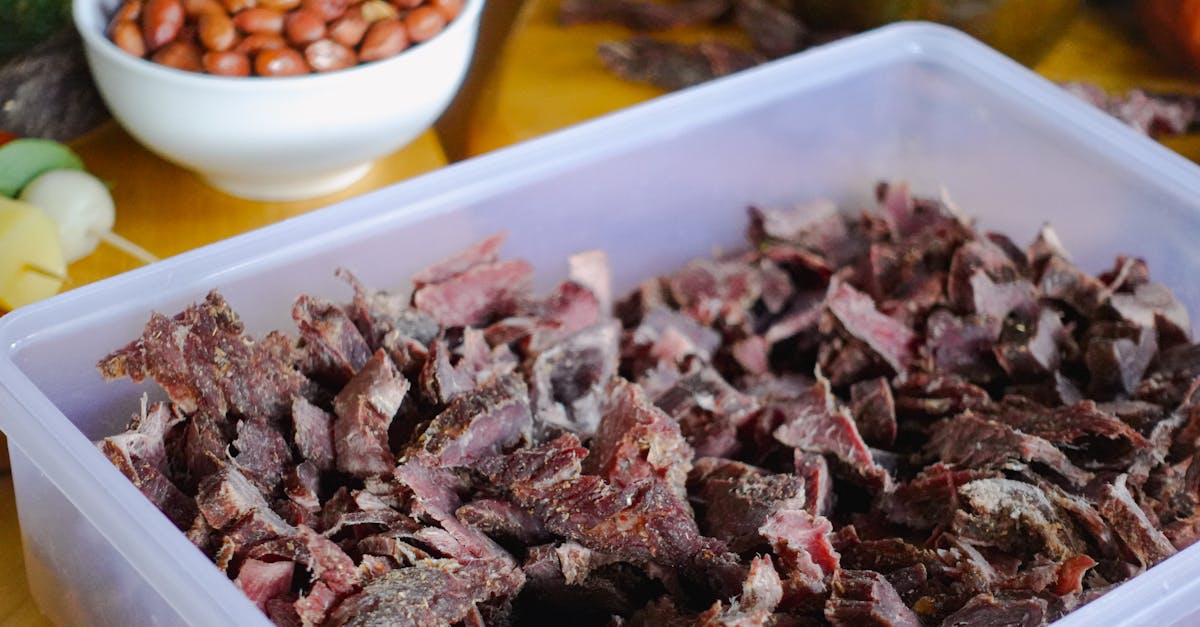
The first time I made ground venison jerky, I expected it to taste “fine.”
Then I pulled a strip, bent it, and it cracked with a clean snap before turning chewy and meaty. No mystery gristle. No tooth-breaking dryness. Just tender jerky that traveled well, which means I stopped babying it like a fragile snack and started packing it for hikes and long drives.
This guide gives you a ground venison jerky recipe you can repeat on purpose. I keep it direct, I keep it safe, and I tell you what actually changes texture, shelf life, and flavor.
Key Takeaways
- Treat this ground venison jerky recipe like a meat “dough” and mix 5–8 minutes until tacky, because the sticky protein bind is what makes strips bend instead of crumble.
- Aim for a 90/10 to 93/7 lean-to-fat ratio for ground venison jerky to keep it tender-chewy without turning greasy or sacrificing shelf life.
- Build food safety into every batch by heat-treating to 160°F and drying around 145°F–160°F so you get a real kill step instead of relying on dehydration alone.
- Form uniform 1/4-inch-thick strips with a jerky gun, piping bag, or careful rolling so drying stays even and you avoid under-dried centers or case hardening.
- Use curing salt #1 only when conditions call for it (low-temp smoking, vacuum-sealing for room-temp storage, or longer shelf stability) and measure precisely by the label rate.
- Finish strong by cooling, conditioning in a sealed jar for 24 hours, and re-drying if you see condensation, then store based on dryness and fat level (fridge 2–3 weeks or freezer 3–6 months if unsure).
What Makes Ground Venison Jerky Different
A lot of jerky fails because people treat ground meat like sliced meat.
Ground venison jerky behaves like a meat “dough,” which means you control texture through mixing and fat level, not knife skills.
“Jerky doesn’t get better in the bag. It gets better in the mix.”
That sticky mix stage decides if your strips bend or crumble.
Ground vs. Whole-Muscle Jerky
Whole-muscle jerky uses intact muscle fibers, which means the chew comes from grain direction and slice thickness.
Ground jerky uses chopped fibers, which means you create structure by developing a protein bind (mixing until tacky).
Here is what I notice in real batches I test at home:
| Factor | Whole-muscle jerky | Ground venison jerky | Which means… |
|---|---|---|---|
| Prep time | Slicing takes 15–30 minutes | Mixing takes 5–8 minutes | you choose speed vs. knife work |
| Texture | Fibrous, steak-like | Uniform, tender-chewy | you get fewer “hard spots” |
| Consistency | Varies by cut | Very consistent | you can repeat results batch to batch |
| Best tool | Sharp knife | Jerky gun or piping bag | you can make jerky even without perfect cuts |
How Fat Content Affects Texture And Shelf Life
Venison is very lean, which means it can turn dry and crumbly if you do not add some fat.
Fat also goes rancid faster than lean meat, which means high-fat jerky loses shelf life.
I get the best balance at 90/10 to 93/7 lean-to-fat for ground venison jerky, which means the strips stay pliable but do not feel oily.
A key data point: the USDA notes that drying is not a kill step by itself for pathogens in meat, which means you should treat jerky like a controlled process, not “just dehydration.” I use temperature targets and cure choices to match that reality (sources below).
Food Safety Basics For Venison Jerky
I like to think about jerky safety like seatbelts.
You do not “feel” the benefit every time, which means you must build it in every time.
USDA Temperature Targets And Why They Matter
Wild game can carry bacteria the same way domestic meat can, which means you should cook or heat-treat to a safe internal temperature.
The USDA guidance for jerky emphasizes heating meat to 160°F (and 165°F for poultry) as the safer target before or during drying, which means you reduce pathogens before you spend hours in the warm “danger zone.”
I follow two practical rules:
- I heat the meat (or the finished jerky) to 160°F. which means I get a real kill step.
- I dry at 145°F–160°F when my equipment allows it. which means the surface does not sit lukewarm for long.
Authoritative reference: USDA FSIS Jerky and Food Safety.
Curing Salt: When To Use It And When To Skip It
Curing salt (often called Prague Powder #1 or “pink curing salt”) contains sodium nitrite, which means it helps block Clostridium botulinum in low-oxygen, low-acid foods.
You should consider cure when you smoke low and slow or when you store jerky at room temperature for longer periods, which means you add a layer of safety when conditions get risky.
I skip cure when all of these are true:
- I dry hot (around 160°F) in an oven or dehydrator, which means the process stays above the danger zone more often.
- I plan short storage (1–2 weeks) in the fridge, which means time does not work against me.
- I keep fat low (≤10%), which means rancidity risk stays lower.
I use cure when any of these are true:
- I smoke below 160°F for flavor, which means bacteria can grow during the early hours.
- I vacuum-seal for room-temp storage, which means oxygen drops and botulism risk factors rise.
- I want longer shelf stability, which means I need more than dryness alone.
Warning: Cure is not “extra salt.”
Cure is a measured additive, which means you must use the package rate and a scale.
For nitrite safety context, I rely on University extension material when I teach friends, which means we use standards that match real food science. Example: Penn State Extension on curing and nitrite use.
Equipment You’ll Need
The moment ground jerky gets easy is the moment you stop fighting the shape.
You need a tool that makes even strips, which means drying stays even and you stop guessing.
Jerky Gun Vs. Piping Bag Vs. Rolling And Cutting
I have used all three methods on the same recipe, which means I can tell you where each one shines.
| Tool | Best for | My result | Which means… |
|---|---|---|---|
| Jerky gun (with flat nozzle) | Uniform strips fast | Most consistent thickness | you get fewer under-dried centers |
| Piping bag + snipped corner | Small batches | Works in a pinch | you can start without buying gear |
| Rolling between parchment + slicing | If you want “chips” or squares | Great control, slower | you can match strip size to your storage bags |
I prefer a jerky gun for batches over 2 lb, which means my hands stay clean and my strips stay consistent.
Oven, Dehydrator, Or Smoker: Choosing Your Method
Each method changes airflow and temperature control, which means it changes both safety margin and texture.
- Oven: easy access, weaker airflow, which means you must prop the door and use racks.
- Dehydrator: steady airflow, steady heat, which means doneness is easier to repeat.
- Smoker: best flavor, most variables, which means you must watch temperature closely.
I keep an instant-read thermometer nearby, which means I can verify the 160°F step instead of trusting a dial.
If you want a fun contrast snack while your jerky dries, I sometimes prep a quick side like this tostada pizza recipe, which means I do not start “testing” jerky early because I got hungry.
Ingredients And Best Meat Blend For Ground Venison Jerky
A surprise detail: spices matter less than salt level and bind.
Salt controls taste and water activity, which means it controls both flavor and how safely the jerky stores.
Recommended Lean-To-Fat Ratio And Add-Ins
My go-to blend is:
- 2 lb ground venison (very lean) which means you get clean wild flavor.
- 0.15–0.25 lb pork fat or fatty pork shoulder (to reach 90/10 to 93/7 overall) which means the bite stays tender.
If your venison already contains added pork, which means you should ask your processor for the ratio before you add more.
Add-ins I like (optional):
- 1 tbsp nonfat dry milk powder which means proteins bind better and strips crumble less.
- 1 tbsp corn syrup or honey which means edges brown slightly and heat tastes rounder.
- 1 tsp coarse black pepper which means aroma survives drying.
Concrete batch note from my kitchen tests: when I pushed fat to 80/20, I saw grease spots on parchment at hour 2, which means the batch felt softer and stored worse.
Seasoning Options: Classic, Spicy, And Sweet Heat
I use a base that works, then I branch.
Here are three profiles that keep salt, acid, and sugar in balance, which means flavor stays strong after dehydration concentrates everything.
| Profile | Flavor notes | Best for | Which means… |
|---|---|---|---|
| Classic | soy + Worcestershire + garlic | “first batch” confidence | you learn texture before heat distracts |
| Spicy | chili flakes + cayenne + chipotle | trail snack | you eat less but feel satisfied |
| Sweet heat | brown sugar + smoked paprika + red pepper | crowd-pleaser | you convert people who “don’t like venison” |
I keep one warning on sweet versions: sugar darkens fast above 170°F, which means you can scorch edges in an oven if airflow is poor.
When I want a sweet note for dessert after jerky, I use these macarons, which means I satisfy the sweet craving without adding sugar to every jerky batch.
Step-By-Step Ground Venison Jerky Recipe
This is the exact process I run when I want easy, tender, shelf-stable ground venison jerky.
I write it like a checklist, which means you can print it and stop scrolling.
Batch size: about 2.25 lb meat mix (yields ~1.2–1.5 lb finished jerky)
Ingredients (Classic base)
- 2 lb ground venison
- 0.25 lb ground pork shoulder (or enough to reach ~90/10)
- 2 tsp kosher salt (about 12 g) which means you season evenly without oversalting.
- 1 tsp curing salt #1 optional (only if smoking low or storing long) which means you add nitrite protection.
- 2 tsp coarse black pepper
- 1 tsp garlic powder
- 1 tsp onion powder
- 1 tsp smoked paprika
- 2 tbsp Worcestershire sauce
- 2 tbsp soy sauce
- 1 tbsp apple cider vinegar
- 1 tbsp brown sugar (optional)
- 1 tbsp nonfat dry milk powder (optional but helpful)
- 2 tbsp ice-cold water
If you use cure, follow the label rate.
Cure varies by brand, which means you should not freestyle the teaspoon.
Steps (overview)
- Chill meat and bowl for 20 minutes, which means fat stays firm and mixing stays clean.
- Mix until tacky (5–8 minutes), which means strips hold together.
- Form uniform strips, which means drying time stays predictable.
- Dry at 145°F–160°F until done, which means you hit safe texture and safe storage.
- Heat-treat to 160°F if needed, which means you add a reliable kill step.
- Cool, condition, and pack, which means you avoid trapped moisture.
Mixing And Developing A Sticky Protein Bind
Cold meat mixes better, which means you get bind without smearing fat.
I put the ground meat in a bowl, add seasonings, and mix by hand for 5 minutes.
Then I add the ice-cold water and keep mixing until the meat looks glossy and sticks to my palm, which means the extracted myosin will act like glue.
A simple test: I pinch a nugget and flip my hand upside down for 2 seconds.
If it clings, which means you can form strips that do not crack.
Forming Strips For Even Drying
I aim for strips that are:
- 1 inch wide
- 1/4 inch thick
- 6–10 inches long
That size dries fast but stays chewy, which means you avoid a raw center.
I extrude onto dehydrator trays or onto parchment, which means I keep cleanup simple.
I leave 1/4 inch gap between strips, which means airflow can reach both sides.
Drying Times And Doneness Cues
Time depends on thickness, humidity, and your tool, which means you must use cues.
Typical times I see for 1/4-inch strips:
| Method | Temp | Time range | Which means… |
|---|---|---|---|
| Dehydrator | 155°F | 4–6 hours | you get the most repeatable finish |
| Oven (rack) | 170°F (or lowest) | 3–5 hours | you must manage airflow |
| Smoker | 145°F–165°F | 4–7 hours | you trade speed for smoke flavor |
I pull a strip and cool it for 5 minutes.
Then I bend it.
- It should crack but not snap in half, which means moisture is low but fibers still flex.
- It should not feel tacky, which means surface water has left.
If you own a scale, I use a simple check: I target 35%–45% weight loss.
Example: 24 oz raw strips that finish at 14–15 oz, which means water loss landed in the safe texture zone.
Oven Method: Reliable Jerky Without Special Gear
An oven can make great jerky, which means you can start today.
But ovens trap moisture, which means airflow becomes your job.
Rack Setup, Airflow, And Temperature Settings
I set my oven to the lowest steady setting (often 170°F).
I place strips on a wire rack over a sheet pan, which means hot air can touch both sides.
I crack the oven door 1–2 inches with a wooden spoon, which means humidity escapes and drying speeds up.
I rotate pans every 60 minutes, which means I correct hot spots.
Concrete cue: if I see beads of fat on the strip surface in the first hour, which means my mix has too much fat or the oven runs too hot.
Post-Dry Heat Treatment For Safety
If my oven temp stays at 170°F the whole time, I often hit 160°F internally during the run, which means the kill step happens naturally.
If I dried cooler (or I feel uncertain), I do a quick post-dry heat treatment:
- I preheat oven to 275°F.
- I place dried jerky on a rack.
- I heat until thick pieces hit 160°F on an instant-read thermometer.
USDA-backed approach: FSIS describes heating steps to improve safety, which means you can add certainty instead of hoping drying “counts.” See the USDA jerky guidance linked earlier.
Honest note: jerky can overdry fast at 275°F.
You must watch it, which means you should not leave the kitchen.
Dehydrator And Smoker Methods
A dehydrator feels boring, which means it works.
A smoker smells incredible, which means it also tempts you to run too cool.
Dehydrator Settings And Rotation Tips
I run ground venison jerky at 155°F in my dehydrator.
That temp dries efficiently without cooking the outside too fast, which means texture stays even.
I rotate trays at hour 2, which means I fix the usual top-to-bottom heat difference.
I start checking doneness at hour 4, which means I stop the batch before it turns brittle.
Data point: The National Center for Home Food Preservation flags that drying happens in a warm range where microbes can survive if you do not heat correctly, which means you should treat temperature as a safety input, not a suggestion. Reference: NCHFP jerky guidance.
Smoker Wood Choices And Managing Low-Temp Smoke
For venison, I like hickory or apple.
Hickory gives bold smoke, which means it stands up to wild flavor.
Apple gives light sweetness, which means pepper and garlic stay noticeable.
Smoker rules I use:
- I keep chamber temp at 160°F–175°F when possible, which means I reduce time in the danger zone.
- I use cure if I plan to smoke at <160°F, which means I add protection for low-oxygen smoke conditions.
- I start with drier airflow (vents open), which means surface moisture leaves instead of trapping.
If I want a drink pairing after I finish a smoked batch, I make this rose margarita, which means I keep a “treat” separate from the jerky itself.
Troubleshooting And Common Mistakes
Jerky failure looks dramatic.
A batch can go from perfect to weird in 30 minutes, which means small mistakes matter.
Jerky Is Crumbly, Greasy, Or Too Soft
Crumbly jerky usually means low fat or weak bind, which means strips break when you bend them.
Fix:
- Mix longer (aim 5–8 minutes) which means proteins knit together.
- Add 1–2 tbsp ice water, which means mixing extracts myosin more easily.
- Move from 97/3 to 90/10, which means you add tenderness without turning oily.
Greasy jerky usually means too much fat or too high heat early, which means fat renders and coats the strip.
Fix:
- Use leaner blend (≤10% fat) which means less render.
- Dry at 145°F–160°F, which means fat stays more stable.
Too soft jerky usually means under-drying or thick strips, which means water activity stays high.
Fix:
- Make strips 1/4 inch thick, which means moisture can escape.
- Dry longer and cool-test for 5 minutes, which means you judge final texture, not hot texture.
Uneven Drying, Case Hardening, And Over-Salting
Uneven drying happens when strips vary in thickness, which means thin edges become brittle while centers stay soft.
Fix:
- Use a flat nozzle on a jerky gun, which means thickness stays consistent.
- Leave 1/4 inch gaps, which means air reaches all sides.
Case hardening means the outside dries too fast and seals in moisture, which means the center stays unsafe.
Fix:
- Lower heat slightly and improve airflow, which means moisture can migrate out steadily.
Over-salting hits harder in jerky because drying concentrates salt, which means a “normal” marinade can turn harsh.
Fix:
- Measure salt by weight when you can, which means you control repeatability.
- Use low-sodium soy sauce if you add soy, which means you keep flavor without salt burn.
Practical warning: If jerky feels soft and you want to “just store it anyway,” do not.
Store soft jerky in the freezer, which means you stop microbial growth while you decide what to do.
Storing, Packaging, And Serving
The smell of fresh jerky makes people bag it while warm.
That move traps steam, which means you create condensation and spoilage risk.
Cooling, Conditioning, And Preventing Moisture Buildup
I cool jerky on racks for 45–60 minutes.
Then I condition it, which means I equalize moisture across pieces.
Conditioning method I use:
- I place cooled jerky in a large jar.
- I seal it and rest it for 24 hours.
- I shake the jar 2–3 times during the day.
If I see condensation, which means the jerky is too wet.
I return it to the dehydrator for 30–60 minutes, which means I fix the problem before storage.
Packaging options:
| Package | Best for | Which means… |
|---|---|---|
| Zip bag (not sealed tight) | short term | you avoid trapped moisture |
| Vacuum seal | long term | you slow oxidation |
| Vacuum seal + oxygen absorber | longest shelf life | you reduce rancid flavors |
Room Temperature Vs. Fridge Vs. Freezer Storage
Storage depends on fat %, dryness, and whether you used cure, which means there is no one rule for every batch.
My real-world approach:
- Room temp (up to 1 week): only very dry jerky and low fat, which means you limit spoilage risk.
- Fridge (2–3 weeks): most home batches, which means you get a safety buffer.
- Freezer (3–6 months): any batch you feel unsure about, which means you stop quality loss.
For serving, I like jerky with something crunchy and salty.
I pair it with these pumpkin crackers, which means I get a “trail mix” vibe without candy.
Conclusion
Ground venison jerky feels like a small skill until you taste a batch that bends, cracks, and stays clean in the bag.
That change comes from three choices: 90/10 meat, tacky bind, and real heat targets, which means you get tender texture and safer storage without guesswork.
If you make one improvement on your next run, mix longer than you think you need.
That sticky, glossy meat tells the truth, which means your jerky will hold together, dry evenly, and travel like it was made for the road.
Frequently Asked Questions
How do you make a ground venison jerky recipe that’s tender, not crumbly?
The key is a tacky “protein bind” and the right fat level. Chill the meat, then mix 5–8 minutes until glossy and sticky. Aim for a 90/10 to 93/7 lean-to-fat blend so strips bend and crack cleanly instead of drying out and crumbling.
What’s the best lean-to-fat ratio for ground venison jerky recipe results and shelf life?
For most batches, 90/10 to 93/7 (lean-to-fat) is the sweet spot. It keeps ground venison jerky pliable and tender-chewy without feeling oily. Going higher fat (like 80/20) can cause grease spots, softer texture, and faster rancidity, shortening storage life.
Do I need curing salt for a ground venison jerky recipe?
Not always. Skip cure if you dry hot (around 160°F) in an oven/dehydrator, keep fat at 10% or less, and store short-term in the fridge. Use curing salt #1 when smoking below 160°F, vacuum-sealing for room-temp storage, or aiming for longer shelf stability.
What temperature should venison jerky reach to be safe?
Drying alone isn’t a reliable kill step, so include a real heat target. USDA guidance emphasizes heating meat to 160°F for safety. Many people dry at 145°F–160°F, then verify a 160°F internal temperature during drying or use a post-dry heat treatment to ensure pathogens are reduced.
Can I make a ground venison jerky recipe without a jerky gun?
Yes. A piping bag with a snipped corner works well for small batches, and rolling the meat between parchment lets you cut squares or strips. The main goal is uniform thickness (about 1/4 inch) and spacing for airflow, so everything dries evenly and safely.
How can I tell when ground venison jerky is done drying?
Cool-test a strip for five minutes, then bend it. Properly dried jerky should crack but not snap in half, and it shouldn’t feel tacky on the surface. A helpful extra check is weight loss: many home batches finish best around 35%–45% lighter than raw.
