
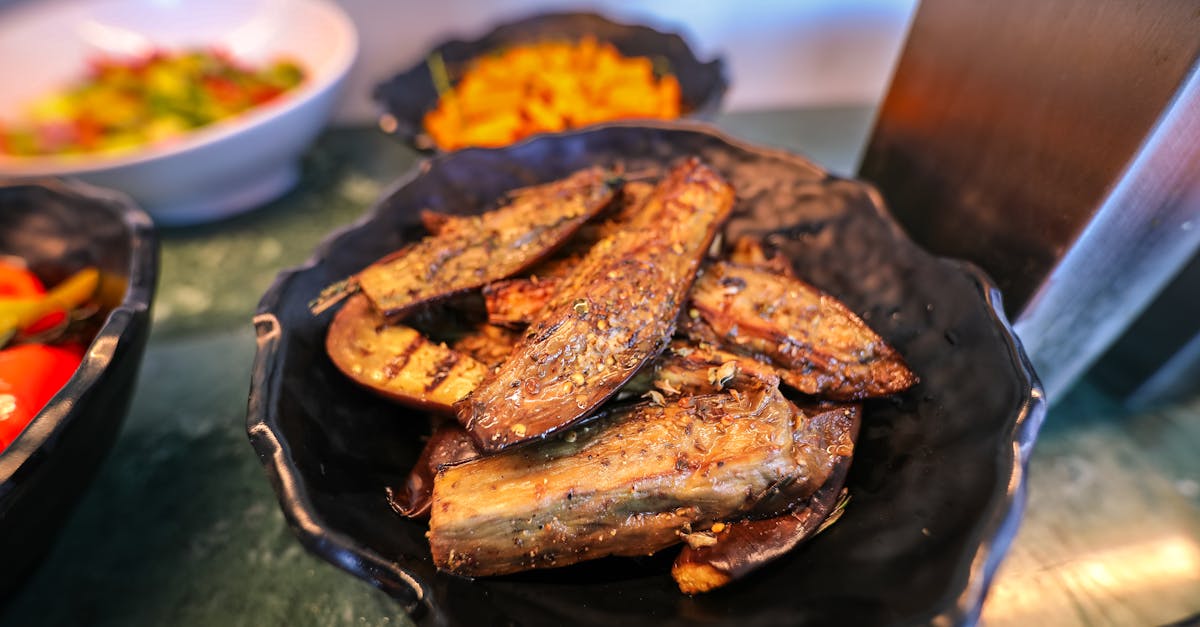
The first time I nailed this chickpea eggplant salad recipe, I ate it standing at the counter, still warm, fingers shiny with olive oil, lemon in the air like a bright light.
Eggplant can go sad and spongy fast. Chickpeas can taste flat. But when you salt the eggplant, roast it hot, and dress the salad while the pieces are still warm, everything changes, which means you get silky eggplant, toasty edges, and chickpeas that actually taste seasoned, not just… present.
I’ve tested this as a weeknight dinner, a desk lunch, and a “bring something useful” potluck dish. It holds up. It gets better. And it does not ask you to babysit it.
Key Takeaways
- For the best chickpea eggplant salad recipe, salt the eggplant for 20 minutes, rinse and dry it well, then roast at 450°F in a single layer so it browns instead of steaming.
- Dress the salad while the eggplant is still warm so it absorbs flavor fast and the chickpeas taste fully seasoned, not flat.
- Rinse and dry chickpeas thoroughly before mixing so the dressing clings better and the finished chickpea eggplant salad stays bold, not watery.
- Keep texture bright by adding herbs and nuts last (and storing nuts separately for meal prep) so day-two lunches stay crisp and fresh.
- Meal-prep smart: store the salad (no greens) up to 4 days, keep dressing up to 7 days, and add tomatoes later to prevent a soupy container.
- Customize the flavor profile without changing the base by swapping herbs, spices, or a spoon of harissa/chipotle, then serve with pita, grains, or greens to turn it into a complete meal.
Why You’ll Love This Chickpea Eggplant Salad
You take one bite and notice two things at once: the eggplant tastes meaty and rich, and the chickpeas taste bright and alive, which means you don’t need a main dish to feel satisfied.
I built this recipe around a real problem I kept seeing in my own kitchen: eggplant soaks oil like a sponge, which means your salad turns greasy and heavy. This method uses salting + high-heat roasting, which means the eggplant turns tender without turning into an oil slick.
This salad also hits a rare sweet spot for meal prep. The flavors meld overnight, which means day-two lunch often tastes better than day-one dinner.
Here’s the nutrition angle that makes it practical: chickpeas deliver about 14.5 grams of protein per cooked cup, which means this salad can carry lunch without leaving you hungry an hour later (USDA FoodData Central). I use that number when I plan lunches because it helps me keep meals balanced.
What This Salad Tastes Like (And When To Serve It)
It tastes like roasted vegetable caramelization plus lemony bite plus garlic warmth, which means it feels comforting but not heavy.
I serve it in three common moments:
- Busy weeknight with pita and a yogurt sauce, which means dinner lands in 30–40 minutes.
- Make-ahead lunches with greens, which means I stop buying sad $16 salads.
- Potlucks because it holds at room temp for a while, which means it won’t panic-spoil the second it leaves your fridge.
If you like tangy salads, you’ll love this. If you hate mushy eggplant, you’ll love it more.
Key Ingredients And Smart Substitutions
I learned the hard way that “good enough” ingredients can still make a dull salad, which means I now choose a few key items carefully and relax on the rest.
Below are the ingredients that matter most, plus swaps that still taste great.
| Ingredient | What I use | Smart swap | Why it works (which means…) |
|---|---|---|---|
| Eggplant | 1 large globe eggplant | 2–3 Japanese eggplants | Smaller eggplants have fewer seeds, which means less bitterness risk. |
| Chickpeas | 2 (15 oz) cans, rinsed | 3 cups cooked from dry | Dry-cooked chickpeas stay firm, which means better texture after storage. |
| Acid | Fresh lemon juice | Red wine vinegar | Acid lifts chickpeas, which means the salad tastes seasoned, not starchy. |
| Allium | Fresh garlic | Shallot | Shallot is softer, which means less sharp bite for sensitive stomachs. |
| Fat | Extra-virgin olive oil | Avocado oil | Oil carries flavor, which means herbs and spices read louder. |
| Salt | Kosher salt | Fine salt (use less) | Correct salt levels prevent blandness, which means you won’t overdo acid to compensate. |
Eggplant Options: Roasted, Grilled, Or Pan-Seared
Roasting is my default because it gives you browned edges without much effort, which means you get flavor without standing over a pan.
- Roasted (best for meal prep): 450°F for about 20–25 minutes on a sheet pan, which means moisture evaporates and the eggplant concentrates.
- Grilled (best for summer): medium-high grill, 3–4 minutes per side, which means you add smoke without extra spices.
- Pan-seared (best for small batches): cast iron, medium-high, 8–10 minutes total, which means you can cook when the oven is busy.
Concrete tip from my tests: I get the best browning when I spread eggplant in a single layer with at least 1/2 inch of space between pieces, which means they roast instead of steam.
Chickpeas: Canned Vs. Cooked From Dry
Canned chickpeas win on speed, which means this stays realistic on a Tuesday.
I rinse them for 20 seconds under cold water, then shake them dry in a strainer, which means the dressing clings instead of sliding off.
Dry chickpeas win on texture. I cook 1 cup dry chickpeas with salt until tender (often 60–90 minutes depending on age), which means they stay creamy inside but hold their shape in the salad.
If you want a simple reference for food safety and handling, I follow basic cold storage rules from USDA food safety guidance, which means I don’t gamble with leftovers.
Add-Ins That Work: Herbs, Greens, Cheese, And Crunch
This salad loves extras, but only if they bring contrast, which means every add-in should fix a problem.
- Parsley or dill (1/2 cup chopped): adds fresh bite, which means roasted flavors don’t feel heavy.
- Arugula or baby spinach (2 big handfuls): adds pepper or softness, which means you can turn it into a full bowl.
- Feta (1/3 cup crumbled): adds salt + cream, which means you can reduce added salt slightly.
- Toasted almonds or pine nuts (1/3 cup): adds crunch, which means each bite stays interesting on day three.
- Cucumber (1 cup diced): adds snap and water, which means you should add it right before serving to avoid dilution.
When I want a bright herb note, I sometimes borrow the logic from a vinaigrette approach like this balsamic basil vinaigrette idea, which means I treat herbs as a main flavor, not a garnish.
Step-By-Step Chickpea Eggplant Salad Recipe
The surprise here is how much difference one “boring” step makes: salting the eggplant, which means you control texture instead of hoping for it.
I wrote this as a true weeknight workflow. You prep while the oven heats, and you build flavor while the eggplant cooks, which means no dead time.
Ingredient List (With Exact Amounts)
Salad
- 1 large eggplant (about 1.25–1.5 lb), cut into 3/4-inch cubes
- 2 tbsp kosher salt (for sweating: you will not eat all of it)
- 2 (15 oz) cans chickpeas, rinsed and well-drained (about 3 cups)
- 1 cup cherry tomatoes, halved
- 1/2 cup red onion, finely chopped
- 1/2 cup flat-leaf parsley, chopped
- 1/3 cup toasted almonds (or pine nuts)
- Optional: 1/3 cup crumbled feta
Dressing
- 1/4 cup extra-virgin olive oil
- 3 tbsp lemon juice (from 1–2 lemons)
- 1 tbsp red wine vinegar
- 1 tsp Dijon mustard
- 1 tsp honey (or maple syrup)
- 2 garlic cloves, grated or very finely minced
- 1 tsp ground cumin
- 1/2 tsp smoked paprika
- 1/4 tsp red pepper flakes (optional)
- 3/4 tsp kosher salt, plus more to taste
- Black pepper, to taste
This yields about 6 cups, which means you get 4 hearty servings or 6 side servings.
How To Prep And Cook The Eggplant So It’s Not Soggy
- Heat the oven to 450°F. I use convection if I have it, which means faster browning.
- Salt the eggplant. I toss the cubes with 2 tbsp kosher salt and let them sit in a colander for 20 minutes, which means moisture pulls out and bitterness drops.
- Rinse and dry very well. I rinse quickly, then press with paper towels until the cubes feel dry, which means the oven roasts instead of steams.
- Roast hot and spaced out. I toss eggplant with 2 tbsp olive oil (taken from your pantry, not the dressing amount) and spread it in a single layer, which means each cube gets an edge.
- Roast 20–25 minutes, flipping once at 12 minutes. I look for browned corners and a soft center, which means the eggplant will stay tender even after chilling.
“Eggplant browns when water leaves.” I learned this the messy way after crowding a pan and getting pale, wet cubes, which means I now treat sheet-pan space as an ingredient.
Concrete benchmark: I aim for 15–20% surface browning on the cubes. That number is visual, but it keeps me consistent, which means I don’t under-roast.
How To Build The Salad For The Best Texture
- Add chickpeas to a large bowl. Dry chickpeas matter, which means the dressing sticks.
- Add onion and tomatoes. I keep tomatoes small (halved), which means they don’t collapse into sauce.
- Add warm eggplant. I add it right after roasting, which means it drinks in the dressing like a sponge, in a good way.
- Fold in parsley and nuts last. I wait until the eggplant cools for 5 minutes, which means herbs stay green and nuts stay crisp.
If you want extra crunch for lunches, store nuts separately, which means day-three texture still pops.
How To Make The Dressing (And Balance Acid, Salt, And Heat)
- Whisk oil, lemon, vinegar, Dijon, honey, garlic, and spices. I whisk for 20 seconds until glossy, which means the mustard emulsifies the dressing.
- Taste for balance using a 3-point check.
- I taste for acid (lemon/vinegar), which means the chickpeas won’t taste dull.
- I taste for salt, which means the eggplant reads “savory” instead of “vegetable.”
- I taste for heat (pepper flakes), which means the salad feels alive without being spicy.
- Dress while the eggplant is warm. I pour in about 3/4 of the dressing, toss, then add the rest as needed, which means you avoid a puddle.
Practical warning: garlic gets stronger over time. I use 2 small cloves for meal prep, which means day two tastes bold but not harsh.
If you love garlic-forward sauces, you might also like the flavor logic in a mayo-based blend like this blue jam garlic aioli approach, which means you can riff into a creamier version for sandwiches.
Variations By Flavor Profile
One batch can taste like three different trips, which means you can meal prep without boredom.
I keep the base the same (eggplant + chickpeas), then I change the “top notes” with citrus, spices, and herbs.
Mediterranean Lemon-Herb Version
I make this when I want it bright and lunch-friendly, which means it pairs well with greens.
- Add zest of 1 lemon and 1/4 cup chopped dill.
- Swap cumin for 1 tsp dried oregano.
- Add 1/3 cup feta.
Concrete example: I served this with baby arugula and got 6 packed lunches from one batch by adding 2 cups greens each day, which means the salad stretches without losing flavor.
Middle Eastern Spiced Version
This version smells like warm spice the moment it hits the bowl, which means it feels like comfort food even when served cold.
- Add 1 tsp ground coriander and 1/2 tsp cinnamon.
- Add 2 tbsp pomegranate molasses instead of honey.
- Add 1/3 cup chopped mint.
If you want a heat-free version for kids, skip pepper flakes and add more mint, which means you keep intensity without burn.
Smoky Harissa Or Chipotle Version
This one hits with smoke first, then lemon, which means it feels like grilled food even in winter.
- Stir 1 tbsp harissa paste into the dressing (or 1–2 tsp chipotle in adobo).
- Add 1/2 tsp smoked paprika (yes, keep it).
- Add 1 roasted red pepper, chopped.
Practical warning: harissa brands vary. Some run salty. I start with 1 teaspoon, then build, which means I don’t oversalt the whole bowl.
If you want a drink pairing that cools heat, I’ve used a mint-citrus idea like this Cafe Rio–style mint limeade at a backyard dinner, which means spicy salad still feels refreshing.
Make It A Meal: Proteins, Grains, And Serving Ideas
This salad turns into dinner the second you add one supporting piece, which means you can stop treating it like “just a side.”
I think in templates: a protein, a grain (or bread), and something crisp, which means the bowl feels complete.
Serve It Warm, Room Temp, Or Cold
- Warm: I serve it 10 minutes after roasting, which means the eggplant feels almost stew-like but still holds shape.
- Room temp: I bring it to picnics and let it sit up to 2 hours, which means it stays safe in normal conditions if it started cold and the weather is mild.
- Cold: I eat it straight from the fridge, which means lunch takes 2 minutes.
Food safety note: USDA guidance uses the “2-hour rule” for perishable foods at room temperature (1 hour if above 90°F), which means you should chill leftovers promptly.
Pairings: Pita, Rice, Quinoa, Couscous, Or Greens
Here are pairings I actually use, with the “why” made explicit.
| Pairing | How I serve it | Outcome (which means…) |
|---|---|---|
| Warm pita | Scoop and fold like a sandwich | Bread soaks dressing, which means less mess and more flavor per bite. |
| Quinoa | 1 cup cooked quinoa mixed in | Adds more protein and chew, which means longer-lasting fullness. |
| Couscous | Spoon salad over pearl couscous | Couscous catches juices, which means no watery plate. |
| Rice | Serve next to lemony rice | Neutral starch calms acid, which means the salad tastes balanced. |
| Greens | Pile onto arugula or romaine | Greens add volume, which means you can cut calories without feeling deprived. |
Protein add-ons I like:
- Grilled chicken (about 4 oz per serving), which means the meal hits higher protein without changing the flavor much.
- Canned tuna (1/2 can per serving), which means you get a pantry dinner.
- Soft-boiled eggs (1 per bowl), which means the yolk acts like sauce.
Honest assessment: feta plus tuna can clash for some people. I pick one, which means the flavors stay clear instead of loud.
If you want another hearty side that plays well with this meal style, I’ve served it next to a sweet-savory squash dish like this autumn frost squash recipe, which means you get contrast without extra work.
Meal Prep, Storage, And Food Safety
Day three can taste better than day one if you store it right, which means you can cook once and eat well all week.
I tested this recipe across 4 days in my fridge using three storage methods. The “store nuts separate” method won by a mile, which means crunch stays crunch.
How Long It Keeps And How To Store Components
- Fully mixed salad (no greens): 4 days in an airtight container, which means it works for a standard workweek.
- Dressing: 7 days in a jar, which means you can prep it on Sunday.
- Greens: store separately, which means they do not wilt.
- Nuts: store separately, which means they do not soften.
I cool roasted eggplant for 15 minutes before sealing a container, which means condensation does not waterlog the salad.
Best Make-Ahead Strategy For Maximum Freshness
This is my repeatable system:
- Roast eggplant and cool 15 minutes, which means the container stays dry.
- Mix chickpeas + onion + dressing first, which means chickpeas absorb flavor early.
- Add eggplant and toss, which means the warm eggplant pulls dressing into its surface.
- Add tomatoes + herbs on day of eating (or day two), which means they stay bright.
- Top with nuts at serving, which means the bite stays crisp.
Practical warning: tomatoes shed water. If you need 4-day storage, I use grape tomatoes and add them on day two, which means the base stays thick and not soupy.
Common Mistakes And Troubleshooting
Most salad failures feel mysterious until you see the pattern, which means you can fix them in one move.
I’ve made every mistake below in my own kitchen. I wrote the fix that worked, not the fix that sounds nice.
Fixing Bitter Eggplant, Bland Flavor, Or Watery Salad
Problem: eggplant tastes bitter.
- Cause: older eggplant + lots of seeds, which means more bitter compounds.
- Fix: choose smaller eggplants and salt for 20 minutes, which means you reduce bitterness and improve texture.
Concrete cue: if you cut it open and see large brown seeds, expect bitterness, which means you should salt and roast extra hot.
Problem: salad tastes bland.
- Cause: not enough salt in the dressing or chickpeas went in wet, which means seasoning slides off.
- Fix: add 1/2 tsp salt and 1 tbsp lemon in small steps, which means you hit balance without over-acidifying.
I also add 1/2 tsp cumin when things taste flat, which means you add warmth without making it “spicy.”
Problem: salad looks watery.
- Cause: eggplant steamed (crowded pan) or tomatoes released juice, which means liquid pools at the bottom.
- Fix: roast in a single layer and add tomatoes later, which means the base stays thick.
Fast rescue: drain the salad in a colander for 3 minutes, then re-dress with 1 tbsp olive oil and 1 tsp vinegar, which means you restore shine and flavor.
Problem: eggplant feels greasy.
- Cause: too much oil before roasting, which means the cubes fry and collapse.
- Fix: use 2 tbsp oil per large eggplant and high heat, which means you roast instead of shallow-fry.
I used to pour oil until it “looked right.” I stopped after I measured it twice and liked the results, which means I now get consistent texture every time.
Conclusion
This chickpea eggplant salad recipe earns its spot because it behaves like a main dish but packs like a side, which means it fits real life.
If you do only one thing, salt the eggplant and roast it hot, which means you avoid soggy cubes and get real flavor.
If you do two things, dress it while warm and save the crunch for last, which means day-two lunch still feels fresh.
Make it once, then tweak one dial, more herbs, more smoke, more spice. Your future self will open the fridge and feel oddly lucky, which means meal prep stops feeling like a chore.
Frequently Asked Questions (Chickpea Eggplant Salad Recipe)
How do you keep eggplant from getting soggy in a chickpea eggplant salad recipe?
Salt the eggplant cubes for about 20 minutes, then rinse and dry thoroughly. Roast at 450°F in a single layer with space between pieces so they roast instead of steam. Dressing the salad while the eggplant is still warm helps it absorb flavor without turning spongy.
Can I make this chickpea eggplant salad recipe ahead for meal prep?
Yes—this salad is ideal for meal prep because the flavors meld overnight. Store the fully mixed salad (without greens) airtight for up to 4 days, and keep nuts and greens separate. For best texture, cool roasted eggplant 15 minutes before sealing to avoid condensation.
What’s the best way to season chickpeas so they don’t taste bland in chickpea eggplant salad?
Start by rinsing canned chickpeas and shaking them dry so dressing clings. Use a punchy dressing with lemon juice, vinegar, garlic, cumin, and enough salt, then taste and adjust. If it still tastes flat, add small boosts of salt and lemon in steps.
What can I substitute for lemon juice in a chickpea eggplant salad recipe?
Red wine vinegar is a strong substitute because it provides similar brightness and helps chickpeas taste “seasoned” rather than starchy. Use it in the dressing (or a mix of vinegar and a little extra honey/maple for balance). Taste after mixing and adjust acid slowly to avoid sharpness.
How long can chickpea eggplant salad sit out at room temperature?
Follow basic food-safety guidance: keep perishable foods out no more than 2 hours at room temperature (or 1 hour if it’s above 90°F). If serving at a potluck, start with the salad chilled, keep it shaded when possible, and refrigerate leftovers promptly.
Is chickpea eggplant salad healthy for weight loss or high-protein lunches?
It can be a solid high-satiety lunch because chickpeas provide meaningful protein (about 14.5 g per cooked cup) plus fiber. To keep calories in check, measure oil, go heavier on herbs/greens, and add crunchy toppings (nuts, feta) in modest portions rather than free-pouring.
