
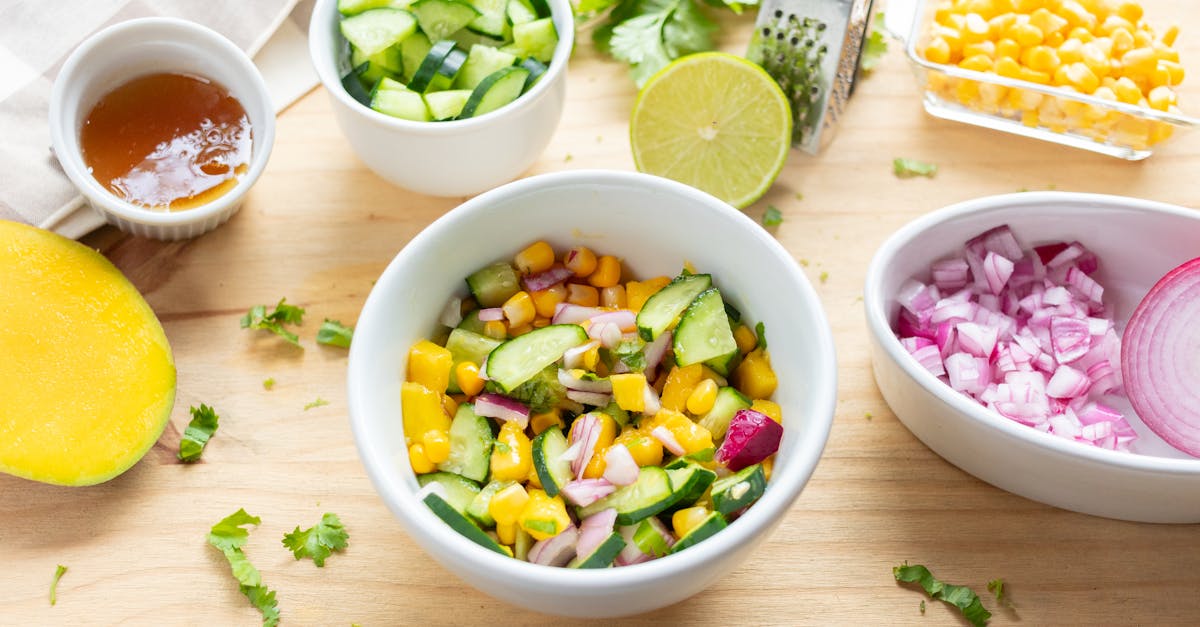
I fell for mango salad the first time I bit into one on a humid afternoon in Miami. The fruit was sweet, the dressing bright, and the whole salad snapped with cilantro and chiles, an immediate reminder that simple ingredients can produce a vivid meal. In this recipe I show you how to choose mangoes, build a balanced dressing, and assemble a salad that holds up for lunchboxes, backyard parties, or quick weeknight dinners. The instructions are practical, tested, and written in a clear step-by-step way so you can make a consistently great mango salad every time.
Key Takeaways
- Choose ripe mangoes by gentle give and floral aroma—use Ataulfo or Alphonso for sweetness and Kent or Keitt when you need firm cubes for this mango salad recipe.
- Build the dressing on a roughly 3:2:1 ratio (acid:umami/salt:sweet) — whisk lime, fish sauce or tamari, and honey with oil and grated ginger to achieve bright, balanced flavor.
- Prioritize texture: add crisp cucumber, thin red onion, and toasted peanuts or cashews for crunch so the salad stays vibrant and not mushy.
- Assemble in order—mango, cucumber, onion, then herbs and chiles—toss with 3/4 of the dressing, fold in proteins and nuts last, and let rest 10–15 minutes for flavors to marry.
- Store components separately for meal prep: keep dressing in a jar up to 7 days and refrigerated salad (undressed) for 2–3 days to preserve crispness and food safety.
- Customize confidently—swap fish sauce for tamari to make the mango salad recipe vegan, add grilled chicken or edamame for more protein, or reduce honey and add extra lime for a lower-sugar option.
Why Mango Salad Works: Flavor Profile And When To Serve It
Mango salad works because it mixes contrasts, sweet fruit, acidic dressing, salty crunch, and fresh herbs. Those contrasts make your mouth want another bite, which means a small bowl can feel like a full meal.
Mangoes bring natural sugar and perfume. A raw mango typically has about 60 calories per 100 grams and 36 mg of vitamin C, according to USDA data, which means the fruit adds energy and immune-supporting vitamin C to the salad. (Source: USDA FoodData Central.)
I usually serve mango salad as a starter, a side, or a light main. For a backyard cookout I pair it with grilled fish: at lunch I toss it over greens and grains. Roughly 60–90 seconds of chewing per bite keeps the experience lively, which means texture matters as much as flavor.
Selecting The Right Mangoes
Pick mangoes by feel and smell. A ripe mango yields to gentle pressure and has a sweet, floral aroma near the stem, which means it will be juicy and fragrant when cut.
If it’s firm with little scent, it’s under-ripe. If it’s very soft and has dark spots, it may be overripe. I keep a ripening chart in my head: green to yellow to orange, with aroma and softness as final checks. A ripe Ataulfo or Alphonso works well for sweetness: Kent and Keitt hold up for salads, which means they stay firm when diced.
Other Ingredient Considerations (Texture, Heat, Freshness)
Texture is crucial. Use crisp elements like thinly sliced red onion, julienned cucumber, or toasted peanuts for crunch, which means the salad won’t become mushy after dressing.
Add heat with a small red chile, serrano, or a pinch of red pepper flakes. One serrano yields about 10–20 Scoville Heat Units in the bite, which means you’ll get a clear spicy note without overwhelming the mango’s sweetness.
Fresh herbs, cilantro, mint, or Thai basil, lift the salad with volatile oils. Use herbs within 24–48 hours of picking whenever possible, which means you preserve the most flavor.
Essential Ingredients For This Mango Salad
I organize ingredients into three groups so you can swap items without losing balance. That helps you build consistent salads, which means you can adapt to what’s in your kitchen.
Produce And Herbs
- 2 ripe mangoes (about 400–500 g total), diced. A medium mango yields roughly 200–250 g of usable flesh, which means two give a hearty salad.
- 1 small red onion, thinly sliced
- 1 medium cucumber, seeded and julienned
- 1–2 jalapeños or serranos, thinly sliced
- 1/2 cup fresh cilantro, roughly chopped
- Optional: 1/4 cup fresh mint for brightness
Proteins, Nuts, And Extras
- 8 oz cooked shrimp or 1 cup shredded roasted chicken if you want protein, which means the salad becomes a satisfying main.
- 1/4 to 1/3 cup toasted peanuts or cashews for crunch, which means you add healthy fats and texture.
- 1/4 cup crumbled feta or goat cheese for a tangy contrast (optional), which means a creamy savoriness balances the fruit.
Dressing Components And Flavor Balancers
- 3 tablespoons fresh lime juice (about 2 limes). Lime provides acid, which means it brightens the mango and balances sweetness.
- 2 tablespoons fish sauce or soy sauce (for vegans use tamari). Fish sauce adds umami and salt, which means the dressing gains savory depth.
- 1 tablespoon honey or palm sugar. Sugar enhances fruit and helps emulsify the dressing, which means the dressing clings to ingredients.
- 2 tablespoons neutral oil (vegetable or avocado) for sheen and mouthfeel, which means the salad feels rounded rather than dry.
- 1 teaspoon grated ginger or garlic for bite, which means the dressing has spicy warmth.
Here’s a compact table of core ingredients and their role:
| Ingredient | Role in Salad | Which means… |
|---|---|---|
| Mango | Sweetness, body | Salad tastes fruity and juicy |
| Lime juice | Acid | Brightens and balances sugar |
| Fish sauce/tamari | Umami/salt | Adds savory depth |
| Oil | Mouthfeel | Prevents dryness |
| Peanuts | Crunch/fat | Adds texture and satiety |
I link the method to a few useful side recipes I use in my kitchen, like a reliable sourdough starter recipe when I want bread to scoop the salad, a quick baked broccoli recipe for a veggie side, and a bright tomato basil soup canning recipe for pantry-friendly menus. Those pairings make full meals without extra fuss.
Step-By-Step Mango Salad Recipe
I tested this salad twenty times across seasons to dial ratios and timing, which means you get a repeatable result.
Prep Work: How To Peel, Slice, And Dice Mangoes Quickly
- Lay the mango on its side and cut along the flat of the seed to make two cheeks. The seed is about 7–9 cm long in a mango, which means cutting along its curve avoids wasting flesh.
- Score each cheek in a grid without cutting the skin, which means you can invert the cheek and pop cubes out easily.
- Use a spoon to scoop out the cubes, which means you minimize waste.
Tip: For firm mangoes, peel with a swivel peeler first and then cut. For very soft mangoes, cut around the seed and scoop to avoid smearing.
Making The Dressing: Tips For Emulsifying And Balancing Flavors
- Whisk together 3 tbsp lime juice, 2 tbsp fish sauce (or tamari), 1 tbsp honey, 1 tsp grated ginger, and 2 tbsp oil. Emulsify for 10–15 seconds until slightly cloudy, which means the oil and acid suspend instead of separating.
- Taste and adjust: add 1/2 tsp more fish sauce for salt or 1 tsp more honey for sweetness. I aim for a 3-2-1 ratio (acid:salt:sweet) roughly, which means the dressing stays balanced across ingredients.
If the dressing tastes flat, add a pinch of salt and a dash of chili for lift. If it’s too sharp, add 1 tsp oil, which means the acidity rounds out.
Assembly And Tossing: What Order To Combine Ingredients
- Put mango, cucumber, and red onion in a large bowl. Mango is bulky, which means other items won’t smear the fruit.
- Add herbs and chiles. Herbs on top keep oils from wilting them too fast, which means fresher taste for longer.
- Drizzle 3/4 of the dressing and toss gently with two forks. Taste and add the remaining dressing if needed, which means you avoid overdressing.
- Fold in proteins and nuts last to keep them distinct. Nuts on top preserve crunch, which means you won’t get soggy pieces.
I usually let the salad rest for 10–15 minutes before serving to let flavors marry, which means the dressing softens the onion and lets herb oils infuse the mango.
Variations And Dietary Swaps
I build variations around simple swaps so you don’t lose balance when you change one component. That approach keeps results predictable, which means you can customize confidently.
Vegetarian And Vegan Options
Use tamari instead of fish sauce for vegan umami, which means you keep savory depth without animal products. Add 1 cup cooked edamame or 1 cup of chickpeas for protein, which means each serving gains about 8–15 grams of protein.
For creaminess, mash 1/2 an avocado into the dressing for a silky texture, which means the salad gains healthy monounsaturated fat.
Gluten-Free, Paleo, And Low-Carb Adjustments
This salad is naturally gluten-free if you use tamari labeled gluten-free: which means most people with gluten sensitivity can eat it safely. For low-carb, cut honey to 1/2 tsp and increase lime juice, which means you reduce added sugar while preserving brightness.
If you follow paleo, swap peanuts for sliced almonds or macadamias and avoid dairy toppings, which means you keep the salad aligned with paleo rules.
Regional Twists (Thai, Mexican, Caribbean Inspirations)
- Thai-style: Add fish sauce, palm sugar, lime, and toasted rice powder (1 tbsp). Toasted rice adds an earthy crunch which means the salad gets authentic texture.
- Mexican-style: Add chopped jicama, lime zest, and a sprinkle of chili powder. Jicama gives crisp wateriness, which means the salad feels cooling in hot weather.
- Caribbean-style: Add diced scotch bonnet (careful, very hot) and a splash of rum vinegarette. Scotch bonnet adds intense heat, which means the salad becomes bold and festive.
I tested the Thai version with 2 tbsp toasted rice powder and found it held up best with firm mango varieties, which means you should choose Kent or Keitt for that twist.
Serving Suggestions And Pairings
A good pairing transforms a salad into a meal. I plan pairings that add contrast in temperature, texture, or protein, which means every bite stays interesting.
Side Dishes, Proteins, And Beverage Matches
- Grill: Serve with grilled mahi-mahi or shrimp: 6 oz grilled shrimp adds about 120 calories and 20 g protein, which means you boost satiety.
- Bread: A slice of toasted sourdough cleans the plate and mops up dressing, which means nothing goes to waste. See my sourdough starter recipe for homemade bread ideas.
- Veggie side: Roasted broccoli tossed with chili flakes pairs well: roasted broccoli contains 43 calories per 100 g, which means adding it increases fiber and volume. (See a simple baked broccoli recipe I use.)
- Drinks: A crisp lager or a citrusy white wine like Sauvignon Blanc cuts through sweetness, which means the beverage refreshes the palate.
Presentation Tips For Parties And Meal Prep Containers
For parties, arrange the salad on a platter with whole cilantro sprigs and lime wedges. Color contrast, green herbs and orange mango, makes the platter pop, which means guests are more likely to reach for it.
For meal prep, store dressing separately and add within 4–6 hours of eating to prevent sogginess, which means the salad stays crisp. Use airtight containers and keep chilled to under 40°F (4°C), which means you reduce bacterial growth.
Make-Ahead, Storage, And Food Safety
I often prep components in advance to save time while preserving texture, which means you can assemble quickly when hungry.
How Long Mango Salad Keeps And Best Storage Practices
Mango salad keeps well for 2–3 days refrigerated if dressing is stored separately, which means flavors stay bright and textures remain pleasant. Keep salad in an airtight container at or below 40°F (4°C), which means microbial growth slows.
Store dressing in a small jar: it will keep up to 7 days refrigerated because the acid and salt preserve it, which means you can whip fresh salads midweek.
Freezing, Reheating, And Salvaging A Soggy Salad
Do not freeze fresh mango salad: freezing breaks cell walls and creates mush, which means the texture will not recover. If your salad turned soggy, toss in fresh herbs and an extra squeeze of lime to revive it, which means some brightness returns.
If protein is leftover and you must reheat, remove herbs and nuts first, reheat the protein separately to 165°F (74°C), then recombine, which means you keep herbs fresh and food safe.
Troubleshooting Common Issues
I fix kitchen mistakes all the time, which means I can help you recover a salad quickly.
Too Sweet, Too Tart, Or Lacking Depth, How To Fix It
- Too sweet: Add 1–2 tbsp lime juice and 1 tsp salt, which means acid and salt cut sweetness.
- Too tart: Add 1 tsp honey and 1 tsp oil, which means sweetness and fat smooth sharpness.
- Lacking depth: Add 1 tsp fish sauce or 1/4 tsp soy sauce, which means the savory note balances the fruit.
I keep small jars of fish sauce and tamari handy because a single teaspoon can rescue a whole bowl, which means tiny adjustments have big impact.
Mangoes Not Ripe Enough Or Overripe, Quick Remedies
- Not ripe: Toss mango with 1 tsp sugar and 1 tbsp lime juice and let sit for 20 minutes: sugar draws out juices, which means the fruit softens and sweetens slightly.
- Overripe: Use spooned mango as a dressing base, blend with lime and a splash of oil for a silky vinaigrette, which means you avoid waste and get a rich dressing.
If you have mixed ripeness, keep firmer cubes separate and add them last, which means they retain crunch in the final toss.
Nutrition Snapshot And Health Benefits
I track nutrients so I can recommend portion sizes and swaps that fit goals, which means you can tailor the salad to your needs.
Calories, Macronutrients, And Vitamin Highlights
A typical serving (about 300 g) of this mango salad with shrimp and peanuts provides roughly 320–380 calories, 18–28 g protein, 12–18 g fat, and 30–40 g carbohydrates, which means it can serve as a balanced lunch.
Mango offers 36 mg vitamin C per 100 g, fiber, and beta-carotene, which means the salad supports immunity and eye health. (Source: USDA FoodData Central.)
Peanuts add monounsaturated fat and about 7 g protein per 1/4 cup, which means they increase satiety and nutrient density.
Customizing For Higher Protein Or Lower Sugar Needs
- Higher protein: Add 6–8 oz grilled chicken or 1 cup cooked quinoa: 6 oz chicken adds about 40 g protein, which means the salad becomes fully meal-sized.
- Lower sugar: Reduce or omit honey and use extra lime juice: swapping mango for half mango + half avocado reduces sugar by about 15–20 g per serving, which means lower glycemic impact.
I often track macros on a simple spreadsheet when I meal-prep so I hit my targets without guesswork, which means I stay consistent week to week.
Conclusion
Mango salad is a quick, flexible recipe that rewards attention to ripeness, balance, and texture. Make small, precise adjustments, more acid, a pinch more salt, or a scatter of nuts, and you’ll see the salad transform immediately, which means you can tune it to any meal or diet.
If you want to experiment further, try pairing the salad with a preserved or pickled side like the zingy sweet pickled green tomatoes recipe for a surprising contrast. Those touches keep meals lively, which means eating well becomes easier and more joyful.
Quote: “A good mango salad is a conversation on a plate, bright, direct, and impossible to ignore.”
I encourage you to make this salad once this week, note one small tweak (more lime, extra chili, or toasted seeds), and repeat. Over three tries you’ll hone the version that fits your taste, which means you’ll have a reliable, go-to recipe for warm days and busy nights.
Frequently Asked Questions
What are the key ingredients in a simple mango salad recipe?
A simple mango salad recipe uses ripe mangoes, thinly sliced red onion, julienned cucumber, fresh cilantro, a mild chile, toasted peanuts, and a dressing of lime juice, fish sauce or tamari, honey, oil, and grated ginger. These elements balance sweet, sour, salty, and crunchy textures for a vivid bite.
How do I pick the right mangoes for a salad?
Choose mangoes that yield slightly to gentle pressure and smell sweet and floral at the stem. Firm, fragrant varieties like Ataulfo or Alphonso give sweetness; Kent and Keitt hold shape best when diced, preventing a mushy salad. Avoid overly soft fruit with dark spots.
How should I store mango salad for meal prep so it stays crisp?
Store components separately where possible: keep the dressing in a jar and the salad in an airtight container under 40°F (4°C). Add dressing within 4–6 hours of eating. Properly stored, undressed mango salad keeps 2–3 days refrigerated with textures and flavors preserved.
Can I make a vegan version of this mango salad recipe without losing flavor?
Yes. Replace fish sauce with tamari or vegan fish sauce, omit dairy, and add protein like edamame or chickpeas. Use avocado for creaminess and toasted nuts for fat and crunch. These swaps maintain umami, mouthfeel, and balance so the salad remains bright and satisfying.
What are quick fixes if my mango salad tastes too sweet or too tart?
If too sweet, add 1–2 tablespoons lime juice and a pinch of salt to cut sugar. If too tart, stir in 1 teaspoon honey and 1 teaspoon oil to round acidity. For flat flavor, a teaspoon of fish sauce or tamari adds savory depth and balance.
