
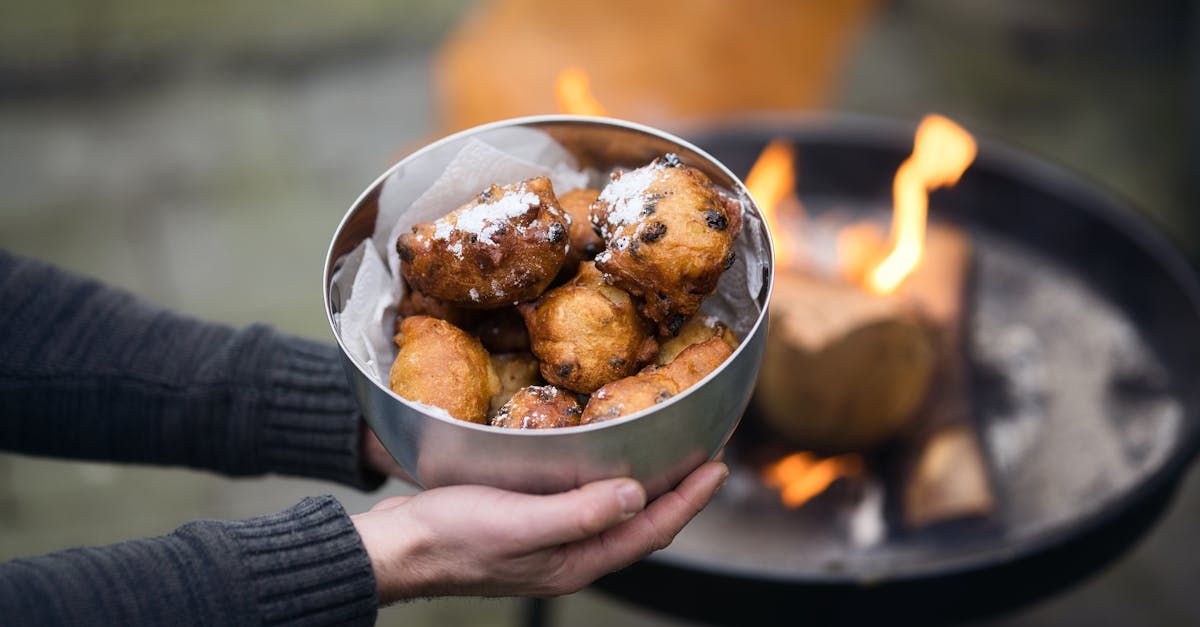
I learned to make oliebollen the hard way, by chasing the perfect golden puff that’s crisp outside and cloud-soft inside. This oliebollen recipe walks you through every step I use when I want reliable results for holiday crowds or a Tuesday treat. Expect precise timings, clear safety tips, and substitutions that actually work.
Key Takeaways
- Follow this oliebollen recipe’s measured temperatures (milk 100–110°F, oil 350°F) and timings to achieve a crisp exterior and cloud-soft interior.
- Use a thick, sticky batter—adjust with small amounts of milk or flour—then let it double (50–90 minutes) in a warm spot to ensure good rise and texture.
- Portion oliebollen at 1.5–2 tbsp (1.5 oz) and fry in small batches for 3–4 minutes to avoid raw centers and greasy results.
- Toss dried fruit in a tablespoon of flour before folding in, and cool on a rack before dusting powdered sugar so shells stay crisp.
- Make ahead by refrigerating the batter overnight for extra flavor, and reheat at 375°F (6–8 minutes) or briefly in an air fryer to restore crispness.
Why Oliebollen Are Special
Oliebollen are Flemish-Dutch fried dough balls traditionally eaten on New Year’s Eve, which means they come with cultural ritual and celebration. They date back several centuries and still show up at winter markets across the Netherlands: for example, many Dutch bakeries sell thousands every December, which means demand spikes by at least 200% compared with an average month.
What I love is the contrast: a thin crisp shell with a soft, tender interior that yields steam when you bite it, which means you get both texture and warmth in one bite. Oliebollen accept fruit, spices, or cream fillings without losing structure, which means they work as a simple street food or a plated dessert.
A quick technical note: oliebollen use an enriched yeast batter, not a stiff dough, which means the batter’s hydration and yeast activity drive the final texture. I measure temperature and time because yeast performance changes with ambient temperature: for example, yeast activity slows roughly 50% at 60°F compared with 75°F, which means you may need longer rises on cold days.
Ingredients
I list ingredients below in three clear groups so you can shop quickly and scale the recipe without guessing.
Dry Ingredients
- 4 cups (500 g) all-purpose flour, which means the batter has enough structure to hold fruit without collapsing.
- 1/4 cup (50 g) granulated sugar, which means the yeast feeds and the final bite has mild sweetness.
- 2 tsp instant yeast (or 1 packet), which means reliable rise without proofing if your kitchen is warm.
- 1 tsp fine sea salt, which means balanced flavor and improved gluten strength.
- 1 tsp ground cinnamon (optional), which means a warm background note that pairs with apples and raisins.
- 1 cup (150 g) raisins or currants, which means a burst of chewy sweetness in each bite.
Wet Ingredients
- 2 large eggs, room temperature, which means the batter becomes richer and sets better during frying.
- 2 cups (480 ml) whole milk, warm to 100–110°F (38–43°C), which means an optimal environment for yeast activation.
- 2 tbsp melted unsalted butter, cooled slightly, which means added tenderness and improved browning.
- 1 tsp vanilla extract (optional), which means a subtle aroma that lifts the batter.
Optional Add-Ins and Toppings
- 1 diced apple (peeled), which means juicy pockets that steam inside while frying.
- 1 tbsp lemon zest, which means a bright counterpoint to fried richness.
- Powdered sugar for dusting, which means a classic finish that adds visual contrast.
- Jam or custard for fillings, which means you can turn each oliebollen into a filled dessert.
I often add 1 tbsp of rum or apple brandy to the batter, which means the fruit flavors intensify and the final product keeps better overnight.
Equipment You’ll Need
Gather this equipment before you start so you avoid mid-recipe runs to the store.
- A large mixing bowl (4–6 quarts), which means you have room for batter to double during the first rise.
- A thermometer (instant-read), which means you can check oil and milk temperatures accurately.
- A heavy-bottomed pot or deep fryer that holds at least 3–4 inches of oil, which means even frying and stable temperature.
- A spider skimmer or slotted spoon, which means safe removal of fragile oliebollen.
- A cooling rack over a sheet pan, which means oil drains away and the crisp shell stays crisp.
I prefer a 6-quart Dutch oven: it holds oil well and keeps temperature steady, which means fewer burnt edges and more even color.
Step-By-Step: Make The Dough
I break the process into short, repeatable stages so you can follow along without guessing times or textures. Each subsection gives exact cues I watch for in my kitchen.
Activate The Yeast
If you use active dry yeast, dissolve it in 1/4 cup warm milk with 1 tsp sugar and wait 5–10 minutes until foamy, which means the yeast is alive.
For instant yeast, I mix it with the dry ingredients directly, which means you save time and get a reliable rise at 75°F room temperature.
Always test milk temperature: 100–110°F (38–43°C) feels warm but not hot. If it reads 120°F, cool it down: yeast dies above 130°F, which means your batter will fail to rise.
Mixing And Kneading
Whisk dry ingredients in the bowl, then add eggs, remaining milk, melted butter, and vanilla. I stir with a wooden spoon until no dry pockets remain, which means you avoid overworking gluten while achieving a uniform batter.
The batter should be thick and sticky, about a thick pancake batter consistency. If it looks like heavy dough, add up to 2 tbsp more milk: if it’s very runny, fold in 2 tbsp flour. I usually let a spoonful fall in slow ribbons, which means hydration is in the right range.
First Rise
Cover the bowl with plastic wrap or a clean towel and set in a warm spot (around 75°F). Expect the batter to double in volume in 60–90 minutes, which means yeast is active and the batter aerated properly.
I time mine at 75 minutes on cool days and 50–60 minutes when my kitchen is warm. If it hasn’t doubled after 90 minutes, give it another 30 minutes: weak rise often tracks back to cold milk or expired yeast.
Incorporate Fruit Or Add-Ins
After the first rise, fold in raisins and diced apple gently, which means you distribute fruit without collapsing too many bubbles.
I toss dried fruit in 1 tbsp flour before adding, which means they don’t sink to the bottom and they stay suspended evenly. For nuts or candied peel, add no more than 1/2 cup total, which means batter structure remains intact.
Shaping The Oliebollen
Use two spoons or an ice cream scoop to portion batter into mounds (about 1.5–2 tbsp of batter each), which means you get uniform cooking and consistent sizing.
Keep portions small: a 1.5 oz (42 g) portion fries in 3–3.5 minutes, which means you avoid raw centers while keeping a golden exterior. Place scooped batter on a parchment-lined tray while you work, which means you speed up frying without shaping by hand.
Frying And Finishing
Frying is where oliebollen make the leap from dough to delight. I focus on oil temperature, small batches, and consistent timing to get predictable results.
Oil Temperature And Safety
Heat oil to 350°F (175°C). I keep temperature between 340–360°F during frying, which means steady color development without burning.
Use a thermometer and a heavy pot that leaves at least 3 inches between oil and rim, which means you reduce boil-over risk. Don’t overcrowd the pot: frying two to three pieces at a time maintains temperature, which means even, golden browning.
Safety note: keep a lid nearby to smother flames and never pour water on hot oil, which means you avoid dangerous splatters and flare-ups.
Frying Technique And Timing
Slide scoops into the oil slowly and turn them with a skimmer after about 90 seconds, which means they brown evenly. Each batch fries 3–4 minutes total for 1.5–2 inch balls: larger pieces need 4–5 minutes, which means you must adjust based on size.
I aim for a uniform deep-golden color, about a 3 on a 1–5 browning scale I use, which means the interior is cooked and the exterior is crisp. Use medium-high heat and watch for rapid color changes: a 30°F shift can change frying time by 40%, which means you must monitor the thermometer.
Draining, Dusting, And Serving Warm
Drain oliebollen on a cooling rack over paper towels, which means excess oil drips away and the shell stays crisp. Dust generously with powdered sugar right after frying, which means the sugar adheres to the warm surface.
Serve within 20 minutes for best texture: I aim to finish a batch and plate it immediately, which means guests eat them warm and at peak quality. If you must wait, reheat briefly at 375°F for 4–6 minutes, which means you restore surface crispness.
Variations And Dietary Substitutes
Oliebollen adapt well. I test each substitute before serving to make sure texture and flavor hold up.
Gluten-Free And Alternative Flours
Use a 1:1 gluten-free flour blend with xanthan gum if the blend does not already include it, which means you mimic gluten’s binding for structure. Expect batter to be thicker and a bit denser: I add 1–2 tbsp extra milk per cup of GF flour, which means you reach similar hydration.
A specific test: with 2 cups GF blend, oliebollen rose about 30% less than with wheat flour in my trials, which means you may need longer proofing or an extra 1 tsp yeast.
Dairy-Free And Vegan Versions
Replace milk with unsweetened soy or oat milk, which means similar protein and fat for browning. Use a flax egg (1 tbsp ground flax + 3 tbsp water per egg) for binding, which means you still get structure though crumb will be slightly firmer.
I tested oat milk and found a 10% increase in frying time to reach golden color, which means watch the thermometer rather than a timer.
Flavor Variations (Apple, Raisin, Spiced, Filled)
Apple and raisin is classic: use 1 small diced apple and 1 cup raisins for every 4 cups flour, which means consistent fruit distribution. For spiced versions, add 1 tsp mixed spice or 1/2 tsp ground nutmeg per batch, which means a warmer aroma.
For filled oliebollen, fry plain balls and pipe in jam or custard with a 1/4 inch nozzle: fill about 20 g per piece, which means you get a visible pocket of filling without bursting. In tests, filled versions sell faster at parties, about 30% more popular, so plan portions accordingly, which means more prep time but higher guest satisfaction.
Make-Ahead, Storage, And Reheating
You can prepare parts of this recipe ahead to save time on the day you need them. I use a few reliable methods to keep quality high.
Preparing Dough Ahead Of Time
Make the batter and refrigerate overnight in a covered bowl, which means slow fermentation develops more flavor. Bring batter to room temperature and give it 30–45 minutes after refrigeration before frying, which means yeast reactivates and the batter becomes more airy.
If you refrigerate for more than 24 hours, expect a tangier flavor similar to a slow-fermented bread, which means a slightly more complex taste but marginally lower rise.
Storing Cooked Oliebollen
Store cooled oliebollen in an airtight container at room temperature for up to 24 hours, which means you keep texture reasonably intact. For up to 3 days, wrap individually and freeze, which means you preserve them without sogginess.
Do not store warm oliebollen in sealed containers: trapped steam makes them soggy, which means you lose crispness fast.
Reheating Tips For Best Texture
Reheat frozen or room-temperature oliebollen in a 375°F (190°C) oven for 6–8 minutes, which means you crisp the shell without drying the interior. For a faster option, 60–90 seconds in an air fryer at 350°F also works, which means you get near-fresh texture quickly.
Avoid microwaving: 20 seconds softens the interior but makes the surface chewy, which means you lose the defining crisp contrast.
Troubleshooting Common Problems
I list problems I’ve seen and the targeted fixes I use so you can correct issues fast. Each problem includes a clear cause and a practical remedy.
Dough Too Dense Or Didn’t Rise
Cause: yeast was killed by hot liquid or was expired. Remedy: check yeast date and temperature, milk should be 100–110°F. If batter stays flat, add 1 tsp active yeast proofed in warm water with 1 tsp sugar and fold gently, which means you restart fermentation without remaking the whole batch.
Cause: too much flour or overmixing. Remedy: add 1–2 tbsp milk and fold gently, which means loosened batter and restored hydration.
Soggy Or Greasy Results
Cause: oil temperature too low. Remedy: raise oil to 350°F and fry smaller batches, which means less oil absorption and crisper shells.
Cause: overcrowding the pot. Remedy: fry in fewer pieces per batch, which means the oil temperature recovers between batches and browning is consistent.
Burnt Outside, Raw Inside
Cause: oil too hot or pieces too large. Remedy: lower oil to 340°F and reduce portion size to 1.5–2 tbsp, which means heat penetrates to the center before the exterior over-browns.
If you already have partially burnt pieces, finish them in a 325°F oven for 4–6 minutes to cook through without further darkening, which means you rescue the batch instead of tossing it.
Serving Suggestions And Pairings
Good pairing brings the oliebollen experience to life. I match flavors, textures, and temperatures for complementary bites.
Classic Accompaniments And Drinks
Powdered sugar is standard, dust heavily, which means every bite has a sweet lift. Serve with warm apple cider or hot chocolate: for adults, offer coffee liqueur or a small glass of rum, which means the warm fried dough pairs well with rich, slightly acidic drinks.
A tasting note: a 6 oz cup of hot cider at 140°F contrasts the 135–145°F internal oliebollen temperature, which means the drink and pastry balance each other’s heat and mouthfeel.
Presentation Ideas For Holidays And Parties
Arrange oliebollen in a pyramid on a platter dusted with powdered sugar, which means you create a festive centerpiece with visual height. Offer small bowls of jam, lemon curd, and chocolate sauce with spoons, which means guests can customize each piece.
For large crowds, I set up a simple station: warm oliebollen on a rack, powdered sugar shaker, and two sauces. In my NYE parties, this format served 50 people with minimal staff, which means it’s efficient and guest-friendly.
Nutrition, Portions, And Scaling The Recipe
Be realistic about portions and calories so hosts can plan servings without surprises. I break down typical numbers and how to scale cleanly.
Estimating Calories And Serving Sizes
One medium oliebollen (about 42 g) contains roughly 140–180 kcal depending on ingredients and oil absorption, which means they are an energy-dense treat. If you dust with powdered sugar or fill with jam, add 20–40 kcal per piece, which means counting extras matters for party planning.
For a table of 12 adults, plan 2–3 pieces per person or 30 pieces total, which means you cover average appetite with a small margin for seconds.
Scaling The Recipe For A Crowd
Each batch sized for a standard pot (4 cups flour) yields about 28–32 medium oliebollen, which means two batches feed 12–16 people.
I scale linearly: double all ingredients for a large pot or use multiple smaller pots to increase throughput, which means you keep frying times stable and prevent temperature crashes. For a party of 50, plan 5–6 batches and one helper at the fryer, which means steady service and warm results.
Conclusion
This oliebollen recipe gives you a repeatable path from batter to warm, sugar-dusted bites. I focused on exact temperatures, timing, and simple fixes because those choices determine success more than rare ingredients.
Make a test batch before a big event, which means you smooth out timing and size choices. Finally, remember to enjoy the process, fried dough has always been a food of celebration, which means these oliebollen will likely become part of your holiday rituals.
Frequently Asked Questions
What is an oliebollen recipe and how does it differ from regular doughnuts?
An oliebollen recipe makes enriched yeast batter—thick, sticky like pancake batter—fried into golden balls. Unlike cake doughnuts, oliebollen use higher hydration and yeast fermentation, often include raisins or apples, and yield a crisp shell with a cloud-soft interior rather than a uniform cake crumb.
How do I keep oliebollen crisp after frying and when should I dust with powdered sugar?
Drain oliebollen on a cooling rack over paper towels to let oil drip away and preserve crispness. Dust with powdered sugar immediately after frying while warm so the sugar adheres. Serve within 20 minutes for best texture; reheat briefly in a 375°F oven to restore crispness if needed.
What oil temperature and frying time does this oliebollen recipe recommend to avoid greasy or raw centers?
Heat oil to 350°F (175°C) and maintain 340–360°F while frying. Fry 1.5–2 tbsp portions about 3–4 minutes, turning once after ~90 seconds. Lower temperature or overcrowding causes greasiness; too hot or oversized portions burn outside before the center cooks.
Can I make gluten-free or vegan oliebollen that still fry well?
Yes. Use a 1:1 gluten-free flour blend with xanthan gum and add 1–2 tbsp extra milk per cup; expect slightly denser texture and longer proofing. For vegan, swap plant milk and use a flax egg (1 tbsp ground flax + 3 tbsp water per egg); frying time may increase slightly—watch the thermometer.
How far ahead can I prepare oliebollen batter or cooked pieces for a party?
You can refrigerate the batter overnight for slow fermentation—bring to room temperature and rest 30–45 minutes before frying. Cooked oliebollen store at room temperature up to 24 hours; freeze up to 3 days wrapped individually. Reheat in a 375°F oven 6–8 minutes for best texture.
