
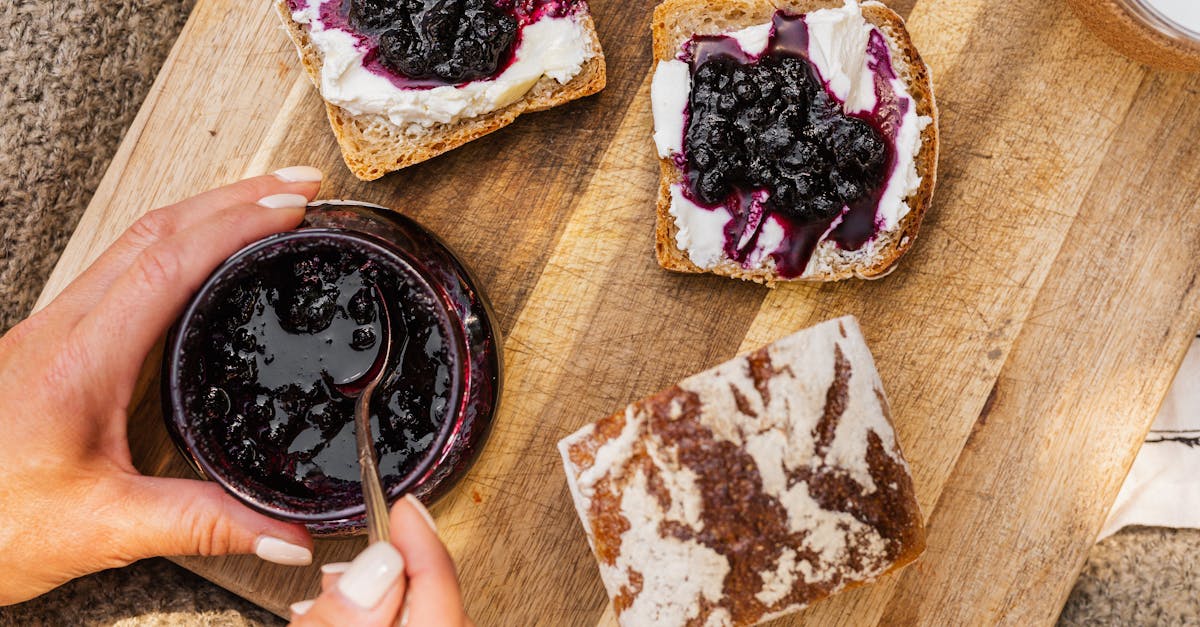
The first time I made blueberry jam, I expected a pot of purple magic.
I got blueberry syrup.
That “almost jam” moment taught me what most recipes skip: set depends on details like fruit ripeness, boil strength, jar headspace, and even your batch size. In this guide, I’ll show you my reliable Ball-style blueberry jam method for a small batch that sets cleanly, tastes bright, and stores safely.
Key Takeaways
- This Ball blueberry jam recipe uses a reliable small-batch ratio—4 cups crushed blueberries, 4 cups sugar, and 2 tbsp bottled lemon juice—to deliver bright flavor and a dependable set.
- Prep everything before cooking because blueberry jam can reach gel stage fast, and having hot jars, tools, and frozen test plates ready prevents rushed mistakes.
- Cook to a true rolling boil and time the hard-boil stage (often 1 minute with added pectin), then confirm set with the freezer-plate wrinkle test rather than relying on the clock alone.
- Use bottled lemon juice and don’t “just cut the sugar,” because consistent acid and tested sugar levels support both pectin gel and safe, shelf-stable canning.
- Fill hot jars with 1/4-inch headspace, remove bubbles, wipe rims, and water-bath process half-pints for 10 minutes at 0–1,000 ft (adjusting for altitude) to protect seal and safety.
- If your Ball blueberry jam recipe turns runny, wait 24–48 hours, then re-cook at a rolling boil with a bit more bottled lemon juice and pectin to rescue the batch without wasting fruit.
What You Need Before You Start
One surprise hits fast: jam goes from “watery” to wrinkly-set in a few minutes.
I set up everything first, which means I do not panic when the gel stage arrives.
Ingredients (With Exact Measurements)
I use this small-batch formula because it sets well and tastes like blueberries, not sugar.
Yield: about 4 half-pint (8 oz) jars (roughly 32 oz total), which means you can finish a batch in one evening.
Ingredients
- 4 cups crushed blueberries (about 6 cups whole berries, ~2 lb), which means you get enough natural pectin and color for a firm set.
- 4 cups granulated sugar (800 g), which means the jam reaches the soluble-solids range that helps it gel and stay shelf-stable.
- 2 tbsp bottled lemon juice (30 mL), which means you add consistent acid for safer canning and better pectin gel.
Optional (recommended for reliability)
- 1 pouch liquid pectin (3 oz / 85 g) or 1 box powdered pectin (1.75 oz / 49 g), which means you reduce the risk of syrupy jam when berries are very ripe or watery.
- 1/2 tsp unsalted butter, which means you reduce foam during the boil.
Ingredient notes I learned the hard way
- I use bottled lemon juice for canning, which means the acidity stays consistent across batches.
- I avoid reducing sugar “just a little” in a full-sugar recipe, which means I do not accidentally break the set and shelf stability.
Equipment And Jar Prep Checklist
A fast boil waits for no one.
I stage my tools like a cooking show, which means I keep spills and under-processed jars to a minimum.
Canning setup
- Water-bath canner (or deep stockpot + rack), which means jars sit off the pot bottom and heat evenly.
- 4–5 half-pint jars with new lids and bands, which means you can fill without scraping the last spoonful.
- Jar lifter, which means you avoid burns and dropped jars.
- Canning funnel + ladle, which means you fill cleanly and keep rims seal-ready.
- Bubble remover/headspace tool (or a plastic knife), which means you release trapped air that can weaken seals.
- Clean towel + paper towels, which means you wipe rims and keep threads dry.
- Instant-read thermometer (optional), which means you can sanity-check temperatures near gel stage.
Jar prep I use
- I wash jars and keep them hot until filling, which means hot jam does not hit a cold jar and crack it.
- I simmer lids per manufacturer guidance (many modern lids only need clean + warm), which means the sealing compound stays in good shape.
Safety source I trust
The USDA home canning guidance sets the baseline for water-bath processing, which means I follow a tested safety standard rather than guesswork: USDA Complete Guide to Home Canning.
How To Make Ball Blueberry Jam Step By Step
You will smell the berries before you see the set.
I watch for texture changes, which means I rely on cues, not just the clock.
Prep The Blueberries And Measure Ingredients
Blueberries can hide water.
I measure after crushing, which means my fruit-to-sugar ratio stays accurate.
- Rinse and drain blueberries well, which means extra rinse water does not thin your jam.
- Crush enough berries to make 4 cups crushed, which means you follow the tested ratio.
- I use a potato masher in a big bowl.
- I keep some berries partly whole, which means the jam looks jewel-like.
- Measure 4 cups sugar into a separate bowl, which means you can add it fast when the recipe calls for it.
- Measure 2 tbsp bottled lemon juice, which means you add stable acid.
My quick gel-test setup
- I put 2 small plates in the freezer, which means I can test set in 30 seconds later.
Cook The Jam To Gel Stage
The pot looks quiet, then it roars.
I use a wide pot, which means water evaporates faster and the jam sets sooner.
- Add crushed blueberries and lemon juice to a wide, heavy pot.
- If you use powdered pectin, whisk it in now, which means it dissolves before the sugar goes in.
- Bring the mixture to a full rolling boil over high heat, which means the boil does not stop when you stir.
- Add all the sugar at once and stir, which means crystals dissolve evenly.
- Return to a full rolling boil.
- If you use liquid pectin, stir it in once you hit a full boil with sugar, which means the pectin gets the heat it needs.
- Boil hard for 1 minute (pectin recipes) while stirring, which means you follow the gel timing Ball-style recipes use.
How I confirm gel stage (two checks)
- Freezer plate test: I drop 1/2 tsp jam on a frozen plate and wait 60 seconds, which means the sample cools fast.
- I push it with my finger.
- If it wrinkles, the jam is ready, which means the pectin network has formed.
- Spoon test: I lift a spoon and watch the drip.
- If it “sheets” off in a thicker curtain, it is close, which means the water content has dropped.
I aim for “just set.” Overcooking gives a stiff, sticky jam, which means spreading feels like tearing bread.
Fill Jars, Remove Bubbles, And Seal
The color looks like stained glass in the funnel.
I work fast and clean, which means I get better seals.
- Keep jam hot and jars hot.
- Ladle jam into jars, leaving 1/4 inch headspace, which means the jam expands during processing and still seals.
- Slide a bubble tool around the inside to release air, which means you avoid hidden pockets.
- Adjust headspace back to 1/4 inch.
- Wipe rims with a damp paper towel, which means the lid compound contacts clean glass.
- Place lids on jars.
- Tighten bands fingertip-tight, which means air can vent during processing.
Water Bath Process And Cooling Rules
The canner sounds like a steady simmer.
I wait for a real boil before timing, which means I do not under-process.
- Lower filled jars into boiling water.
- Ensure water covers jar tops by at least 1 inch, which means heat surrounds the jar fully.
- Cover the canner and bring back to a full boil.
- Process 10 minutes for half-pints at 0–1,000 ft, which means you match common tested jam processing times.
- Turn off heat and rest jars 5 minutes in the canner, which means pressure changes stay gentle.
- Remove jars upright and place on a towel.
- Cool 12–24 hours untouched, which means seals form without disturbance.
What I do during cooling
- I do not re-tighten bands.
- I do not press the lid center.
That restraint feels silly, which means it is exactly when most seal failures happen.
Key Variables That Affect Set And Texture
One batch can pour like syrup.
The next batch can stand up like candy.
I treat jam like a controlled experiment, which means I change one variable at a time.
Blueberry Ripeness, Sugar Ratio, And Acid Balance
The berries decide more than you think.
I adjust my expectations based on ripeness, which means I avoid chasing a set that the fruit cannot support.
- Riper blueberries contain less acid, which means pectin has a harder time forming a gel.
- Very juicy berries add water, which means you need more evaporation or pectin support.
Concrete example from my kitchen
I once used frozen wild blueberries that leaked a lot of juice.
My first boil looked strong, but the jam still ran.
I added liquid pectin on the next batch and kept the boil at a true rolling boil for 60 seconds, which means the second batch set cleanly in 24 hours.
Sugar and safety in plain terms
- Sugar binds water.
- That water-binding helps preservation.
Ball-style full-sugar ratios exist for a reason, which means you should not cut sugar in half unless you switch to a tested low-sugar method.
Pectin Choices And When To Use Them
Pectin feels like insurance.
I buy it fresh each season, which means I get stronger gelling power.
Common pectin types
| Pectin type | Best for | What it changes | My take |
|---|---|---|---|
| High-methoxyl (regular) | Full-sugar jams | Needs sugar + acid to gel, which means it sets fast at the right ratio | Most “Ball-style” blueberry jam uses this |
| Low/no-sugar pectin | Reduced-sugar jams | Gels with calcium, which means you can cut sugar and still set | Great flavor, but follow the exact box method |
| No added pectin | Very small, longer-cooked batches | Relies on fruit reduction, which means cook time rises a lot | Works, but texture can go “sticky” |
One stat that matters
The National Center for Home Food Preservation warns that you should follow tested recipes for safe and consistent results, which means pectin type and ratios are not “flexible” if you want repeatability: NCHFP jam and jelly guidance.
Cooking Time, Temperature, And Batch Size
Your pot shape changes the outcome.
I use a wide 6–8 quart pot, which means steam escapes and the jam reaches gel stage faster.
Batch size rule I follow
- I keep batches to 4–6 cups crushed fruit max per pot, which means the boil stays strong.
Temperature reality check
Jam often gels near 220°F at sea level, which means you can use temperature as a guide.
Altitude changes the boiling point, which means you should treat 220°F as “around,” not a guarantee.
I trust the wrinkle test more than the thermometer, which means I avoid overcooking when my stove runs hot.
First-hand method I use
I time the “hard boil” portion with a phone timer.
I also listen.
A rolling boil sounds like constant popping across the surface, which means the mixture stays above the gelling threshold even when I stir.
Safe Canning Guidelines For Shelf-Stable Jam
A safe seal feels boring.
That boredom protects your pantry, which means it matters more than the prettiest label.
Headspace, Processing Time, And Altitude Adjustments
Headspace looks tiny.
It controls sealing, which means it controls safety.
Headspace
- Use 1/4 inch for jam, which means the product expands and still vents.
Processing time (typical)
- 10 minutes at 0–1,000 ft for half-pints in a boiling-water canner, which means the jar contents reach a safe heat level.
Altitude adjustments
Boiling water gets cooler at higher elevation, which means you must process longer.
I use Ball/USDA altitude tables when I travel.
Here is a practical reference from a state extension service, which means you get science-based timing: Colorado State University Extension, Canning at high altitudes.
How To Confirm A Proper Seal And Handle Failures
The best sound is the quiet “ping.”
It signals vacuum formation, which means the lid locked.
Seal check (after 12–24 hours)
- The lid center sits concave.
- The lid does not flex when pressed.
- The jar lifts by the lid edge (gentle test), which means the seal holds.
If a jar fails
- Refrigerate and use within 3 weeks, which means you still enjoy it safely.
- Or reprocess within 24 hours with a new lid, which means you can still make it shelf-stable.
Storage Life, Labeling, And Best Flavor Window
Pantry light fades color.
I store jars in a dark spot, which means anthocyanin pigment holds longer.
Storage rules I follow
- Store sealed jars without bands, which means trapped moisture does not rust the lid.
- Label with date + batch notes, which means you can track what worked.
Shelf life guidance
Many extensions recommend using home-canned goods within 12 months for best quality, which means you get brighter flavor and color.
I usually eat blueberry jam within 6 months, which means the berry aroma stays sharp instead of “cooked.”
I write “WILD + LIQ PECTIN” on the label when I use wild berries, which means I remember why the texture came out firmer.
Troubleshooting Common Blueberry Jam Problems
Jam teaches fast.
It also punishes guesses, which means troubleshooting saves your next batch.
Jam Didn’t Set (Or Set Too Firm)
A loose jam looks gorgeous.
It also slides off biscuits, which means it feels like a fail.
If jam did not set
- Wait 24–48 hours first, which means you give pectin time to finish forming.
- If it stays runny, re-cook the batch.
My re-cook method (small batch)
- Pour jam back into the pot.
- Bring to a full rolling boil.
- Add 1–2 tbsp bottled lemon juice.
- Add pectin per label for the amount of jam you have.
- Boil hard 1 minute.
This method fixes most syrupy batches I see, which means you do not waste fruit.
If jam set too firm
- You overcooked or used too much pectin, which means the gel network got too tight.
- Warm a jar gently and stir in 1–2 tsp hot water when serving, which means you soften texture without remaking the whole batch.
Foaming, Crystals, And Cloudy Jam
Foam makes the top look pale.
It also traps air, which means it can weaken the look and the fill.
Foam control
- Add 1/2 tsp butter, which means foam collapses faster.
- Skim with a spoon before jarring, which means you keep the top clear.
Sugar crystals
Crystals feel gritty.
They form when sugar does not dissolve fully, which means you need better stirring and slower sugar incorporation.
What I do:
- I stir until the liquid looks glossy and smooth before timing the boil, which means I dissolve sugar before rapid evaporation.
Cloudy jam
- Over-stirring can whip in air, which means you see haze.
- Old fruit can break down, which means fine particles stay suspended.
Floating Fruit, Color Changes, And Off Flavors
Floating fruit makes a “layer.”
It looks odd, which means gifting feels awkward.
Fruit float fix
- Let the jam sit 5 minutes off heat before filling, which means the fruit distributes better.
- Stir gently every minute, which means you keep berries suspended.
Color changes
Blueberry jam can turn dull purple-brown.
Heat and light cause this, which means storage location matters.
I store jars in a cabinet and avoid sunny shelves.
Off flavors
- Scorched jam tastes bitter, which means the pot bottom overheated.
- Old frozen berries can taste “freezer-y,” which means you should use fresher fruit for gifts.
I use a heat diffuser on my electric stove when I double a batch, which means I reduce hot spots that scorch sugar.
Variations And Serving Ideas
One spoon can taste like July.
A small tweak can also ruin set, which means I change recipes with care.
Low-Sugar And No-Sugar Options (With Notes On Safety)
Low-sugar jam tastes more like fruit.
It can also spoil faster after opening, which means you need clean handling.
What I do for low-sugar
- I use low/no-sugar pectin and follow the exact insert.
- I do not “freestyle” sugar cuts in a regular pectin recipe.
That strict approach keeps texture predictable, which means breakfast does not turn into a science project.
Safety note in plain terms
Processing time does not “replace” sugar changes.
You still need a tested low-sugar formula, which means you rely on proven acidity and gel chemistry.
Flavor Add-Ins: Lemon, Vanilla, Spices, And Mixed Berries
A pinch of spice can make blueberries taste bigger.
I keep add-ins measured, which means I do not thin the batch.
Add-ins I like (per batch)
- Lemon zest: 1 tsp, which means you boost aroma without extra liquid.
- Vanilla extract: 1 tsp (stir in after cooking), which means the flavor stays bright.
- Cinnamon: 1/4 tsp, which means you add warmth without masking berries.
- Mixed berries: swap 1 cup crushed blueberries for crushed blackberries, which means you raise acidity and deepen color.
If you want a tangy counterpoint for sandwiches or salads, I pair jam with a sharp dressing like this pineapple dressing recipe, which means you get sweet-acid balance without extra cooking.
How To Use Blueberry Jam Beyond Toast
Jam does not need bread.
It needs contrast, which means you should pair it with salt, fat, or acid.
My go-to uses
- Swirl 1 tbsp into plain Greek yogurt, which means you get a high-protein snack with real fruit flavor.
- Brush onto roast poultry during the last 10 minutes of cooking, which means you get a glossy, sweet crust.
- Stir into vinaigrette with mustard, which means you get a fast berry dressing.
- Fill baked donuts or top glaze.
I use this easy donut glaze when I want a quick finish, which means the jam can become a bakery-style topping.
I also like jam inside a yeast-raised donut.
This guide to baked donut recipes with yeast gives good structure, which means the donut can hold a spoonful of filling without collapsing.
For a savory-sweet snack board, I spoon jam next to smoky cured meat like this Cajun tasso recipe, which means the salt and smoke make the berries taste even brighter.
Conclusion
Blueberry jam rewards attention.
It also rewards patience, which means you can get a perfect set without huge batches or fancy gear.
I treat this Ball blueberry jam recipe like a repeatable routine: measured fruit, full rolling boil, correct headspace, and a real process time.
When the lid seals and the jar cools to a clean “click,” I feel it every time.
It means winter will taste like blueberries, which means future-you gets an easy win at breakfast.
Frequently Asked Questions
What is the best Ball blueberry jam recipe for a small batch that actually sets?
A reliable Ball blueberry jam recipe uses a tested ratio: 4 cups crushed blueberries, 4 cups granulated sugar, and 2 tbsp bottled lemon juice. For extra consistency, add powdered pectin before sugar (or liquid pectin after returning to a full rolling boil) and boil hard for 1 minute.
Why didn’t my Ball blueberry jam recipe set and how can I fix runny jam?
Runny jam usually comes from very ripe/juicy berries, a weak rolling boil, incorrect ratios, or reducing sugar. First, wait 24–48 hours for the gel to finish forming. If it’s still syrupy, re-cook: bring to a full boil, add 1–2 tbsp bottled lemon juice plus pectin per label, and boil hard 1 minute.
How much headspace should I leave when canning blueberry jam in Ball jars?
Leave 1/4 inch headspace for blueberry jam. This small space helps the jam expand during processing while still allowing air to vent so a strong vacuum seal forms. After filling, remove bubbles, re-check headspace, wipe rims clean, and tighten bands fingertip-tight before water-bath processing.
How long do you water-bath process a Ball blueberry jam recipe, and does altitude change it?
For half-pint jars, a common tested time is 10 minutes at 0–1,000 ft, timed only after the canner returns to a full boil. Altitude matters because boiling water is cooler at higher elevations, so you must increase processing time using Ball/USDA altitude tables to maintain safe heat penetration.
Can I reduce sugar in a Ball blueberry jam recipe without ruining the set or safety?
Not safely or reliably with regular (full-sugar) pectin recipes. Sugar supports gel formation and helps bind water for preservation. If you want less sugar, use a tested low/no-sugar pectin and follow the insert exactly (including any calcium step). Don’t “just cut it” in a standard Ball-style formula.
Do I have to use bottled lemon juice in blueberry jam, or can I use fresh lemon juice?
For canning, bottled lemon juice is preferred because its acidity is standardized, which helps both safety and consistent gel formation. Fresh lemons vary in acidity, so the same volume may not reliably acidify the batch. If you’re making refrigerator jam (not shelf-stable), fresh can work, but set may vary.
